
Introduction
In the digital landscape of 2026, our smartphones have evolved into the central anchors of our digital identities. They no longer function simply as communication devices; they act as the primary authentication keys for corporate networks, personal bank accounts, cryptocurrency wallets, and sensitive cloud storage. Because our digital footprints are tied heavily to a single ten-digit phone number, cybercriminals have found an elegant way to bypass traditional perimeter security. This method is a highly targeted attack vector known as SIM swapping.
SIM swapping completely undermines the assumption that possessing a phone number is proof of identity. This attack bypasses conventional technical barriers by exploiting the weakest link in the communication chain: human administrative processes. Understanding the structural mechanics of this threat is the first step toward securing high-value accounts from total compromise.
What is a SIM Swapping Attack?
A SIM swapping attack—often referred to as SIM hijacking or SIM card fraud—is a form of identity theft where a malicious actor successfully convinces a mobile network operator to port a victim’s phone number over to a blank SIM card under the attacker’s physical control.
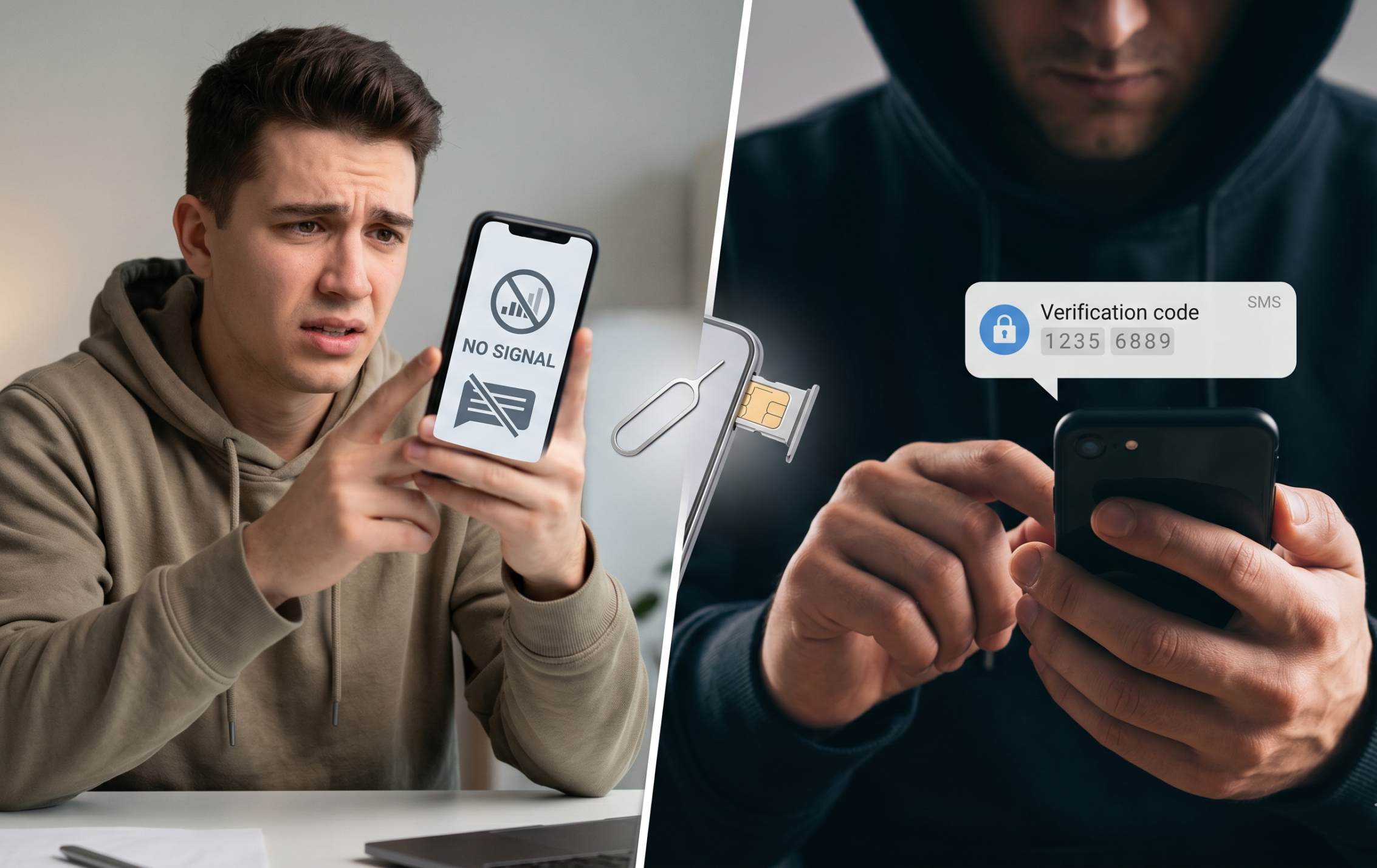
When this transfer occurs, the victim’s mobile device instantly loses connection to the cellular network, showing a “No Service” or “SOS Only” indicator. Meanwhile, the attacker’s device inherits the victim’s entire cellular profile. From that moment on, every incoming voice call, text message, and crucial one-time password (OTP) is delivered straight to the cybercriminal.
[Victim's Phone loses network] ──> [Carrier ports number] ──> [Attacker receives all SMS OTPs]
The Step-by-Step Mechanics of the Exploit
A successful SIM swap is rarely an isolated incident. It is the culmination of a structured multi-phase operation executed by sophisticated threat actors.
Phase 1: Target Reconnaissance and Data Harvesting
Attackers begin by gathering open-source intelligence (OSINT) on a specific target. They aggregate data from historical corporate breaches, public records, and social media platforms. By compiling full names, dates of birth, physical addresses, and answers to common security questions, the attacker builds a comprehensive profile of the victim.
Phase 2: Social Engineering the Carrier
Equipped with the harvested personal data, the criminal contacts the victim’s mobile service provider. Impersonating the victim, the attacker presents a plausible scenario to the customer service representative—such as claiming their phone was dropped in water, stolen while traveling, or that they upgraded to a new device requiring a different SIM format.
If the carrier’s internal verification process relies entirely on basic static data like a billing address or a national ID number, the representative will often authorize the swap, linking the phone number to the attacker’s SIM card. To explore how scammers leverage human empathy and corporate scripts to bypass administrative checkpoints, review The Psychology of Cybercrime: Why People Fall for Online Scams.
Phase 3: Automated Account Takeover (ATO)
The moment the cellular signal shifts to the attacker’s device, the clock begins ticking. The attacker initiates password reset sequences across the victim’s primary digital assets, starting with their master email account. Because many services use SMS text messages as a default verification route, the password reset links and secondary verification codes go straight to the hacker. Within minutes, the attacker systematically locks the legitimate owner out of their financial, professional, and personal platforms.
Why SMS-Based Two-Factor Authentication is Broken
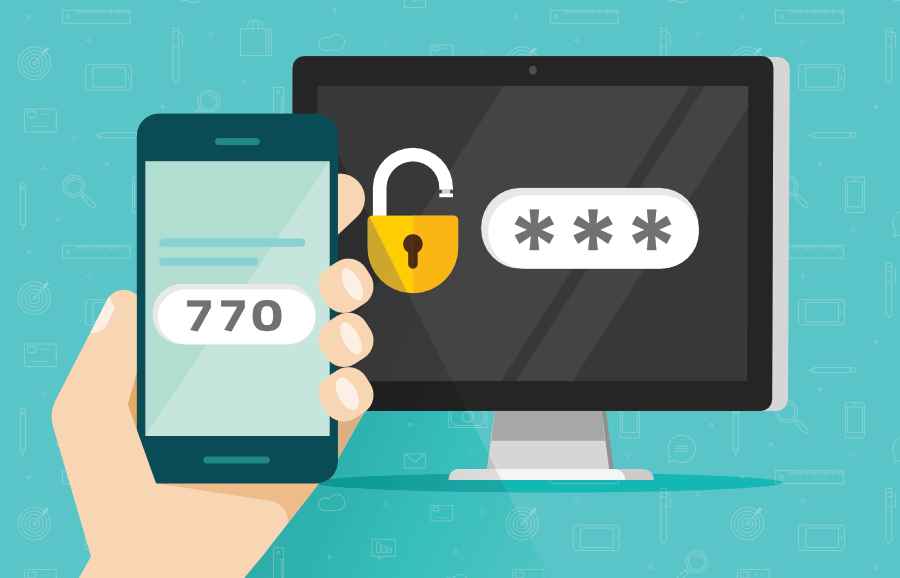
For years, organizations treated SMS-based two-factor authentication (2FA) as a reliable security standard. However, structural realities in modern telecommunications have turned SMS into a critical vulnerability.
The underlying infrastructure of cellular networks was never built to serve as a cryptographic security layer. SMS traffic moves unencrypted across telecommunication networks, leaving it open to interception, routing exploits, and administrative manipulation.
When a security strategy assumes that receiving a text message proves identity, it introduces a dangerous point of failure. If a threat actor controls the cellular connection, your secondary layer of defense disappears. For this reason, modern security frameworks are moving toward credential architectures that remove cellular carriers from the authentication loop entirely. You can read more about this transition in our strategic overview on Passwordless Authentication: The Future of Secure Logins.
Critical Warning Signs of an Active Attack
Because SIM hijacking happens at the network provider level, early detection requires recognizing sudden changes in device behavior:
Instant Loss of Network Connectivity: If your phone suddenly loses cellular bars and displays a persistent network error despite being in an area with excellent coverage, treat it as an immediate anomaly.
Unsolicited Carrier Notifications: Receiving unexpected text alerts or emails stating that your carrier profile, password, or SIM card settings have been modified is an immediate indicator of a fraudulent request.
Inability to Authenticate: Being abruptly logged out of your email or financial applications with messages indicating your password was changed within the last few minutes means an account takeover is currently underway.
Advanced Protection Strategies
Mitigating the risk of a SIM swap requires moving away from default security options and establishing strict authentication boundaries.
Implement Carrier-Level Restrictions
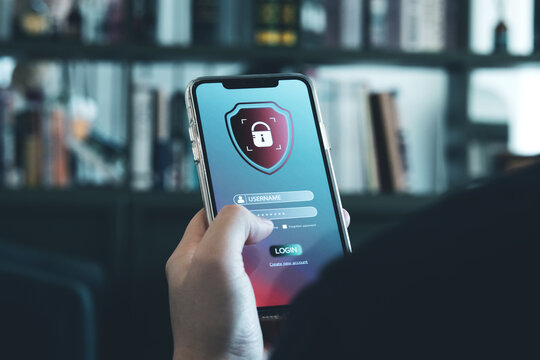
Contact your mobile network operator and demand that a high-security verbal passphrase or alphanumeric PIN be added to your account profile. Instruct the provider that no SIM modifications, device upgrades, or porting requests may occur unless that specific passcode is verified in person or via an out-of-band security protocol.
Transition to App-Based and Hardware Authentication
Remove your phone number from the security settings of all critical accounts. Replace SMS verification routes with dedicated authenticator applications that generate time-based one-time passwords locally on your physical device. For maximum protection on high-value corporate or financial accounts, deploy physical hardware security keys that utilize cryptographic challenge-response mechanisms.
Practice Rigorous Data Minimization
Limit the volume of biographical data available on public profiles. Avoid sharing clear images of your identity documents, vacation itineraries, or specific family details that could be used by an attacker to successfully answer verification questions during an impersonation attempt.
Enterprise Defensive Alignment
| Security Parameter | Defensive Best Practice | Operational Resilience |
| Authentication Policy | Enforce App-Based MFA or FIDO2 Keys. | Bypasses the cellular network entirely, neutralising SIM swap vectors. |
| Carrier Account Security | Mandate Alphanumeric Porting Pins. | Introduces an administrative barrier against basic social engineering. |
| Identity Monitoring | Deploy Dark Web Data Auditing. | Identifies leaked employee credentials and phone numbers before exploitation. |
| Incident Response | Establish Rapid Account Freezing Rules. | Minimizes structural damage by locking down corporate suites within minutes. |
Mitigating Personnel Risk with FireShark
A secure network architecture is only as strong as the human beings who navigate it daily. When employees use their personal mobile numbers for work-related access or corporate recovery options, a single SIM swap on a staff member’s device can open a door into internal company data.
FireShark addresses these human vectors by delivering comprehensive, reality-driven cybersecurity training programs. Our educational tracks show IT professionals and enterprise teams how modern identity theft, credential routing exploits, and social engineering campaigns are orchestrated. By teaching your workforce how to transition away from legacy authentication models and cultivate a resilient security posture, FireShark ensures that your organizational perimeters remain secure against identity-hijacking techniques.
Conclusion
The reality of SIM swapping serves as an important reminder that convenient security options are rarely truly secure. Relying on telecommunication providers to protect access keys to your financial and corporate platforms is an unnecessary operational risk. By taking ownership of your authentication methods, removing SMS dependencies, and adopting local, app-based or hardware-driven security controls, you can effectively isolate your digital identity from cell carrier vulnerabilities.
Frequently Asked Questions (FAQs)
1. How does an attacker perform a SIM swap without physically touching my phone? Attackers do not need your physical device. Instead, they gather your personal data from breaches or social profiles and use social engineering to trick your mobile carrier’s customer support agents into shifting your phone number to a new, blank SIM card that the attacker owns.
2. Why are financial and cryptocurrency accounts frequently targeted in SIM swaps? Financial platforms and cryptocurrency exchanges often rely on SMS text messages for password recovery and transaction authorization. If an attacker controls the phone number, they can easily intercept these codes, reset account credentials, and transfer out assets via non-reversible transactions.
3. Does using an eSIM protect me from a SIM swapping attack? No. While an eSIM removes the physical card from your phone, the underlying verification and porting processes handled by your mobile carrier remain the same. An attacker can social engineer a carrier into downloading your cellular profile to an eSIM slot on their own device just as easily as a physical card.
4. What should be my very first action if I suspect I am a victim of a SIM swap? You must immediately contact your mobile service provider using an alternative line or in person to report unauthorized porting. Demand that they freeze your number, check for fraudulent activity, and return your cellular service to your legitimate device before the attacker can access your master accounts.
5. How can organizations prevent corporate breaches stemming from employee SIM swaps? Organizations should enforce strict security policies that explicitly forbid the use of SMS-based 2FA for corporate network access. All employee accounts should be protected using managed authenticator applications, biometric verifications, or physical security keys that operate independently of cellular numbers.