
Introduction
In the hyper-connected digital landscape of 2026, information is the most valuable currency—and it is available everywhere. Every social media post, public website, online database, technical forum, and search engine contains a goldmine of data that can be used for either defense or destruction. Cybersecurity professionals harness this publicly available information to identify emerging threats, investigate cybercriminals, detect hidden vulnerabilities, and fortify organizational security. This strategic process is known as OSINT, or Open Source Intelligence.
OSINT has transitioned from a niche investigative technique into one of the most powerful pillars of modern cybersecurity. Because both attackers and defenders leave massive “digital footprints” online, security experts analyze these trails to stay one step ahead of adversaries, monitor suspicious activities in real-time, and build a proactive shield around their digital assets.
Understanding OSINT: Beyond Just “Googling”
OSINT (Open Source Intelligence) refers to the disciplined process of collecting, analyzing, and synthesizing information from publicly available and legal sources. It is important to distinguish OSINT from traditional “hacking”—OSINT does not involve bypassing passwords or exploiting system flaws to gain unauthorized access. Instead, it focuses on the “art of the visible,” finding data that is already out in the open but perhaps hidden in plain sight.
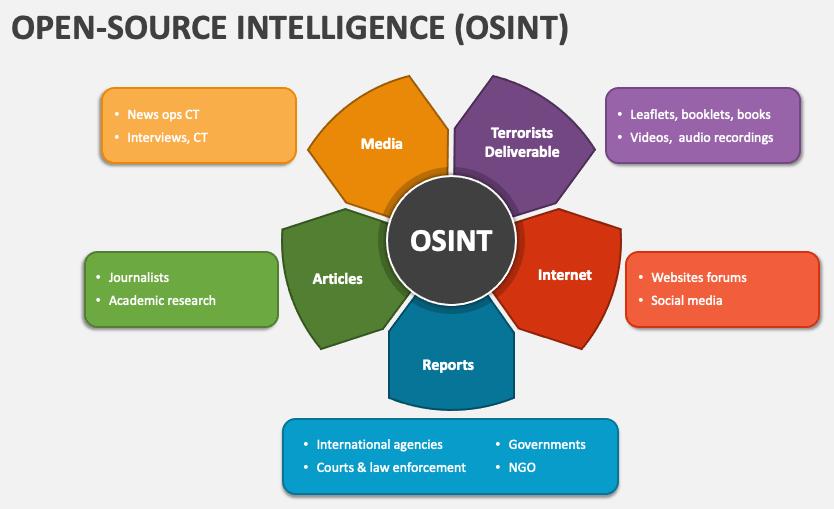
Common data points gathered via OSINT include
Media Content: News articles, blogs, and press releases.
Social Data: Public profiles on LinkedIn, X (Twitter), and specialized forums.
Technical Data: WHOIS records, IP addresses, domain registrations, and SSL certificates.
Geospatial Data: Maps, satellite imagery, and localized public cameras.
Leaked Data: Credentials or documents found on paste-sites or underground forums.
OSINT is a fundamental skill used by ethical hackers, SOC analysts, penetration testers, law enforcement agencies, and threat intelligence organizations. As digital training platforms like FireShark emphasize, mastering OSINT is about learning how to connect the dots between seemingly unrelated pieces of public information.
Why OSINT is Critical for Modern Cybersecurity
The biggest vulnerability in many organizations isn’t a software bug, but unintentional exposure. Employees may share sensitive company details on social media, developers might accidentally leak API keys in public GitHub repositories, or IT teams might leave legacy systems visible to the public internet.
By adopting an OSINT mindset, cybersecurity professionals can identify these “leaks” before a malicious actor does.
Key benefits of OSINT include
Vulnerability Detection: Finding exposed ports or unpatched services visible to the public.
Data Leak Monitoring: Identifying company credentials or customer data being sold on the dark web.
Phishing Defense: Mapping out an organization’s public hierarchy to predict who might be targeted by social engineering.
Hacker Activity Analysis: Monitoring forums to see if your company name is being discussed by threat actors.
Enhanced Threat Intelligence: Building a database of known malicious IPs and domains used in global campaigns.
Key Sources of OSINT Information
Security professionals categorize OSINT sources into several layers to ensure a comprehensive investigation:
1. Social Media Platforms
LinkedIn, Facebook, and Instagram are treasure troves for Social Engineering. Attackers use them to find employee names, job titles, and the specific technologies a company uses (often found in job descriptions). Professionals monitor these platforms to ensure employees aren’t sharing “too much” information.
2. Search Engines & “Google Dorking”
Beyond standard searches, analysts use Google Dorks (advanced operators) to find sensitive files. For example, using filetype:pdf "confidential" can reveal internal documents that were indexed by accident.
3. Public Records & WHOIS Databases
WHOIS records provide ownership details for domains, while government and court records can reveal the physical infrastructure or legal history of an entity.
4. The Dark Web & Underground Forums
While much of the Dark Web is hidden, the parts that are “public” to those with the right tools are essential for monitoring. Cybersecurity teams look for leaked databases, ransomware “shame sites,” and discussions about new exploits.
How Professionals Use OSINT in the Field
| Use Case | How it is Applied |
| Penetration Testing | In the “Reconnaissance” phase, ethical hackers gather emails, IP ranges, and software versions to plan their attack. |
| Incident Response | After a breach, investigators use OSINT to trace the attacker’s infrastructure, identifying where the malicious traffic originated. |
| Threat Intelligence | Teams track hacker groups (APTs) to understand their specific Tactics, Techniques, and Procedures (TTPs). |
| Brand Protection | Monitoring the web for fake websites or social media profiles that are impersonating the company to scam customers. |
Popular OSINT Tools You Need to Know
To handle the sheer volume of data, professionals use specialized automation tools:
Maltego: A graphical link-analysis tool that maps out relationships between people, domains, and companies in a visual “web.”
Shodan: Often called the “search engine for hackers,” Shodan indexes every device connected to the internet, from smart fridges to industrial power grids.
theHarvester: A simple yet effective tool for gathering email addresses, subdomains, and employee names from across the web.
Recon-ng: A powerful command-line framework that automates the collection of domain and contact information.
SpiderFoot: An automation engine that integrates with over 100 data sources to find vulnerabilities and digital footprints automatically.
Challenges, Risks, and the Ethical Boundary
While OSINT is legal and highly effective, it is not without its hurdles. The primary challenge is Information Overload. With billions of data points available, analysts often struggle with “False Positives”—inaccurate information that leads to the wrong conclusions. Verification is the most important step in the OSINT process; one source is never enough.
Furthermore, there is a risk of Adversarial OSINT. Attackers use these exact same tools to plan their hits. This is why organizations must strictly manage their public exposure. Platforms like FireShark advocate for “Defensive OSINT”—using these tools to look at your own company through the eyes of an attacker to find and close gaps.

The Future of OSINT in 2026 and Beyond
As we move deeper into the decade, Artificial Intelligence and Machine Learning are revolutionizing OSINT. AI can now analyze hours of video or thousands of images in seconds to find a specific logo or person. We are also seeing the rise of Autonomous OSINT, where systems constantly scan the web for mentions of a company and alert the Security Operations Center (SOC) the moment a new threat is detected.
“In the future of cybersecurity, the winners will be those who can filter the noise and find the intelligence fastest.”
Conclusion
OSINT (Open Source Intelligence) is no longer a luxury; it is a foundational requirement for any modern cybersecurity strategy. By leveraging publicly available data, security professionals can gain a “god-view” of their organization’s digital footprint, allowing them to identify vulnerabilities, monitor for leaks, and investigate attackers with surgical precision.
From the reconnaissance phase of a penetration test to the deep-dive analysis of an incident response, OSINT provides the context needed to turn raw data into actionable security. As our digital lives continue to expand across social media, the cloud, and the IoT, the ability to perform ethical, effective OSINT will remain the ultimate skill for those defending the digital frontier. For those looking to master these techniques, staying updated with platforms like FireShark is essential to understanding the latest tools and ethical boundaries of this ever-evolving field.
Frequently Asked Questions (FAQs)
1. Is OSINT legal?
Yes. OSINT only uses information that is publicly and legally available. It does not involve “hacking” into private systems.
2. What is the difference between OSINT and Hacking?
Hacking involves gaining unauthorized access to systems (breaking in). OSINT involves analyzing information that is already public (observing from the outside).
3. Do I need to be a coder to use OSINT?
Not necessarily. While tools like theHarvester use the command line, others like Maltego and Shodan have user-friendly interfaces.
4. How can I reduce my personal OSINT footprint?
Set your social media profiles to private, use “Burner” emails for public forums, and regularly check search engines for your own name to see what is public.
5. What is “Google Dorking”?
It is the use of advanced search operators (like site:, inurl:, intitle:) to find specific information or vulnerable files that a standard search would miss.