Introduction
Identity theft has evolved dramatically over the past decade. What once involved stolen passwords, forged documents, or hacked databases has now entered a new era powered by artificial intelligence. Deepfake technology, capable of creating highly realistic fake videos, audio recordings, and images, has become one of the most dangerous tools available to cybercriminals. As AI models become increasingly sophisticated and accessible, attackers no longer need to steal someone’s physical identity—they can digitally recreate it.
The rise of deepfakes represents a significant challenge for individuals, businesses, financial institutions, and governments. The ability to convincingly imitate someone’s face or voice allows criminals to bypass traditional security measures, manipulate trust, and commit fraud on an unprecedented scale. This is why deepfakes are rapidly becoming the ultimate weapon for modern identity theft.
Understanding Deepfake Technology
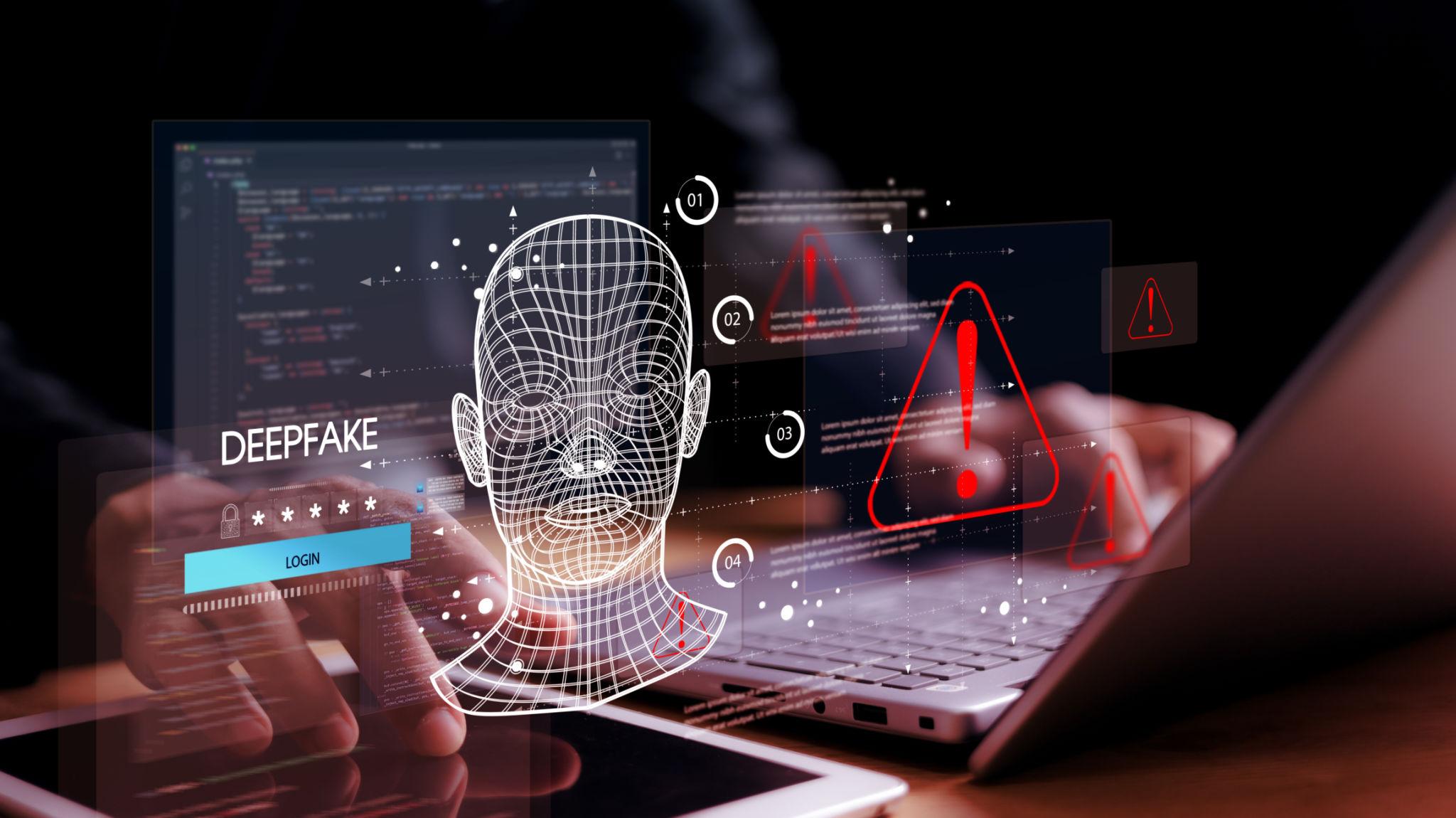
Deepfakes are synthetic media created using advanced artificial intelligence techniques, particularly deep learning and generative neural networks. These systems analyze thousands of images, videos, or voice samples to learn the characteristics of a person. Once trained, the AI can generate new content that closely mimics the target’s appearance, expressions, or speech patterns.
Unlike simple photo editing, deepfake technology can produce videos where a person appears to say or do things they never actually did. Similarly, voice cloning software can recreate someone’s speech after analyzing only a small sample of audio.
The technology itself has legitimate applications in filmmaking, entertainment, education, accessibility, and gaming. However, when placed in the hands of cybercriminals, it becomes a powerful instrument for deception and identity fraud.
Why Deepfakes Make Identity Theft More Dangerous
Traditional identity theft typically requires access to personal information such as passwords, Social Security numbers, banking details, or official documents. Deepfakes, however, exploit something even more valuable—human trust.
People naturally trust familiar faces and voices. If a family member appears in a video asking for emergency money or a CEO seems to authorize a financial transaction during a video call, many individuals may not question the authenticity. Deepfakes manipulate this instinctive trust, making scams far more convincing than phishing emails or fake websites.
As remote work and online communication become increasingly common, visual and audio verification has become part of everyday business. Deepfakes exploit exactly these communication channels.
Financial Fraud Through Deepfake Technology
One of the biggest threats posed by deepfakes is financial fraud. Criminals can clone the voice of executives or business owners and instruct employees to transfer funds to fraudulent accounts.
Banks and financial institutions increasingly use biometric authentication such as facial recognition or voice verification. While these technologies improve convenience, sophisticated deepfake systems may attempt to fool them by presenting fabricated biometric data.
Consumers are also at risk. Attackers can create fake customer service representatives, investment advisors, or loan officers using AI-generated videos, convincing victims to reveal sensitive financial information or authorize payments.
Social Engineering Becomes More Powerful
Social engineering attacks rely on manipulating human psychology rather than technical vulnerabilities. Deepfakes dramatically increase the effectiveness of these attacks.
Imagine receiving a video call from someone who looks exactly like your manager requesting confidential company files. Or receiving a voice message from a parent asking for immediate financial assistance after an accident. These scenarios become far more believable when AI-generated audio and video closely resemble real people.
Instead of attacking computer systems directly, cybercriminals attack human judgment, making deepfake-assisted scams extremely difficult to detect.
Threats to Businesses
Organizations face significant risks from deepfake technology. Corporate executives are particularly attractive targets because they often possess authority over financial decisions.
Attackers may impersonate CEOs during virtual meetings to approve wire transfers or confidential projects. Human resources departments may receive fake identity verification videos from fraudulent job applicants. Customer support teams may unknowingly reset accounts after receiving convincing AI-generated voice authentication.
Businesses also face reputational damage if fake videos circulate online showing executives making offensive statements or announcing false corporate decisions. Even after such content is proven fake, public trust may already have been affected.
Personal Identity Theft in the Digital Age
Modern identity extends far beyond government-issued documents. Social media profiles, online photographs, podcasts, video interviews, and public speeches provide enormous amounts of training data for AI systems.
Many people unknowingly upload enough content for attackers to create convincing digital replicas. Publicly available videos on platforms like YouTube or social media can provide facial expressions, speech patterns, and voice samples that AI models can learn from.
Once a digital identity is recreated, criminals may use it to deceive friends, relatives, employers, or financial institutions.
The Growing Threat to Biometric Security
For years, biometrics such as fingerprints, facial recognition, and voice authentication were considered stronger alternatives to passwords. However, deepfakes challenge this assumption.
Unlike passwords, biometric characteristics cannot simply be changed if compromised. If someone successfully creates a convincing AI-generated version of your face or voice, replacing your biological identity is impossible.
This has encouraged security experts to advocate multi-factor authentication systems that combine biometrics with device verification, behavioral analysis, and one-time codes.
Impact on Governments and National Security
Deepfakes extend beyond individual identity theft into national security concerns. Fake videos of political leaders, military officials, or emergency broadcasts can spread misinformation rapidly, potentially influencing elections, financial markets, or public safety.
Criminal organizations and hostile actors may exploit deepfakes to undermine trust in legitimate information. As people become uncertain about what is real, the overall reliability of digital evidence decreases, creating broader societal challenges.
How Individuals Can Protect Themselves
Protection against deepfakes requires both technological safeguards and critical thinking. People should avoid sharing excessive personal information online, particularly high-quality videos and voice recordings when unnecessary. Privacy settings on social media should be reviewed regularly to limit public access to personal content.
Multi-factor authentication should be enabled for important accounts, ensuring that a compromised face or voice alone cannot grant access. Financial requests received through video calls or voice messages should always be independently verified through another communication channel.
Remaining skeptical of urgent requests involving money or confidential information is one of the strongest defenses against deepfake-enabled fraud.
How Organizations Can Reduce Risk
Companies should train employees to recognize AI-powered social engineering attacks and establish verification procedures for sensitive transactions. Large financial transfers should require multiple approvals rather than relying on verbal authorization from a single executive.
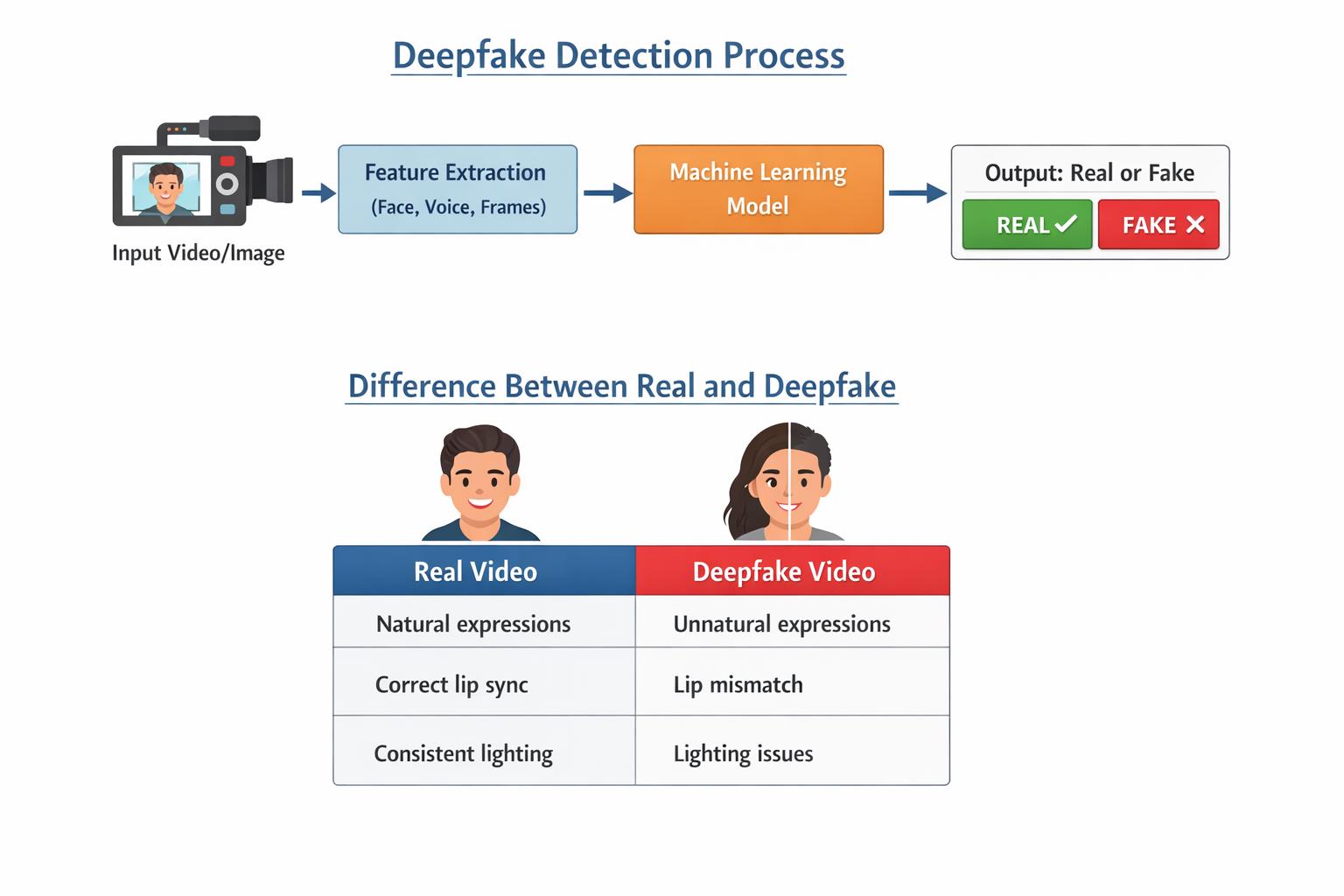
Organizations should invest in AI-powered deepfake detection systems capable of analyzing inconsistencies in video and audio. Identity verification processes should combine multiple authentication methods instead of depending solely on facial or voice recognition.
Regular cybersecurity awareness programs can help employees understand that seeing or hearing someone online no longer guarantees authenticity.
The Future of Deepfake Detection
Researchers and technology companies are actively developing solutions to identify synthetic media. AI detection systems analyze subtle inconsistencies in facial movements, blinking patterns, lighting, audio frequencies, and digital artifacts that humans may overlook.
Meanwhile, governments around the world are exploring regulations requiring transparency in AI-generated content and stronger penalties for malicious deepfake creation. However, the race between generation and detection technologies continues, making cybersecurity an ongoing challenge.
Conclusion
Deepfake technology has transformed identity theft from the theft of personal information into the replication of human identity itself. By combining artificial intelligence with social engineering, criminals can exploit trust more effectively than ever before. Financial fraud, corporate espionage, misinformation campaigns, and personal scams all become significantly more convincing when powered by realistic synthetic media.
The solution is not to fear artificial intelligence but to adapt to it. Individuals must practice digital caution, organizations must strengthen verification processes, and technology providers must continue developing detection tools. In the age of AI, protecting identity requires more than securing passwords—it requires protecting the very characteristics that make us who we are.
FAQs
1. What is a deepfake?
A deepfake is AI-generated fake audio, video, or images that imitate a real person.
2. Why are deepfakes dangerous for identity theft?
They can impersonate someone’s face or voice to commit fraud and scams.
3. Can deepfakes fool biometric security?
Yes, advanced deepfakes may deceive some facial or voice recognition systems.
4. How can I protect myself from deepfake scams?
Use multi-factor authentication, verify requests, and avoid oversharing personal media online.
5. How can organizations prevent deepfake attacks?
They should use AI detection tools, employee training, and strong verification processes.