Introduction
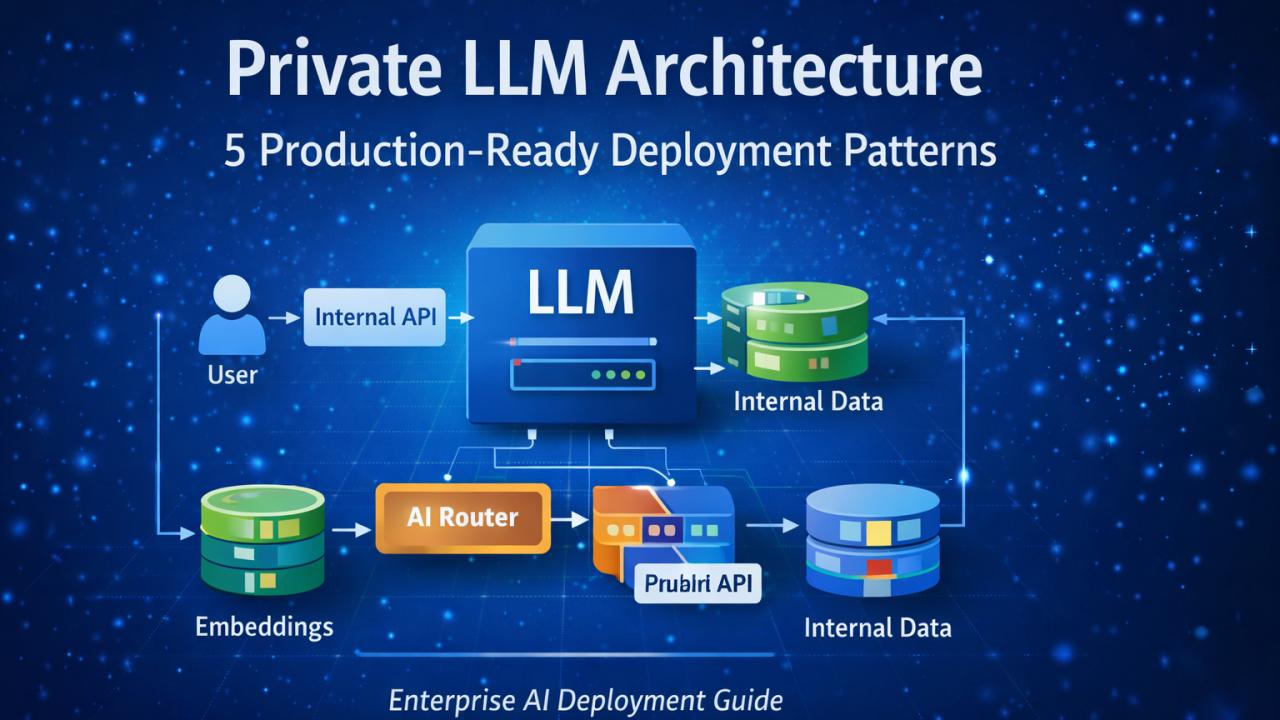
Large Language Models (LLMs) have rapidly transformed how organizations process information, automate workflows, and enhance productivity. While cloud-based AI services dominate the market, many enterprises are increasingly adopting local LLM implementations to maintain control over sensitive data, reduce reliance on external providers, and comply with regulatory requirements.
Running an LLM locally offers significant advantages, but it also introduces unique security challenges. Unlike cloud services where infrastructure security is largely handled by providers, local deployments make organizations responsible for protecting the model, underlying systems, and the data being processed.
Without proper safeguards, a locally deployed AI model can become an attractive target for cybercriminals, insider threats, and supply chain attacks. Securing these implementations requires a comprehensive strategy that goes far beyond installing the model on a server.

Why Local LLMs Need Special Security Attention
Organizations often assume that keeping AI models inside their own environment automatically makes them secure. However, local deployment simply shifts responsibility from cloud vendors to internal teams.
Local LLMs process highly sensitive information, including:
- Internal documents
- Customer records
- Source code repositories
- Financial reports
- Healthcare data
- Research and intellectual property
If compromised, attackers may steal confidential information, manipulate AI responses, poison datasets, or use the model as an entry point into the broader enterprise network.
Therefore, security must be integrated into every stage of deployment and operation.
Secure the Infrastructure First
A local LLM is only as secure as the environment hosting it. Whether deployed on a workstation, GPU server, or private cloud infrastructure, the underlying systems must be hardened.
Administrators should:
- Keep operating systems updated.
- Disable unnecessary services.
- Apply least privilege principles.
- Enable endpoint protection.
- Use firewalls to restrict inbound and outbound connections.
- Segment AI servers from other business networks.
Network segmentation prevents attackers from moving laterally if a single component becomes compromised. Separating AI infrastructure from production systems significantly reduces the potential impact of an intrusion.
Protect Sensitive Data
Data represents one of the biggest risks in local AI deployments. Since LLMs frequently process confidential information, proper controls are essential.
Sensitive datasets should never be stored in plain text. Encryption should be applied both at rest and during transmission.
Organizations should implement:
- Data classification policies.
- Encryption mechanisms.
- Secure backup procedures.
- Role-based access controls.
- Data retention policies.
Not every employee needs access to every document or AI capability. Limiting access reduces the likelihood of accidental exposure and insider misuse.
Implement Strong Authentication and Access Control
Unauthorized access to a local LLM can have severe consequences. Attackers may extract sensitive prompts, steal embeddings, or manipulate outputs.
Access should be protected through:
- Multi-factor authentication (MFA)
- Role-based permissions
- API authentication mechanisms
- Session monitoring
- Account lockout policies
Administrative privileges should be restricted to authorized personnel only. Shared accounts should be avoided because they eliminate accountability and make investigations difficult.
Defend Against Prompt Injection Attacks
Prompt injection has emerged as one of the most dangerous threats affecting AI systems.
Attackers can craft malicious instructions that manipulate the model into:
- Revealing confidential information.
- Ignoring safety rules.
- Executing unintended actions.
- Producing harmful outputs.
Input validation and prompt filtering should be implemented before user queries reach the model.
Developers should create isolated system prompts and establish boundaries that prevent user instructions from overriding internal configurations.
Continuous testing is necessary because prompt injection techniques evolve rapidly.
Validate Models and Third-Party Components
Many organizations download open-source models and plugins from public repositories. However, these components may contain vulnerabilities or malicious modifications.
Before deployment:
- Verify model sources.
- Check file hashes.
- Scan dependencies for vulnerabilities.
- Review licenses and permissions.
- Maintain software inventories.
Supply chain attacks have become increasingly common, making component validation a critical part of AI security.
Isolate AI Environments
Running local LLMs inside containers or virtual machines provides an additional security layer.
Isolation prevents compromised applications from affecting other systems.
Organizations should:
- Use Docker containers with restricted privileges.
- Separate development and production environments.
- Disable unnecessary internet access.
- Apply Zero Trust principles.
- Restrict outbound connections.
Sandboxing minimizes damage even if an attacker manages to exploit a vulnerability.
Monitor Logs and User Activity
Security monitoring helps detect abnormal behavior before it escalates into a major incident.
Important events to monitor include:
- Failed login attempts.
- Unusual API requests.
- Excessive prompt activity.
- Data access anomalies.
- Unauthorized configuration changes.
Centralized logging and Security Information and Event Management (SIEM) solutions provide visibility across AI infrastructure.
Continuous monitoring allows organizations to detect attacks early and respond effectively.
Secure APIs and Integrations
Many local LLM implementations interact with external applications, databases, and automation platforms.
These APIs represent potential attack surfaces.
Security teams should:
- Use encrypted HTTPS connections.
- Apply rate limiting.
- Validate inputs.
- Rotate API keys regularly.
- Restrict unnecessary permissions.
Every integration increases complexity and potential exposure, making API security essential.
Protect Against Model Poisoning
Model poisoning occurs when attackers manipulate training data or fine-tuning datasets to influence outputs.
Consequences may include:
- Biased responses.
- Hidden backdoors.
- Information leakage.
- Reduced accuracy.
Organizations should maintain strict control over datasets and ensure only trusted sources are used during training and fine-tuning.
Dataset integrity checks and version control systems help preserve trust in model behavior.
Maintain Regular Updates
Like traditional software, AI frameworks and dependencies frequently receive security patches.
Organizations should regularly update:
- Model serving platforms.
- CUDA drivers.
- Python packages.
- Libraries and dependencies.
- Operating systems.
Delayed patching creates opportunities for attackers to exploit known vulnerabilities.
A formal vulnerability management process helps maintain security over time.
Prepare Incident Response Procedures
No environment is completely immune to attacks. Therefore, organizations should establish incident response plans specifically for AI systems.
These plans should address:
- Data leakage scenarios.
- Model compromise.
- Unauthorized access.
- Supply chain attacks.
- Recovery procedures.
Regular drills ensure teams can respond quickly and minimize business disruption.
Educate Users and Developers
Human error remains one of the largest contributors to security incidents.
Employees should understand:
- Safe prompt practices.
- Social engineering risks.
- Secure data handling.
- Access control policies.
- Reporting procedures.
Developers and administrators should receive continuous AI security training to stay ahead of evolving threats.
Organizations such as FireShark Technologies emphasize secure AI practices alongside cybersecurity awareness programs, helping businesses implement AI systems responsibly.
The Role of Zero Trust in Local LLM Security
Zero Trust architecture assumes that no user, device, or application should be trusted by default.
Applying Zero Trust principles to local AI deployments means:
- Verifying every request.
- Enforcing least privilege.
- Monitoring continuously.
- Segmenting networks.
- Authenticating users and devices.
This approach significantly reduces the attack surface and strengthens overall resilience.
Conclusion
Local LLM implementations provide organizations with greater privacy, flexibility, and control over their AI infrastructure. However, these benefits come with increased responsibility. Security cannot be treated as an afterthought because AI systems process some of the most valuable assets an organization possesses.
Protecting local LLM deployments requires a combination of infrastructure hardening, access controls, monitoring, supply chain validation, prompt injection defenses, and employee awareness. As AI adoption accelerates, organizations that prioritize security from the beginning will be better positioned to harness the power of large language models while minimizing risks.
Building secure local AI environments is not merely a technical necessity—it is an essential requirement for maintaining trust, protecting sensitive information, and ensuring the long-term success of enterprise AI initiatives.