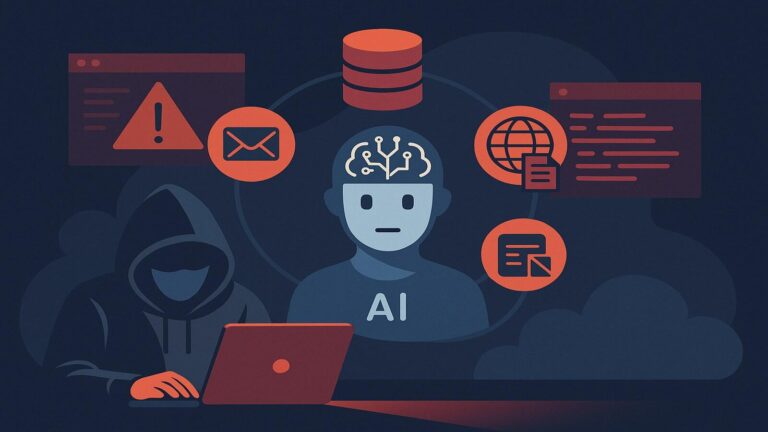
Artificial Intelligence has transformed the modern workplace by making tasks faster, smarter, and more efficient. Employees now use AI tools to draft emails, generate reports, write code, summarize meetings, analyze data, and even create marketing content within seconds. While these capabilities significantly improve productivity, they have also introduced a growing cybersecurity and governance challenge known as Shadow AI.
Shadow AI refers to the use of AI applications, platforms, or services by employees without the knowledge, approval, or oversight of an organization’s IT or security team. Just as “Shadow IT” emerged when employees installed unauthorized software or cloud services, Shadow AI has become its modern equivalent, except the risks are even greater because these tools often process sensitive business information.
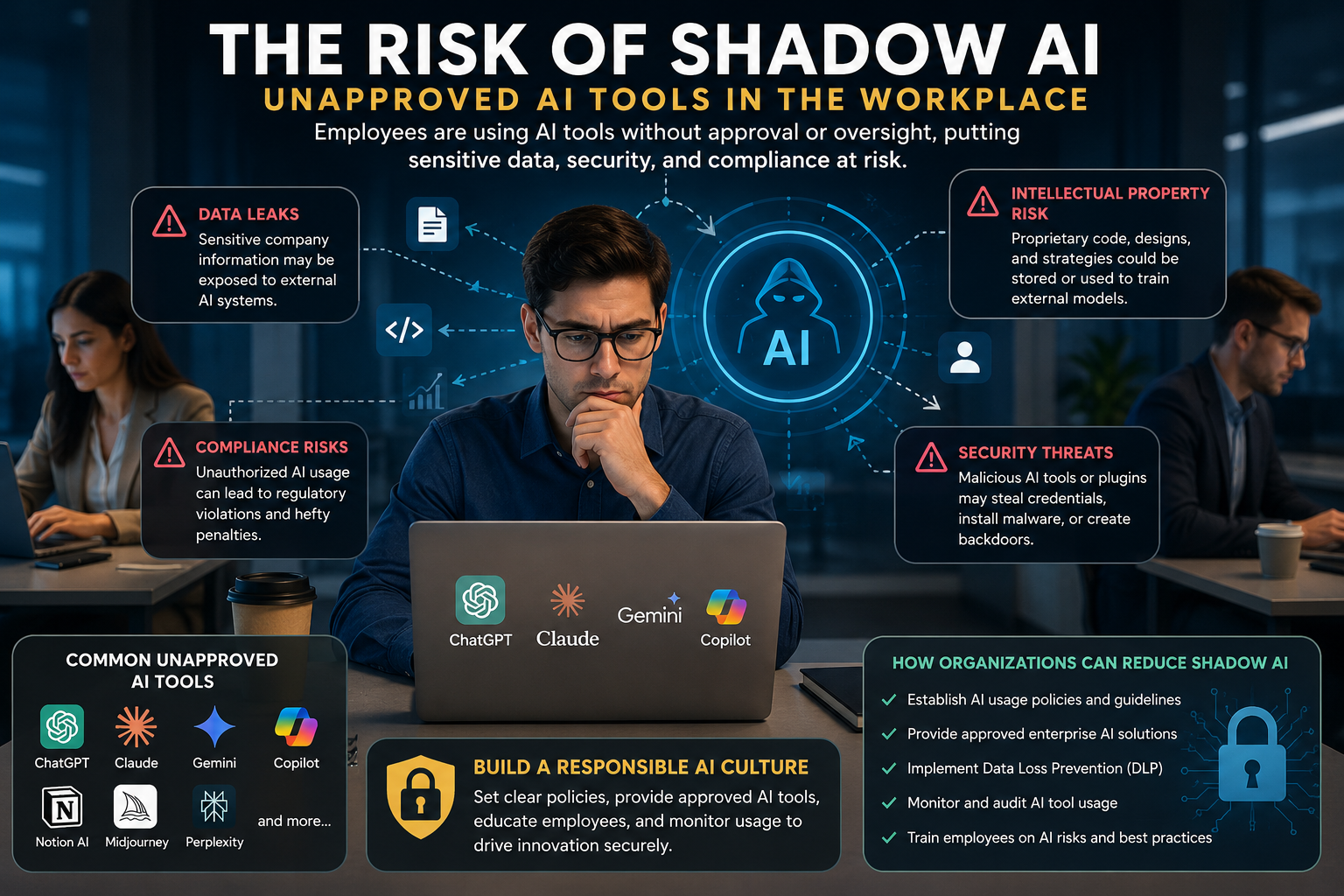
Organizations across industries are discovering that employees may be uploading confidential documents, customer records, source code, financial data, or strategic plans into public AI systems simply to save time. While the intention is usually to improve efficiency rather than cause harm, the consequences can include data leaks, compliance violations, intellectual property exposure, and cybersecurity incidents.
Understanding Shadow AI
Shadow AI occurs whenever workers use artificial intelligence tools that have not been officially approved by their organization. These tools may include AI chatbots, image generators, coding assistants, document summarizers, transcription platforms, or automation services.
For example, an employee preparing a business proposal may copy confidential client information into a public AI chatbot to improve the writing quality. A software developer might paste proprietary source code into an AI coding assistant to identify bugs. A marketing executive may upload internal campaign strategies to generate creative ideas.
Although these actions seem harmless and productive, the organization often has no visibility into where the information is stored, how it is processed, or whether it may be retained for future model training depending on the service and its settings.
Why Employees Use Shadow AI
The rapid growth of AI has created enormous pressure to work faster and produce better results. Employees frequently adopt AI tools because they are easy to access and often free or inexpensive.
Many organizations have not yet established clear AI policies or approved enterprise solutions. As a result, workers simply choose whichever AI platform helps them complete tasks quickly. They may believe that using AI is no different from using a search engine or grammar checker, without understanding the potential security implications.
The popularity of generative AI has also been fueled by social media, online tutorials, and success stories that encourage experimentation, making Shadow AI a widespread phenomenon.
The Biggest Security Risks
The primary concern with Shadow AI is the accidental exposure of sensitive information.
When employees upload confidential business documents into external AI platforms, they may unknowingly share:
● Customer information
● Financial records
● Employee data
● Internal business strategies
● Product designs
● Source code
● Legal documents
● Research and development information
If this information is stored or processed outside organizational controls, it can create serious privacy and security challenges.
Another major risk is intellectual property leakage. Companies invest significant resources in developing proprietary technologies and business strategies. Uploading these assets to unauthorized AI systems could weaken competitive advantages or violate contractual obligations.
Compliance and Regulatory Challenges
Many industries must comply with strict data protection regulations and contractual requirements. Healthcare organizations, financial institutions, government agencies, and multinational corporations often handle highly sensitive information.
If employees process regulated data through unauthorized AI platforms, organizations may face:
● Regulatory penalties
● Compliance failures
● Legal disputes
● Contract breaches
● Loss of customer trust
● Reputational damage
Even when no data breach occurs, the inability to demonstrate proper governance can create significant business risks.
Cybersecurity Concerns Beyond Data Leakage
Shadow AI is not limited to privacy issues. Cybercriminals can exploit AI-related behaviors in multiple ways.
Fake AI websites and malicious browser extensions may steal credentials or install malware. Employees searching for new AI productivity tools may unknowingly download compromised software.
Attackers can also create convincing phishing emails, fake documents, or deepfake content using AI, increasing the sophistication of social engineering attacks.
Furthermore, AI-generated code suggestions may occasionally introduce insecure programming practices if developers rely on them without proper review.
The Business Impact
The consequences of Shadow AI extend beyond cybersecurity.
An organization that lacks visibility into AI usage may struggle to maintain consistent quality, governance, and accountability. Different departments may rely on different AI systems, creating inconsistent outputs and making auditing more difficult.
If confidential information is exposed, organizations may experience:
● Financial losses
● Regulatory investigations
● Customer dissatisfaction
● Competitive disadvantages
● Operational disruptions
● Brand reputation damage
In severe cases, a single employee’s attempt to improve productivity could trigger a significant security incident.
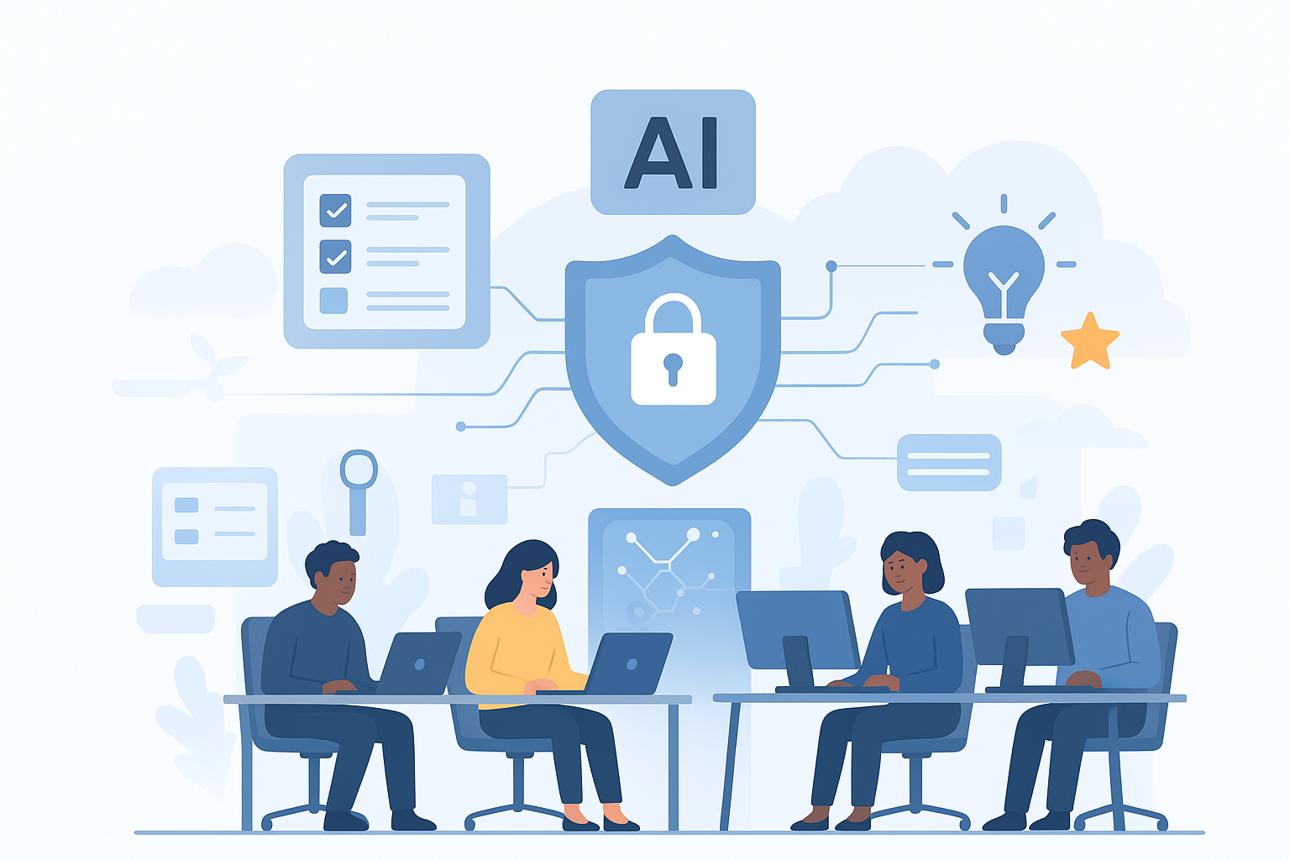
Building a Responsible AI Culture
Completely banning AI is neither practical nor beneficial. AI has become an essential productivity tool, and organizations that prohibit it entirely may fall behind competitors.
Instead, businesses should focus on responsible adoption by creating clear governance frameworks. Employees should understand which AI tools are approved, what types of information can be shared, and when human review is required.
Training programs should emphasize both the benefits and risks of AI, helping employees make informed decisions rather than relying on assumptions.
Technical Controls That Reduce Shadow AI
Organizations can implement technical measures to manage AI usage safely. These may include:
● AI usage policies and governance frameworks
● Approved enterprise AI platforms
● Data loss prevention (DLP) solutions
● Network and application monitoring
● Access controls and identity management
● Security awareness training
● Regular audits of AI usage
● Vendor risk assessments
● Logging and monitoring of AI interactions
● Clear incident response procedures
These controls allow organizations to benefit from AI innovation while protecting sensitive information.
The Future of Shadow AI
As artificial intelligence becomes integrated into everyday business operations, Shadow AI will likely become one of the most significant governance challenges for enterprises. The issue is not that employees want to bypass security policies; rather, they often seek the fastest way to solve problems and increase productivity.
Organizations that embrace AI responsibly, provide secure alternatives, and educate their workforce will be better positioned to balance innovation with security. Instead of viewing AI as a threat, businesses should establish policies and technologies that enable its safe and effective use.
Some of the most popular AI tools used in workplaces today include:
● ChatGPT – Generates text, summarizes documents, writes code, and answers questions.
● Google Gemini – Assists with writing, research, coding, and productivity tasks.
● Microsoft Copilot – Integrates with Microsoft 365 to help create documents, presentations, emails, and analyze data.
● Claude – Useful for long-form writing, document analysis, and coding assistance.
● GitHub Copilot – Helps developers write and review code.
● Midjourney – Creates images from text prompts.
● DALL·E – Generates and edits images using AI.
● Perplexity – Combines web search with AI-generated answers and citations.
In the context of Shadow AI, these tools become a risk when employees use them without organizational approval or upload confidential company information into them, potentially exposing sensitive data. Organizations should establish clear AI policies and provide approved enterprise AI solutions to minimize these risks.
Conclusion
Shadow AI represents one of the most important cybersecurity and governance challenges in today’s digital workplace. Unauthorized AI tools can improve productivity but also expose organizations to data breaches, compliance violations, intellectual property loss, and operational risks. The solution is not to eliminate AI but to implement strong governance, employee education, and secure enterprise-approved platforms. By balancing innovation with security, organizations can unlock the benefits of artificial intelligence while minimizing the hidden dangers of Shadow AI.
FAQs
1. What is Shadow AI?
Shadow AI is the use of artificial intelligence tools or applications by employees without approval or oversight from their organization’s IT or security teams.
2. Why is Shadow AI dangerous?
It can lead to data leaks, compliance violations, intellectual property exposure, and cybersecurity risks when sensitive information is shared with unauthorized AI services.
3. How can companies reduce Shadow AI?
Companies should establish AI governance policies, provide approved AI tools, educate employees, monitor usage, and implement security controls such as Data Loss Prevention (DLP).
4. Is Shadow AI the same as Shadow IT?
No. Shadow IT involves unauthorized software or hardware, while Shadow AI specifically refers to unauthorized AI applications and services used within an organization.
5. Should organizations ban AI tools completely?
Generally, no. A better approach is responsible AI adoption through clear policies, secure enterprise solutions, employee training, and continuous monitoring rather than a complete ban.