
In today’s digital world, cyber threats are evolving at an unprecedented pace. Organizations invest millions of dollars in cybersecurity technologies, employee training, and security monitoring, yet attackers continue to discover new ways to bypass defenses. Among the most dangerous of these threats are zero-day exploits, which have the ability to compromise systems before developers or security teams even realize a vulnerability exists. Unlike common cyberattacks that target known weaknesses with available patches, zero-day exploits capitalize on undiscovered or unpatched software flaws, leaving organizations virtually defenseless during the initial stages of an attack.
Zero-day vulnerabilities have become a favorite weapon for cybercriminals, nation-state hackers, and advanced persistent threat (APT) groups because they offer a high chance of success. Once discovered by attackers, these vulnerabilities can be exploited to steal sensitive data, deploy ransomware, spy on users, or gain complete control over critical systems. Understanding how zero-day exploits work and learning effective defense strategies has therefore become essential for businesses and individuals alike.
What Is a Zero-Day Exploit?
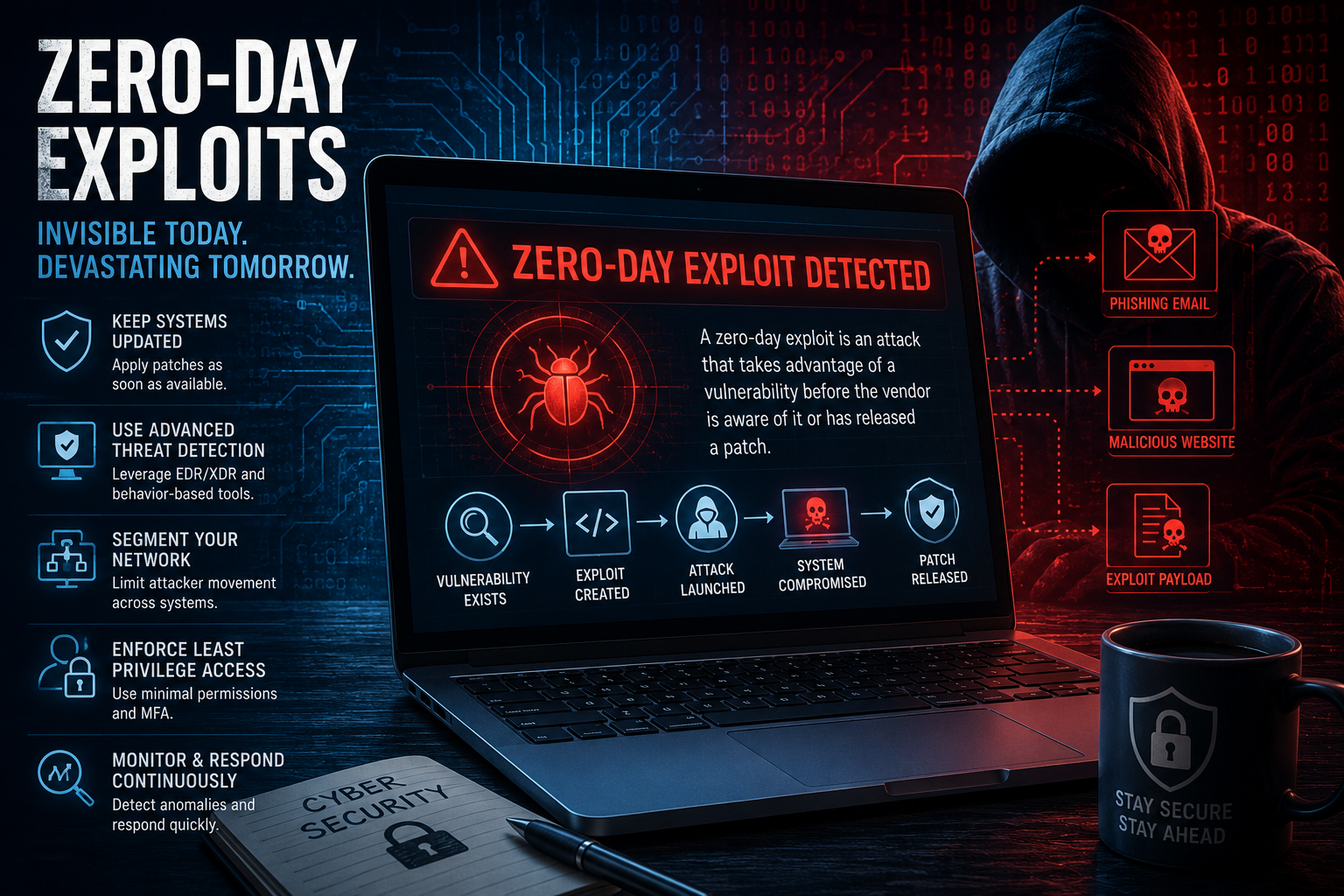
A zero-day exploit refers to an attack that takes advantage of a software vulnerability before the software vendor or developer has had the opportunity to fix it. The term “zero-day” signifies that the developer has had zero days to create and distribute a patch after becoming aware of the vulnerability.
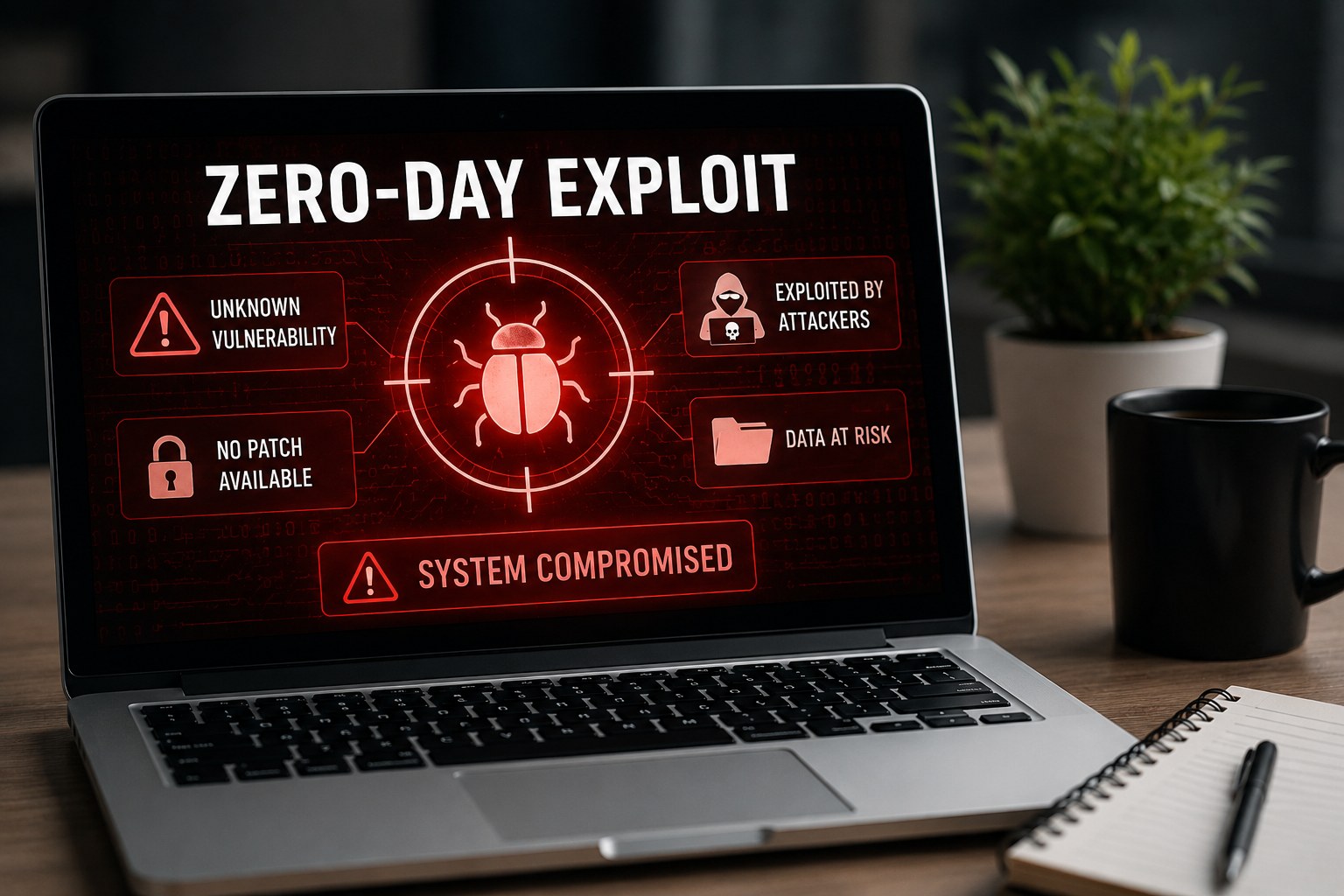
The process usually begins when a flaw exists within an operating system, application, browser, or hardware firmware. An attacker discovers this flaw and develops malicious code capable of exploiting it. Since the vulnerability is unknown to the software vendor and cybersecurity community, traditional antivirus solutions and signature-based detection systems often fail to recognize the attack.
The sequence generally follows this pattern:
● A hidden vulnerability exists in software.
● An attacker discovers the flaw before the vendor.
● The attacker creates an exploit to abuse it.
● Victims are attacked before a security patch becomes available.
● The vendor eventually identifies the issue and releases a fix.
● Organizations that delay patching remain vulnerable even after the update is released.
This window between discovery and remediation is what makes zero-day exploits particularly dangerous.
Why Zero-Day Exploits Are So Dangerous
The primary reason zero-day exploits are feared is the element of surprise. Security tools are typically designed to detect known attack patterns or malware signatures. Since zero-day exploits target previously unknown vulnerabilities, there are often no existing signatures or indicators available.
Attackers can therefore operate with greater stealth, bypassing conventional defenses while maintaining persistence inside compromised networks. By the time security teams detect suspicious activity, valuable information may already have been stolen or systems encrypted by ransomware.
Modern organizations also rely on interconnected cloud services, APIs, mobile applications, and Internet of Things (IoT) devices. A single zero-day vulnerability in one component can potentially provide attackers with access to an entire infrastructure.
How Attackers Discover Zero-Day Vulnerabilities
Finding a zero-day vulnerability requires extensive technical expertise. Cybercriminals analyze software code, reverse-engineer applications, and conduct intensive testing to identify weaknesses that developers may have overlooked.
Some attackers use automated fuzzing techniques, which involve feeding unexpected or random inputs into software to trigger crashes or abnormal behavior. Others inspect memory management, authentication mechanisms, or communication protocols to locate exploitable flaws.
In some cases, zero-day vulnerabilities are purchased on underground marketplaces where security researchers or malicious actors sell information for substantial sums. Highly valuable vulnerabilities affecting popular operating systems or enterprise software can command hundreds of thousands or even millions of dollars.
Real-World Examples of Zero-Day Attacks
History has demonstrated how devastating zero-day exploits can be.
The Stuxnet malware targeted industrial control systems and exploited multiple zero-day vulnerabilities to sabotage critical infrastructure. It showcased how cyber weapons could cause physical damage through software exploitation.
The Log4Shell vulnerability revealed how a widely used software component could expose millions of systems worldwide. Organizations across industries rushed to patch their environments after security researchers disclosed the flaw, illustrating how quickly zero-day-style vulnerabilities can create global security crises.
Similarly, vulnerabilities affecting major web browsers, mobile operating systems, and enterprise collaboration platforms have repeatedly been exploited before patches became available, compromising governments, businesses, and individual users alike.
These incidents demonstrate that no organization is immune, regardless of size or industry.
The Lifecycle of a Zero-Day Exploit
A zero-day exploit generally progresses through several stages. Initially, a vulnerability exists silently within software. An attacker discovers and weaponizes it into an exploit capable of executing malicious actions.
The exploit is then delivered through phishing emails, compromised websites, malicious documents, infected downloads, or supply-chain attacks. Once executed, the attacker may install malware, establish remote access, steal credentials, or move laterally across networks.
Eventually, security researchers or the software vendor identify the vulnerability and develop a patch. Security advisories are published, and organizations begin deploying updates. However, systems that remain unpatched continue to be exposed, allowing attackers to exploit them long after public disclosure.
How Organizations Can Defend Against Zero-Day Exploits
Although preventing every zero-day attack is impossible, organizations can significantly reduce their risk by adopting a layered cybersecurity strategy.
Keeping software updated remains one of the most effective defenses. Once vendors release patches, organizations should deploy them quickly through a structured vulnerability management process. Delayed patching unnecessarily extends exposure.
Endpoint Detection and Response (EDR) and Extended Detection and Response (XDR) solutions enhance security by identifying suspicious behaviors rather than relying solely on known malware signatures. Behavioral analytics can detect unusual system activity indicative of zero-day exploitation.
Network segmentation is another valuable defense. Separating critical systems into isolated network zones limits an attacker’s ability to move laterally if one device becomes compromised.
The principle of least privilege also plays an important role. Users and applications should receive only the minimum permissions required to perform their functions. Restricting administrative access reduces the potential damage of successful exploitation.
Application whitelisting prevents unauthorized programs from executing, while multi-factor authentication helps protect accounts even if credentials are stolen during an attack.
Regular security monitoring and threat hunting enable security teams to identify anomalies before attackers achieve their objectives. Combining automated detection with skilled analysts improves the likelihood of discovering sophisticated threats early.
Equally important are secure software development practices. Organizations that develop applications should incorporate code reviews, penetration testing, static analysis, dynamic analysis, and vulnerability scanning throughout the software development lifecycle to identify weaknesses before deployment.
The Importance of Threat Intelligence
Threat intelligence allows organizations to stay informed about emerging vulnerabilities, attacker techniques, and active exploitation campaigns. Security teams can use this information to prioritize defensive measures and proactively monitor systems for indicators of compromise.
By integrating threat intelligence into Security Operations Centers (SOCs), organizations gain greater visibility into evolving risks and can respond more effectively when new vulnerabilities are disclosed.
The Human Factor
Technology alone cannot eliminate the risk posed by zero-day exploits. Employees remain one of the most common entry points for cyberattacks through phishing emails, malicious attachments, and social engineering tactics.
Regular cybersecurity awareness training helps users recognize suspicious emails, avoid unsafe downloads, and report unusual activity promptly. A well-informed workforce serves as an additional layer of defense against sophisticated attacks.
The Future of Zero-Day Threats
As artificial intelligence and automation become more advanced, both defenders and attackers are gaining new capabilities. AI-powered tools can accelerate vulnerability discovery, generate exploit code, and automate attack campaigns. At the same time, defenders are leveraging machine learning to detect behavioral anomalies and respond to incidents more rapidly.
The cybersecurity landscape will continue evolving, making proactive defense, continuous monitoring, and rapid incident response increasingly important. Organizations that embrace a defense-in-depth strategy will be better positioned to withstand future zero-day attacks.
Conclusion
Zero-day exploits represent one of the most challenging threats in modern cybersecurity because they target vulnerabilities that are unknown or unpatched. Their unpredictability and ability to evade traditional defenses make them highly valuable to attackers and highly dangerous for organizations. While no defense can guarantee complete protection, combining timely patch management, behavioral threat detection, network segmentation, least-privilege access controls, threat intelligence, and employee awareness creates a strong security posture. In an era where new vulnerabilities emerge constantly, preparedness and continuous vigilance remain the best defenses against zero-day attacks.
Frequently Asked Questions (FAQs)
1. What is a zero-day exploit?
A zero-day exploit is a cyberattack that takes advantage of a software vulnerability before the software developer or vendor has released a patch or fix, leaving users exposed to potential attacks.
2. Why are zero-day exploits considered so dangerous?
They are dangerous because security tools often cannot detect them, and there is no available patch when the attack begins. This gives attackers a significant advantage over defenders.
3. How do hackers discover zero-day vulnerabilities?
Hackers may find them through code analysis, reverse engineering, fuzz testing, or by purchasing vulnerability information from underground marketplaces or other researchers.
4. How can organizations protect themselves from zero-day attacks?
Organizations can reduce the risk by keeping software updated, using Endpoint Detection and Response (EDR) solutions, implementing network segmentation, enforcing multi-factor authentication, monitoring systems continuously, and training employees on cybersecurity best practices.
5. Can zero-day exploits be completely prevented?
No, it is impossible to completely prevent zero-day exploits because they involve previously unknown vulnerabilities. However, a layered security strategy and rapid incident response can greatly minimize their impact.