Table of Contents
Introduction
The modern workplace has transformed dramatically over the past decade. Employees no longer rely solely on company-managed software to perform their daily tasks. Instead, they frequently adopt cloud-based applications such as project management tools, AI assistants, file-sharing platforms, note-taking apps, marketing software, and communication platforms without involving the IT department. At the same time, businesses increasingly depend on Application Programming Interfaces (APIs) to connect applications, automate workflows, and exchange data seamlessly.
While these technologies improve productivity and innovation, they also introduce significant security challenges. Two of the most overlooked threats in today’s digital environment are Shadow SaaS and unmonitored API tokens. These hidden assets often exist outside the organization’s visibility, creating blind spots that cybercriminals actively exploit.
Unlike traditional cyberattacks that rely on sophisticated malware, many modern breaches occur simply because organizations lose track of who has access to their data and which applications are connected to their systems.
Understanding Shadow SaaS
Shadow SaaS refers to cloud applications that employees begin using without approval or oversight from the organization’s IT or security teams. These services may appear harmless at first, but they often gain access to sensitive corporate information.
For example, an employee may upload confidential documents to an AI writing assistant for editing, synchronize customer information with an unofficial CRM tool, store financial spreadsheets in a personal cloud storage account, or connect an external automation platform to internal databases. While each decision may seem convenient, collectively these unauthorized services create an invisible ecosystem that security teams cannot monitor effectively.
The popularity of remote work, hybrid workplaces, and subscription-based software has significantly accelerated the growth of Shadow SaaS. Since most cloud applications require only an email address to create an account, employees can begin using them within minutes without requesting permission.
Over time, organizations may unknowingly accumulate hundreds or even thousands of unmanaged SaaS applications connected to their corporate environment.
Why Employees Use Shadow SaaS
Most employees do not intentionally violate security policies. Instead, they seek faster ways to complete their work. Official software approval processes may take days or weeks, while a cloud application can be activated almost instantly.
Employees often adopt unauthorized SaaS applications because they:
- Want additional productivity features.
- Need collaboration tools unavailable internally.
- Prefer AI-powered assistants.
- Require temporary software for a project.
- Find existing enterprise software difficult to use.
Although these reasons are understandable, they frequently bypass essential security reviews.
What Are API Tokens?
Modern software rarely works in isolation. APIs allow different applications to communicate automatically. Instead of entering usernames and passwords repeatedly, applications often authenticate using API tokens.
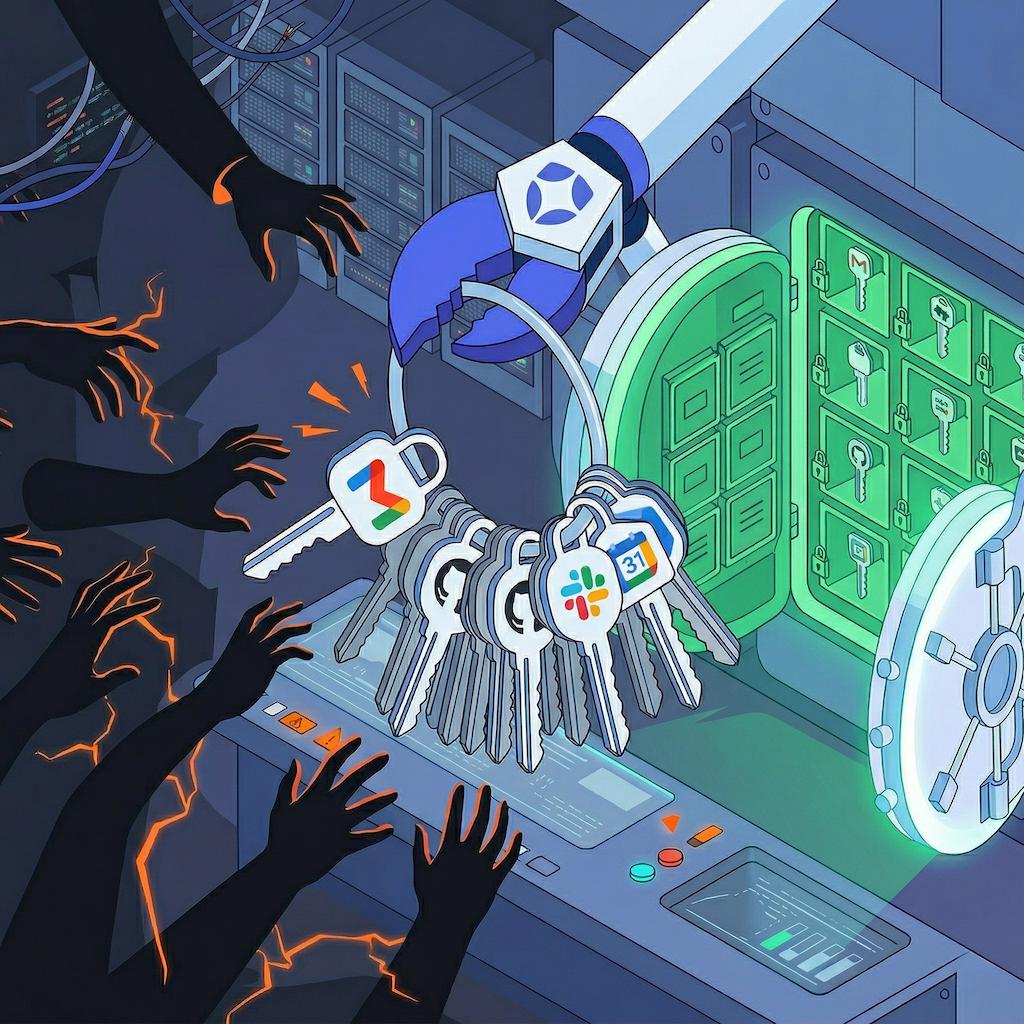
An API token functions like a digital key. Once issued, it allows one application to access another system according to assigned permissions.
For instance:
- A marketing platform accesses CRM customer records.
- A payment gateway updates transaction data.
- A chatbot retrieves support tickets.
- A project management application synchronizes employee information.
- AI assistants connect to document repositories.
These integrations make business operations more efficient but also introduce hidden risks if tokens remain active indefinitely.
The Hidden Danger of Unmonitored API Tokens
Many organizations create API tokens during software deployment but rarely revisit them afterward. Months or even years later, these credentials may still possess extensive permissions despite no longer being necessary.
Some API tokens remain active after:
- Employees leave the company.
- Third-party contracts expire.
- Software subscriptions end.
- Development projects finish.
- Temporary integrations are abandoned.
Because API tokens often operate silently in the background, security teams may not realize they still exist.
If an attacker discovers one of these forgotten tokens through leaked source code, exposed configuration files, phishing attacks, or compromised developer accounts, they can gain direct access without needing traditional login credentials.
Unlike passwords, API tokens frequently bypass multi-factor authentication, making them especially attractive to cybercriminals.
How Shadow SaaS and API Tokens Work Together
The combination of Shadow SaaS and forgotten API tokens creates a particularly dangerous security scenario.
Imagine an employee signs up for an unofficial AI productivity platform and grants it access to the company’s cloud storage using an API token. Months later, the employee stops using the platform but never revokes the authorization.
If that SaaS provider experiences a breach, attackers may obtain the stored API token and continue accessing corporate files even though nobody inside the company remembers the integration exists.
This situation illustrates why visibility is one of the most important aspects of cybersecurity.
Organizations cannot protect assets they do not know they possess.
Real Business Risks
The consequences of unmanaged SaaS applications and forgotten API tokens extend far beyond IT departments.
Sensitive customer information may become accessible through unauthorized applications.
Financial reports could be synchronized to personal cloud storage services.
Intellectual property may be exposed through AI platforms.
Compliance regulations such as GDPR, ISO 27001, HIPAA, or PCI DSS may be violated due to uncontrolled data sharing.
Attackers may establish persistent access using compromised API credentials without triggering traditional login alerts.
Because these threats often develop gradually rather than through dramatic attacks, organizations may remain unaware for months before discovering a breach.
Common Ways Attackers Exploit These Weaknesses
Cybercriminals increasingly target cloud environments instead of traditional networks.
Some common attack techniques include:
- Stealing API tokens from public GitHub repositories.
- Extracting tokens from compromised employee devices.
- Phishing developers to obtain cloud credentials.
- Exploiting vulnerable SaaS providers.
- Abusing excessive API permissions.
- Leveraging forgotten integrations for lateral movement.
These attacks frequently succeed because organizations lack complete visibility into their cloud ecosystem.
How Organizations Can Reduce the Risk
Effective protection begins with visibility. Organizations should regularly discover all SaaS applications connected to corporate identities and continuously monitor new software registrations.
Identity and Access Management (IAM) solutions should enforce strong authentication while limiting unnecessary permissions. Every API token should follow the principle of least privilege, granting only the minimum access required for specific tasks.
Security teams should also implement token rotation policies so credentials expire automatically rather than remaining valid indefinitely. Regular audits help identify unused integrations that should be removed.
Cloud Access Security Brokers (CASBs) and SaaS Security Posture Management (SSPM) platforms provide valuable insight into unauthorized cloud applications and risky configurations. Endpoint Detection and Response (EDR), Security Information and Event Management (SIEM), and Extended Detection and Response (XDR) platforms can further improve visibility by correlating suspicious activities across cloud environments.
Employee awareness is equally important. Staff should understand the risks of connecting personal applications to business accounts and be encouraged to request approved alternatives instead of creating unofficial solutions.
The Role of FireShark Technologies
Organizations seeking stronger cloud security should adopt a proactive security strategy rather than waiting for incidents to occur.
FireShark Technologies helps businesses strengthen their cybersecurity posture through services such as:
- Vulnerability Assessment and Penetration Testing (VAPT)
- Cloud Security Assessments
- API Security Testing
- Web Application Security Testing
- Security Awareness Training
- Security Monitoring and Threat Intelligence
- Incident Response and Digital Forensics
- Compliance and Risk Assessment
By identifying hidden SaaS applications, reviewing API security, and assessing cloud environments, organizations can significantly reduce their attack surface before cybercriminals exploit it.
Conclusion
Shadow SaaS and unmonitored API tokens represent two of the fastest-growing yet least visible cybersecurity threats facing modern organizations. As businesses continue adopting cloud technologies, AI-powered applications, and automated integrations, maintaining visibility over every connected service becomes increasingly important.
Strong cybersecurity is no longer limited to protecting endpoints and networks. It now requires understanding every cloud application, every API connection, and every digital identity interacting with corporate data. Organizations that continuously monitor these assets, enforce least-privilege access, rotate API credentials, and educate employees will be far better positioned to prevent breaches and maintain customer trust in an increasingly interconnected digital world.
Frequently Asked Questions (FAQs)
What is Shadow SaaS?
Shadow SaaS refers to cloud applications employees use without approval or visibility from the organization’s IT or security teams.
Why are API tokens considered a security risk?
API tokens can provide long-term access to systems. If they are not monitored, rotated, or revoked, attackers can exploit them to gain unauthorized access without using passwords.
How can organizations detect Shadow SaaS?
Organizations can use SaaS Security Posture Management (SSPM), Cloud Access Security Brokers (CASB), identity management tools, and regular security audits to discover unauthorized cloud applications.
Can API tokens bypass Multi-Factor Authentication (MFA)?
Yes. Once an API token is issued, it typically authenticates requests directly and usually does not require MFA for every use, making proper management essential.
How can FireShark Technologies help?
FireShark Technologies provides VAPT, API Security Testing, Cloud Security Assessments, Security Monitoring, Incident Response, Compliance Consulting, and Security Awareness Training to help organizations identify and mitigate hidden cloud security risks.