Introduction
Artificial Intelligence (AI) is transforming the world in many positive ways. Businesses use AI to improve customer service, automate tasks, analyze data, and increase productivity. However, cybercriminals are also taking advantage of AI to launch smarter and more dangerous cyberattacks.
Traditional cyberattacks already pose serious risks to businesses and individuals, but AI-powered attacks are making cybersecurity even more challenging. Hackers can now automate attacks, create realistic phishing emails, bypass security systems, and steal sensitive information faster than ever before.
As technology continues to evolve, organizations must understand how AI is being used in cybercrime and how they can protect themselves from these advanced threats.
What Are AI-Powered Cyber Attacks?
AI-powered cyberattacks are attacks where hackers use artificial intelligence and machine learning tools to improve the speed, accuracy, and effectiveness of their malicious activities.
Unlike traditional attacks that require significant manual effort, AI can help attackers
- Analyze huge amounts of data quickly
- Identify vulnerabilities automatically
- Mimic human behavior
- Generate convincing fake content
- Automate hacking attempts at scale
These attacks are becoming more sophisticated because AI can continuously learn and adapt based on the target’s behavior and security systems.
Why AI-Powered Attacks Are Increasing
There are several reasons why AI-based cyber threats are growing rapidly:
- AI tools are becoming easily accessible
- Businesses store large amounts of digital data
- Remote work environments increase vulnerabilities
- Cloud services are widely used
- Employees rely heavily on digital communication
- Cybercriminals can automate attacks with less effort
Many organizations are still not fully prepared for these evolving threats, which makes them attractive targets for attackers.
Common Types of AI-Powered Cyber Attacks
1. AI-Generated Phishing Emails
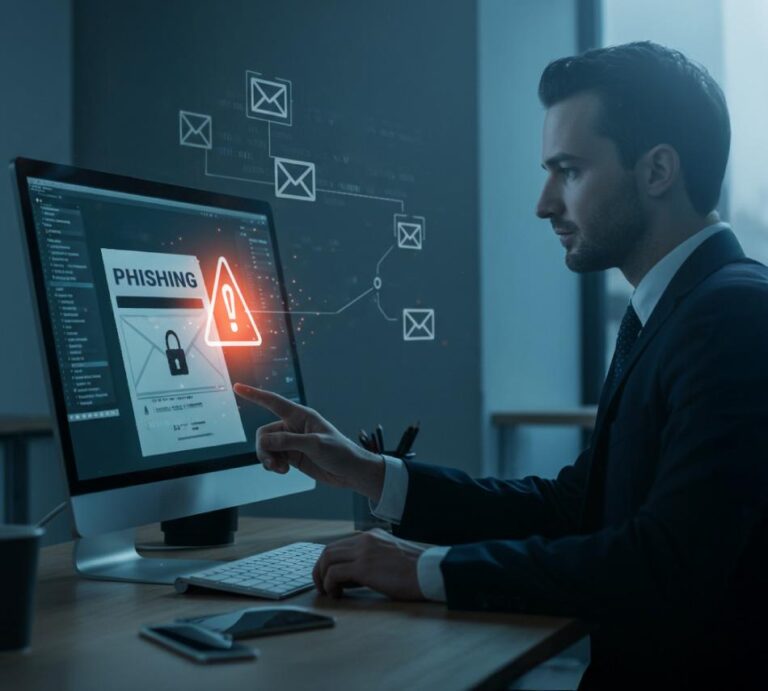
Phishing attacks are one of the most common cyber threats. Earlier, phishing emails often contained spelling mistakes and poor grammar, making them easier to detect. However, AI tools can now generate highly professional and personalized emails.
Hackers use AI to:
- Study social media profiles
- Analyse communication patterns
- Create realistic business emails
- Mimic writing styles of company executives
These emails look genuine and can trick employees into sharing passwords, banking details, or confidential company information.
Cybersecurity companies like FireShark continuously educate businesses about identifying advanced phishing attempts and improving email security awareness.
2. AI-Powered Malware
Modern malware is becoming smarter with the help of AI. Traditional antivirus software often detects threats based on known signatures, but AI-powered malware can adapt and change its behavior to avoid detection.
Features of AI-based malware include:
- Self-learning capabilities
- Automatic spreading across networks
- Detection avoidance techniques
- Real-time adaptation to security measures This makes it harder for organizations to identify and stop attacks before damage occurs.
Security experts at FireShark recommend continuous monitoring and AI-driven defense systems to detect suspicious activities early.
3. Deepfake Attacks
Deepfake technology uses AI to create fake audio, video, or images that appear real. Cybercriminals use deepfakes to impersonate executives, employees, or public figures.
For example:
- Fake voice recordings can authorize financial transfers
- Deepfake videos can spread misinformation
- Fake identities can bypass verification systems
Businesses are increasingly becoming victims of social engineering attacks involving deepfake technology.
4. Automated Password Cracking
Hackers use AI tools to crack passwords much faster than traditional brute-force methods. AI can study password patterns and predict commonly used combinations.
Weak passwords make organizations highly vulnerable to these attacks.
To reduce risks:
- Use strong passwords
- Enable multi-factor authentication (MFA)
- Avoid password reuse
- Use password managers
Companies such as FireShark emphasize the importance of strong authentication systems and employee cybersecurity training.
5. AI-Driven Social Engineering
Social engineering attacks manipulate people into revealing confidential information. AI helps attackers create more convincing conversations and fake identities.
Examples include:
- AI chatbots pretending to be customer support
- Fake job interview scams
- Personalized scam messages
- AI-generated phone calls
These attacks target human psychology rather than technical vulnerabilities.
6. Intelligent Vulnerability Scanning
Hackers use AI to scan networks and identify weak points automatically.
AI tools can:
- Detect outdated software
- Find exposed databases
- Identify insecure configurations
- Search for vulnerable devices
- This allows cybercriminals to launch attacks faster and more efficiently.
Organizations should regularly update systems, patch vulnerabilities, and conduct security assessments to stay protected.
Cybersecurity providers like FireShark help businesses identify vulnerabilities before hackers can exploit them.
Industries Most at Risk
AI-powered cyberattacks can target almost any industry, but some sectors face higher risks due to the sensitive data they manage.
High-risk industries include:
- Banking and finance
- Healthcare
- Government organizations
- E-commerce businesses
- Educational institutions
- Technology companies
These sectors often store valuable customer information, financial records, and confidential business data.
How Businesses Can Protect Themselves
1. Employee Cybersecurity Training
Employees should understand:
- How phishing attacks work
- How to identify suspicious emails
- Safe browsing practices
- Password security
Human awareness is one of the strongest defenses against cyber threats.
2. Use AI-Based Security Solutions
Organizations should also use AI for defense. AI-powered security systems can:
- Detect unusual behavior
- Monitor network activity
- Identify threats in real time
- Automate incident response
AI can help cybersecurity teams respond faster to attacks.
3. Enable Multi-Factor Authentication
MFA adds an extra layer of protection by requiring additional verification beyond passwords.
Even if hackers steal passwords, MFA can prevent unauthorized access.
4. Regular Software Updates
Outdated software often contains vulnerabilities that attackers exploit.
Businesses should:
- Install updates regularly
- Patch security vulnerabilities
- Remove unsupported software
5. Backup Important Data
Regular backups can reduce the impact of ransomware and data loss attacks.
Backups should be:
- Stored securely
- Updated frequently
- Tested regularly
The Future of AI in Cybersecurity
AI will continue to shape both cyberattacks and cybersecurity defenses in the future. While hackers are using AI to improve attacks, cybersecurity experts are also developing advanced AI tools to detect and stop threats more effectively.
Future trends may include:
- AI-driven security automation
- Faster threat intelligence systems
- Improved fraud detection
- Advanced behavioral analysis
- Smarter endpoint protection
Organizations that invest in cybersecurity awareness and modern protection systems will be better prepared for the evolving threat landscape.
Conclusion
Artificial Intelligence is revolutionizing the cybersecurity world — both positively and negatively. Cybercriminals are using AI to create smarter phishing attacks, advanced malware, deepfakes, and automated hacking tools that are harder to detect.
As AI-powered cyber threats continue to increase, businesses must strengthen their cybersecurity strategies, educate employees, and adopt modern security solutions to stay protected. Understanding these evolving threats is the first step toward building a safer digital environment for organizations and individuals like.
Frequently Asked Questions (FAQs)
1. What are AI-powered cyber attacks?
AI-powered cyber attacks are cyber threats where hackers use artificial intelligence and machine learning tools to automate attacks, steal data, bypass security systems, and create advanced phishing scams.
2. How do hackers use AI in cybercrime?
Hackers use AI to generate phishing emails, create deepfake videos, crack passwords, scan vulnerabilities, and develop malware that can adapt to security systems.
3. Why are AI-based cyber attacks dangerous?
These attacks are more dangerous because they are faster, smarter, highly automated, and harder to detect than traditional cyber threats.
4. How can businesses protect themselves from AI-powered attacks?
Businesses can improve security by training employees, enabling multi-factor authentication, updating software regularly, using AI-based security tools, and monitoring network activity continuously.
5. Can AI also help in cybersecurity defense?Yes, AI is also used by cybersecurity professionals to detect suspicious activities, identify threats in real time, automate responses, and improve overall digital security.