
Table of Contents
Introduction
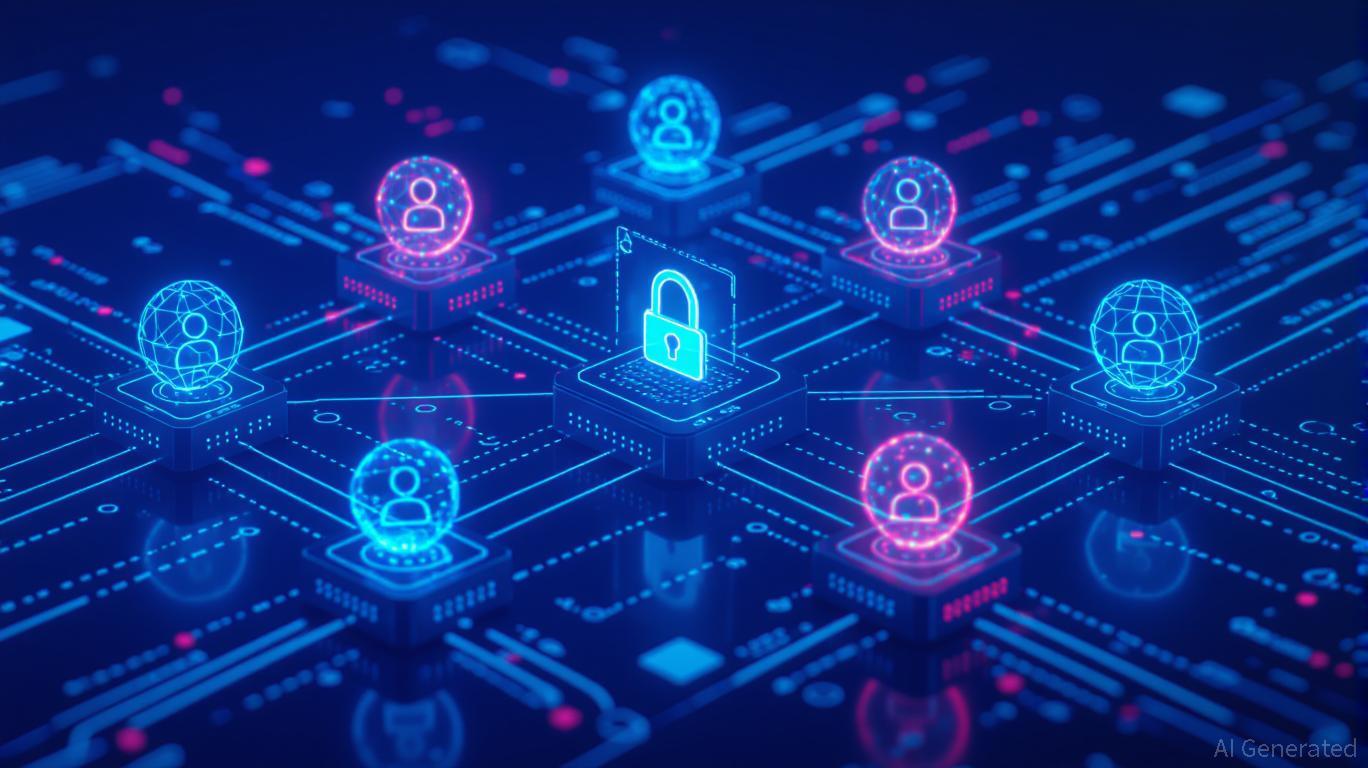
Artificial Intelligence is rapidly evolving beyond centralized cloud platforms. Instead of relying on a single organization to host, train, and operate AI models, many developers are now embracing decentralized AI infrastructure, where computation, storage, data sharing, and model training occur across distributed networks. These systems often combine blockchain technology, peer-to-peer networking, federated learning, distributed computing, and decentralized storage to eliminate single points of failure while giving users greater control over their data.
Although decentralized AI offers remarkable advantages in privacy, resilience, and transparency, it also introduces an entirely new attack surface. Every additional node, communication channel, smart contract, decentralized storage layer, and participating device becomes another potential entry point for cybercriminals.
Security researchers are increasingly discovering that many decentralized AI platforms prioritize scalability and collaboration while unintentionally overlooking critical security controls. Attackers are actively studying these weaknesses because compromising one part of a decentralized ecosystem can influence thousands of participating nodes simultaneously.
This growing threat represents one of the most important cybersecurity challenges that organizations developing AI systems will face over the next decade.
Understanding Decentralized AI Infrastructure
Traditional AI infrastructure generally follows a centralized architecture. A single cloud provider stores training data, hosts AI models, performs inference, and manages updates.
Decentralized AI distributes these responsibilities among many independent participants.
A decentralized AI ecosystem may include:
- Federated learning across multiple organizations
- Distributed model training
- Blockchain-based AI marketplaces
- Decentralized storage for datasets
- Community-owned AI models
- Edge AI devices participating in collaborative learning
- Token-based governance systems
Rather than sending sensitive information to one server, participants often train models locally before sharing model updates with the broader network. This approach improves privacy while reducing centralized control.
However, decentralization also means there is no single trusted security boundary.
Every participating device becomes part of the attack surface.
Why Attackers Prefer Decentralized AI Networks
Hackers traditionally targeted central servers because compromising one system provided access to valuable information.
Today, decentralized AI presents an even more attractive opportunity.
Instead of attacking one data center, criminals can compromise:
- Individual training nodes
- Edge devices
- Communication protocols
- Consensus mechanisms
- Smart contracts
- Model update pipelines
- Decentralized storage systems
Since thousands of independent participants contribute to the same AI ecosystem, manipulating only a small percentage of nodes may significantly influence model behavior.
This makes decentralized AI an appealing target for financially motivated attackers, nation-state groups, and cyber espionage campaigns.
Poisoning Collaborative Model Training
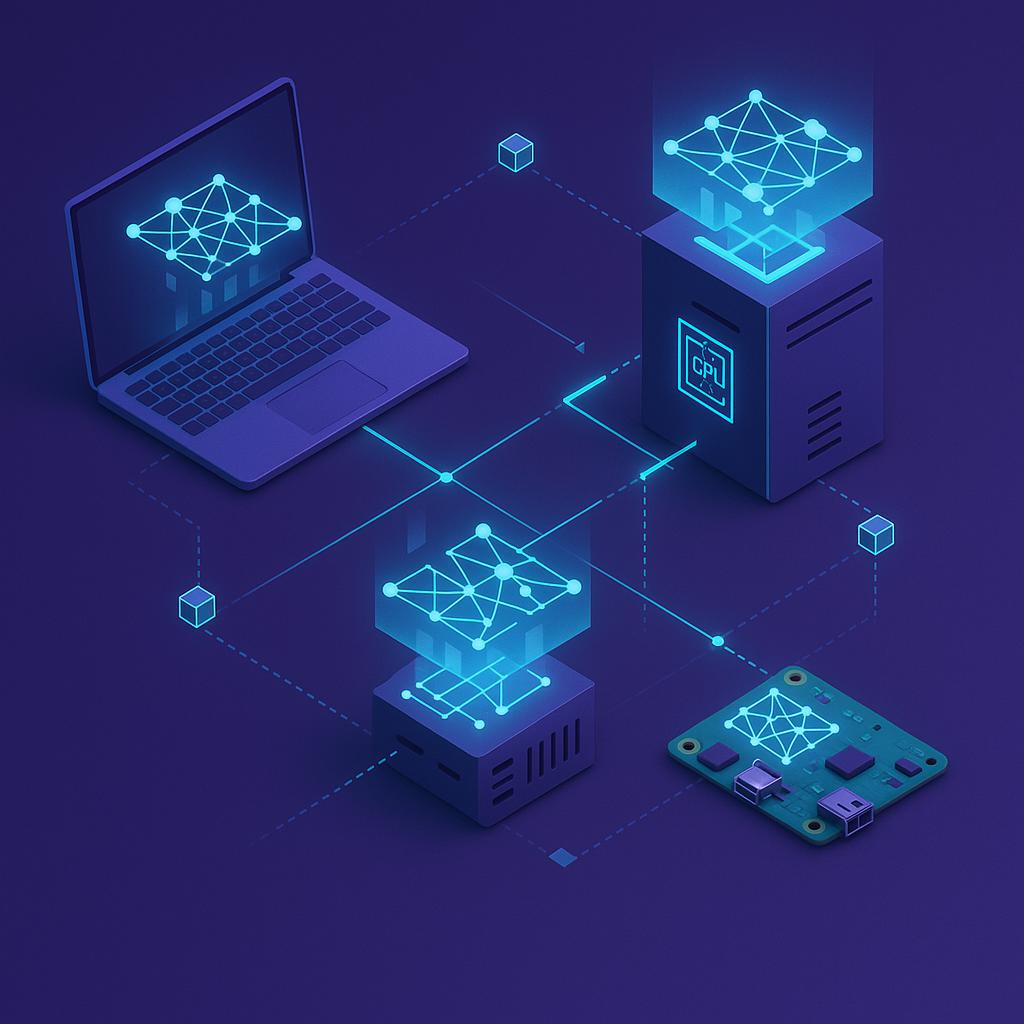
One of the most dangerous attacks against decentralized AI is model poisoning.
Instead of directly hacking the AI model, attackers participate as legitimate contributors.
During collaborative training, they intentionally submit malicious updates that gradually influence the global model.
The poisoning may appear insignificant during individual training rounds.
However, after hundreds or thousands of updates, the accumulated effect becomes substantial.
An attacker could cause the model to:
- Misclassify malware as legitimate software
- Ignore specific attack patterns
- Introduce hidden backdoors
- Favor manipulated outputs
- Produce inaccurate predictions under specific conditions
Because decentralized learning depends on contributions from many participants, detecting poisoned updates becomes increasingly difficult.
Data Poisoning Before Training Begins
Training data is the foundation of every AI model.
Attackers increasingly focus on corrupting datasets before model training even starts.
Instead of modifying the model directly, they manipulate:
- Public datasets
- Shared repositories
- Community-generated content
- Crowdsourced annotations
- Decentralized storage platforms
Even a relatively small amount of poisoned data can shift model behavior.
For example, an attacker may intentionally label malicious network traffic as normal activity.
Once incorporated into the training process, the AI gradually learns incorrect patterns.
The compromised model may later fail to detect genuine cyberattacks.
Exploiting Weak Authentication Between Nodes
Many decentralized AI systems rely on thousands of geographically distributed devices communicating continuously.
Unfortunately, authentication between nodes is not always sufficiently robust.
Attackers exploit:
- Weak API keys
- Stolen authentication tokens
- Misconfigured certificates
- Insecure peer discovery
- Default credentials
- Poor identity verification
Once attackers impersonate trusted nodes, they can inject malicious model updates, intercept communications, or manipulate distributed training processes without immediately raising suspicion.
Smart Contract Vulnerabilities
Many decentralized AI ecosystems rely on blockchain-based smart contracts to coordinate transactions, reward contributors, and manage governance.
While smart contracts eliminate some centralized risks, they introduce entirely new vulnerabilities.
Poorly written contracts may contain:
- Reentrancy flaws
- Logic errors
- Integer overflows
- Authorization mistakes
- Governance weaknesses
Attackers exploiting these vulnerabilities may redirect rewards, manipulate governance votes, or gain unauthorized access to AI resources.
Although the blockchain itself may remain secure, insecure application logic can still cause significant damage.
Sybil Attacks Against AI Networks
In decentralized environments, attackers often create thousands of fake identities.
This technique is known as a Sybil attack.
Instead of participating honestly, attackers flood the network with fraudulent nodes.
The fake participants may:
- Influence consensus decisions
- Dominate collaborative learning
- Manipulate reputation systems
- Control governance voting
- Submit coordinated poisoned updates
If identity verification mechanisms are weak, distinguishing legitimate contributors from malicious participants becomes extremely challenging.
Distributed Denial-of-Service Against AI Coordination Layers
Unlike centralized AI services, decentralized platforms rely heavily on continuous communication among nodes.
Attackers increasingly launch distributed denial-of-service (DDoS) attacks against:
- Model aggregation servers
- Bootstrap nodes
- Peer discovery services
- Blockchain gateways
- Storage coordinators
Even if the AI model itself remains intact, disrupting communication prevents participants from exchanging updates, effectively halting collaborative learning.
Compromising Edge AI Devices
Edge AI devices are among the weakest components in decentralized ecosystems.
These include:
- IoT sensors
- Smart cameras
- Industrial controllers
- Autonomous vehicles
- Mobile devices
- Medical equipment
Many operate with limited hardware resources and inconsistent security updates.
Attackers compromising these endpoints gain direct access to locally trained models and sensitive data before updates are shared across the network.
A compromised edge device may silently contribute malicious information for months before detection.
Model Backdoors Hidden Inside Collaborative Updates
Rather than poisoning an entire AI model, sophisticated attackers introduce hidden triggers.
A model may behave normally during everyday operations while secretly responding to specific inputs.
For example:
- A unique network packet sequence
- A specific image pattern
- Certain keywords
- Particular sensor readings
These hidden backdoors remain dormant until activated.
Since normal testing rarely covers every possible input combination, many backdoored models escape detection.

Exploiting Decentralized Storage Systems
Many decentralized AI projects rely on distributed storage platforms to host datasets and trained models.
Improper access controls can expose:
- Proprietary datasets
- Training checkpoints
- Sensitive research
- AI model weights
- Configuration files
Attackers may replace legitimate files with malicious versions or distribute altered models disguised as authentic releases.
Without strong integrity verification, users may unknowingly deploy compromised AI systems.
Privacy Leakage Through Model Updates
Federated learning was designed to improve privacy.
However, researchers have demonstrated that attackers can sometimes reconstruct sensitive training data from shared model updates.
Known as model inversion or gradient leakage, these attacks attempt to recover:
- Personal information
- Medical records
- Financial data
- Images
- User behavior patterns
Even when raw data never leaves local devices, improperly protected gradients may unintentionally reveal confidential information.
Supply Chain Attacks Targeting AI Dependencies
Decentralized AI platforms often depend on hundreds of open-source libraries, container images, plugins, and machine learning frameworks.
Attackers increasingly compromise these dependencies before they reach developers.
Malicious packages may include:
- Credential stealers
- Remote access backdoors
- Cryptominers
- Hidden surveillance components
Once integrated into decentralized AI infrastructure, these malicious dependencies can spread rapidly throughout the ecosystem.
Governance Manipulation
Many decentralized AI platforms allow community voting on upgrades, funding, or model changes.
Attackers may accumulate voting power through:
- Token manipulation
- Fake identities
- Economic attacks
- Social engineering
Instead of attacking infrastructure directly, they influence governance decisions that weaken security or approve malicious updates.
Defending Decentralized AI Infrastructure
Protecting decentralized AI requires security at every layer rather than relying on perimeter defenses alone.
Organizations should implement strong identity verification for participating nodes, cryptographic signing of model updates, secure aggregation protocols, continuous monitoring for anomalous training behavior, and rigorous validation of contributed data.
Smart contracts should undergo independent security audits before deployment, while decentralized storage systems should enforce integrity verification through cryptographic hashes and digital signatures.
Edge devices require regular firmware updates, hardware-backed security modules where feasible, and strict authentication mechanisms before joining collaborative learning environments.
AI developers should also continuously test models for hidden backdoors, adversarial manipulation, and poisoning attempts using dedicated security evaluation frameworks.
Finally, supply chain security—including software bill of materials (SBOMs), dependency verification, and code signing—must become standard practice to reduce the risk of compromised components entering decentralized AI ecosystems.
The Future of Decentralized AI Security
As decentralized AI becomes more common in healthcare, finance, manufacturing, autonomous systems, and critical infrastructure, attackers will continue developing increasingly sophisticated techniques to exploit distributed environments. The same openness that enables innovation can also create opportunities for adversaries if trust, identity, and integrity are not carefully protected.
Future defenses will likely rely on stronger cryptographic methods, confidential computing, zero-knowledge proofs, privacy-preserving machine learning, and AI-driven threat detection capable of identifying subtle manipulation across distributed networks. Security will no longer be an optional feature added after deployment—it will need to be embedded into every layer of decentralized AI architecture from the beginning.
Organizations that invest in secure-by-design principles today will be better prepared to harness the benefits of decentralized AI while reducing the risks posed by evolving cyber threats.
Conclusion
Decentralized AI infrastructure represents a major step forward in creating collaborative, resilient, and privacy-conscious artificial intelligence systems. Yet decentralization also expands the attack surface, providing adversaries with new opportunities to poison models, manipulate training, compromise edge devices, exploit smart contracts, and infiltrate supply chains.
The future success of decentralized AI depends on treating cybersecurity as a core architectural requirement rather than an afterthought. By combining robust authentication, secure software development, continuous monitoring, cryptographic protections, and comprehensive governance, organizations can build decentralized AI ecosystems that remain trustworthy, resilient, and capable of supporting the next generation of intelligent applications.
FAQ
1. What is decentralized AI infrastructure?
Decentralized AI infrastructure is a distributed approach to building and operating AI systems where data, model training, storage, and computing resources are spread across multiple independent nodes instead of being managed by a single centralized server. This architecture improves privacy, resilience, and scalability but also introduces new cybersecurity challenges.
2. Why is decentralized AI more vulnerable to cyberattacks?
Unlike centralized systems with a defined security perimeter, decentralized AI relies on numerous interconnected devices, networks, and participants. Each node can become a potential attack point, allowing cybercriminals to exploit weak authentication, poison training data, manipulate model updates, or compromise edge devices to influence the entire AI ecosystem.
3. What are the most common attacks against decentralized AI systems?
Some of the most common threats include model poisoning, data poisoning, Sybil attacks, smart contract exploitation, supply chain attacks, distributed denial-of-service (DDoS) attacks, model backdoors, gradient leakage, and attacks targeting edge AI devices. These techniques can disrupt AI performance, compromise sensitive data, or manipulate model behavior.
4. How can organizations secure decentralized AI infrastructure?
Organizations should adopt a security-by-design approach that includes strong identity verification, encrypted communication, secure aggregation protocols, continuous monitoring, cryptographic signing of model updates, smart contract audits, secure software supply chain practices, and regular security testing for AI models and infrastructure. Implementing Zero Trust principles and AI-specific threat detection also strengthens overall security.
5. How can FireShark help organizations secure decentralized AI environments?
FireShark Technologies provides comprehensive cybersecurity services to help organizations protect modern AI and distributed computing environments. Its offerings include Vulnerability Assessment and Penetration Testing (VAPT), Web Application and API Security Testing, Cloud Security and Infrastructure Hardening, Security Audits, SOC Monitoring and Threat Intelligence, Incident Response, Digital Forensics, and Cybersecurity Consulting. These services help businesses identify vulnerabilities, strengthen AI infrastructure, and defend against evolving cyber threats before they can be exploited.