
Introduction
Open source software is the functional baseline of modern application development. From lean technology startups to global enterprise operations, engineering teams rely extensively on public registries, open frameworks, and community-maintained packages to accelerate development cycles and lower overhead costs. Popular ecosystems like npm, PyPI, Maven, and GitHub host millions of digital assets accessible to any terminal worldwide.
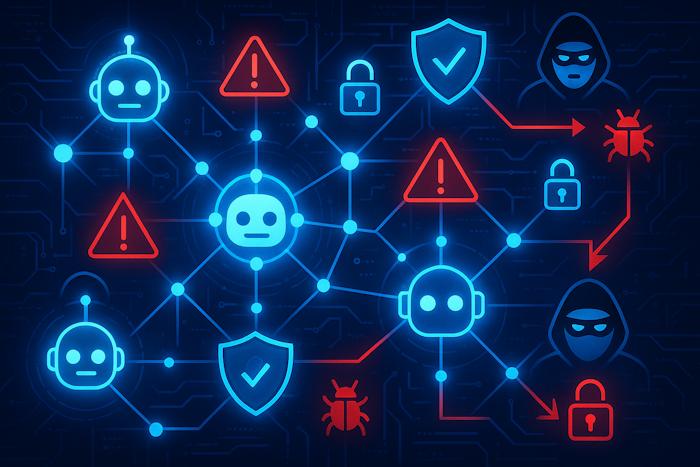
While this unhindered accessibility drives rapid technological innovation, it introduces a severe systemic threat: malicious code infiltrating the software supply chain.

The software supply chain encompasses every component, third-party dependency, development tool, continuous integration pipeline, and deployment mechanism involved in bringing software to life. By compromising a single ubiquitous upstream library, threat actors can effortlessly bypass localized firewalls to compromise thousands of downstream enterprise applications simultaneously. As organizations prioritize rapid DevOps delivery, securing this sprawling external ecosystem has become a central objective of mature corporate data infrastructure defense.
The Architecture of the Modern Software Supply Chain
Modern business applications are rarely built entirely from scratch. Instead, developers assemble functionality using an intricate web of pre-existing external layers designed to handle routine tasks like cryptographic hashing, user authentication, logging, and database routing.
A standard enterprise software deployment routinely relies on:
Open Source Libraries & Ecosystems: Core functional building blocks (e.g., npm packages, Python wheels, Java JARs).
Third-Party APIs & Cloud Software: External data-sharing connections and managed platform systems.
Package Management Tools: Systems that resolve, pull, and install dependencies automatically during builds (e.g.,
pip,npm,NuGet).Continuous Integration/Continuous Deployment (CI/CD) Envrionments: Automated test, containerization, and build servers.
Base Container Images: Pre-packaged OS environments (e.g., Docker Hub images) hosting runtime engines.
Because software code relies on transitive dependencies (libraries that rely on other libraries), pulling in a single seemingly basic open-source package can unknowingly introduce dozens of unverified sub-packages into a production environment, exponentially expanding the corporate attack surface.
Why Open Source Software Is a Primary Target
Cybercriminals and sophisticated nation-state actors have moved away from attacking well-guarded perimeter networks directly. Instead, they exploit the natural trust relationship between developers and established open-source repositories. Compromising a foundational library allows attackers to achieve a massive economy of scale.
[Threat Actor Injects Malware]
             │
             ▼
   [Public Upstream Package]
             │
             ▼ (Automated Dependencies Pull)
   [Thousands of Corporate CI/CD Build Engines]
             │
             ▼
[Production Infrastructures Compromised Globally]
Primary Objectives of Supply Chain Infiltration
Data & Intellectual Property Theft: Exfiltrating proprietary enterprise algorithms, codebases, and corporate data assets.
Credential Harvesting: Silently scraping local environment variables, cloud IAM access keys, database passwords, and SSH configurations.
Remote Code Execution (RCE): Planting permanent structural backdoors inside consumer-facing apps to control target systems remotely.
Cryptojacking & Ransomware: Utilizing compromised enterprise container nodes for stealthy cryptocurrency mining or deploying enterprise encryption payloads.
Core Attack Methodology: Exploit Vectors
1. Typosquatting
Attackers register malicious packages with names that mimic highly popular, legitimate packages (e.g., uploading a poisoned package named reqeusts to exploit a developer typing requests). If a developer makes a simple keyboard error, the package installer pulls down the malicious codebase without throwing an alert.
2. Dependency Confusion (Namespace Hijacking)
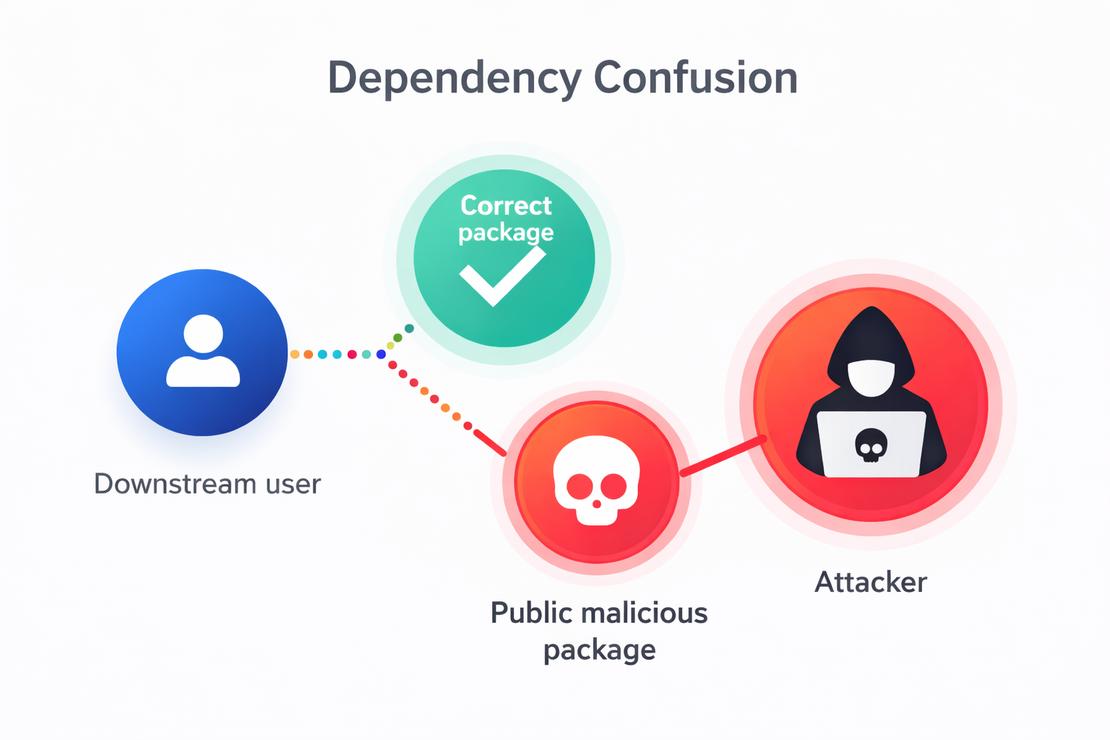
Many enterprises use internal, proprietary package names for custom features. Attackers discover these private names through leaked logs or source code and publish identical names to a public registry (like npm or PyPI) using a highly inflated version number (e.g., v99.9.9). Because many package managers default to prioritizing public registries or selecting the highest available version string, build engines mistakenly download the public malicious code over the secure internal asset.
3. Compromised Maintainer Accounts
Many widely utilized open-source tools are run by independent open-source volunteers. Attackers compromise these maintainers’ personal accounts via spear-phishing, credential stuffing, or social engineering. Once inside, they push a malicious update under the trusted maintainer’s digital signature, causing downstream software systems to ingest the payload automatically.
4. Malicious Code Contributions & Hidden Patches
Sophisticated actors frequently engage in long-term social engineering by making helpful, benign contributions to an open-source project over months to earn committer status. Once trusted by the community, they insert a subtle, deeply hidden vulnerability or obfuscated backdoor into a future code update, ensuring it escapes routine manual peer reviews.
Tactical Frameworks for Software Supply Chain Security
1. Maintain Enriched, Living Software Bills of Materials (SBOMs)
A Software Bill of Materials (SBOM) acts as an automated, comprehensive ingredients list detailing every individual software component, package version, licensing standard, and structural relationship embedded inside an application.
Regulatory Compliance Imperative
Compliance frameworks globally mandate explicit software provenance tracking. Under major international legal standards—such as the phased rollout of the EU Cyber Resilience Act (CRA) requirements beginning in late 2026—organizations must maintain machine-readable SBOMs (in SPDX or CycloneDX formats) to rapidly surface and report newly exposed vulnerabilities across their entire product support life cycle.
Static, point-in-time “paper SBOMs” are no longer sufficient. Modern configurations require live, continuously updated SBOM databases integrated directly with Vulnerability Exploitability eXchange (VEX) streams to assess whether a newly announced vulnerability is actively reachable inside production code.
2. Automate Perimeter Curation and Continuous Scanning
Do not allow development terminals to pull packages indiscriminately from the open web. Implement a secure private repository manager (such as Nexus, Artifactory, or Cloudsmith) to act as an authenticated perimeter gateway.
Configure automated security policies at the registry gate to block dependencies that fail baseline criteria:
Packages less than 30 days old.
Projects with zero verified maintainers or completely abandoned code repositories.
Packages carrying restrictive, non-compliant software licenses.
Code flagged with high-severity entries in global vulnerability databases.
[Public Registry] ──> [Automated Curation Firewall (Age/CVE/Signatures Check)] ──> [Internal Developer Pipeline]
3. Enforce Cryptographic Package Integrity & Provenance
To protect against code tampering during distribution, enforce strict verification processes across all development build tasks. Every dependency file must be matched against its declared cryptographic hashes and checksums.
Organizations must structure their continuous integration frameworks around rigorous provenance models like the Supply Chain Levels for Software Artifacts (SLSA) framework. Moving toward SLSA Level 3 compliance guarantees that every compiled binary reaches production backed by an immutable, signed chain-of-custody log.
4. Apply Least Privilege and Isolate Build Runtimes
Build pipelines are inherently high-value execution targets. If an untrusted open-source package executes installation scripts (preinstall/postinstall) during a compilation routine, it must not possess uninhibited system access.
Run build sequences inside ephemeral, hardened, and isolated container sandboxes.
Completely block outbound network access during sensitive compilation phases to stop unauthorized data exfiltration.
Isolate code-signing certificates inside dedicated Hardware Security Modules (HSMs) or vault tools, ensuring keys are only accessible via tightly restricted, short-lived tokens.
Govern Automation Tools & Agents: With the rise of autonomous development assistance, software tools must be assigned unique non-human identities with audited permissions, preventing them from independently importing unvetted libraries to solve tasks.
Technical Security Environment: Traditional vs. Hardened SDLC
| Security Area | Legacy Development Workflow | Hardened Secure Supply Chain Architecture |
| Package Sourcing | Open downloading directly from public internet endpoints. | Curated internal proxy registry with policy-based blocking. |
| Dependency Insight | Incomplete dependency tracking; no visibility into transitive files. | Automated CycloneDX/SPDX living SBOMs updated on every build. |
| Pipeline Access Control | Build servers running with persistent administrative cloud privileges. | Isolated build environments utilizing scoped, temporary IAM tokens. |
| Integrity Verification | Direct code adoption without verifying author identity or package checksums. | Code signing, signature attestation checks, and SLSA Level 3 tracing. |
Conclusion
Open source software remains an indispensable catalyst for software innovation, but it can no longer be integrated blindly. The contemporary threat landscape has proven that compromising a shared upstream component is an exceptionally effective pathway for adversaries trying to compromise enterprise perimeters.
Mitigating these risks requires moving away from reactive patch management and toward proactive, end-to-end supply chain governance. By maintaining live SBOM tracking, hardening continuous integration platforms, enforcing automated perimeter curation, and ensuring developer awareness, organizations can harvest the massive benefits of open-source collaboration while building resilient software that stands up to sophisticated external threats.
Frequently Asked Questions (FAQs)
1. What is a software supply chain attack?
A software supply chain attack occurs when a threat actor injects malicious code into a third-party software component, dependency, tool, or registry rather than attacking a target organization directly. When the victim installs or updates the compromised component, the malicious code executes silently within their internal network.
2. How does dependency confusion work?
Dependency confusion occurs when an attacker discovers the specific name of an organization’s private internal software package. The attacker then publishes a malicious package with the exact same name to a public registry but assigns it a much higher version number. Automated build tools often select the higher version from the public registry, pulling the attacker’s payload straight into the enterprise ecosystem.
3. What is an SBOM and how does it protect my applications?
A Software Bill of Materials (SBOM) is a machine-readable directory detailing all components, dependencies, and license versions inside a software asset. When a new vulnerability or exploit is announced publicly, an organization can query its active SBOM records instantly to discover exactly which production systems contain the compromised package, cutting down remediation times from weeks to minutes.
4. Why can’t standard network firewalls detect malicious open-source packages?
Standard network firewalls block untrusted traffic, known malicious domains, or invalid communication protocols. When an internal build tool downloads a package from an official public registry like npm or PyPI, the connection appears completely legitimate, and the malicious payload looks like standard application code to network scanners.
5. What is the most effective initial step to secure our development pipeline?
The most immediate, high-impact step is to direct all developer terminals and build machines through a central, private repository proxy rather than connecting directly to the public web. This single point of governance allows you to block malicious typosquatting attempts, lock down software versions, and prevent unverified or vulnerable packages from reaching your source code.