
Introduction
As cyberattacks continue to grow in complexity, traditional security methods are no longer enough to protect modern businesses. Companies today operate in cloud environments, support remote employees, and manage large amounts of sensitive data across multiple devices and networks. This has increased the risk of cyber threats such as ransomware, phishing attacks, insider threats, and unauthorized access.
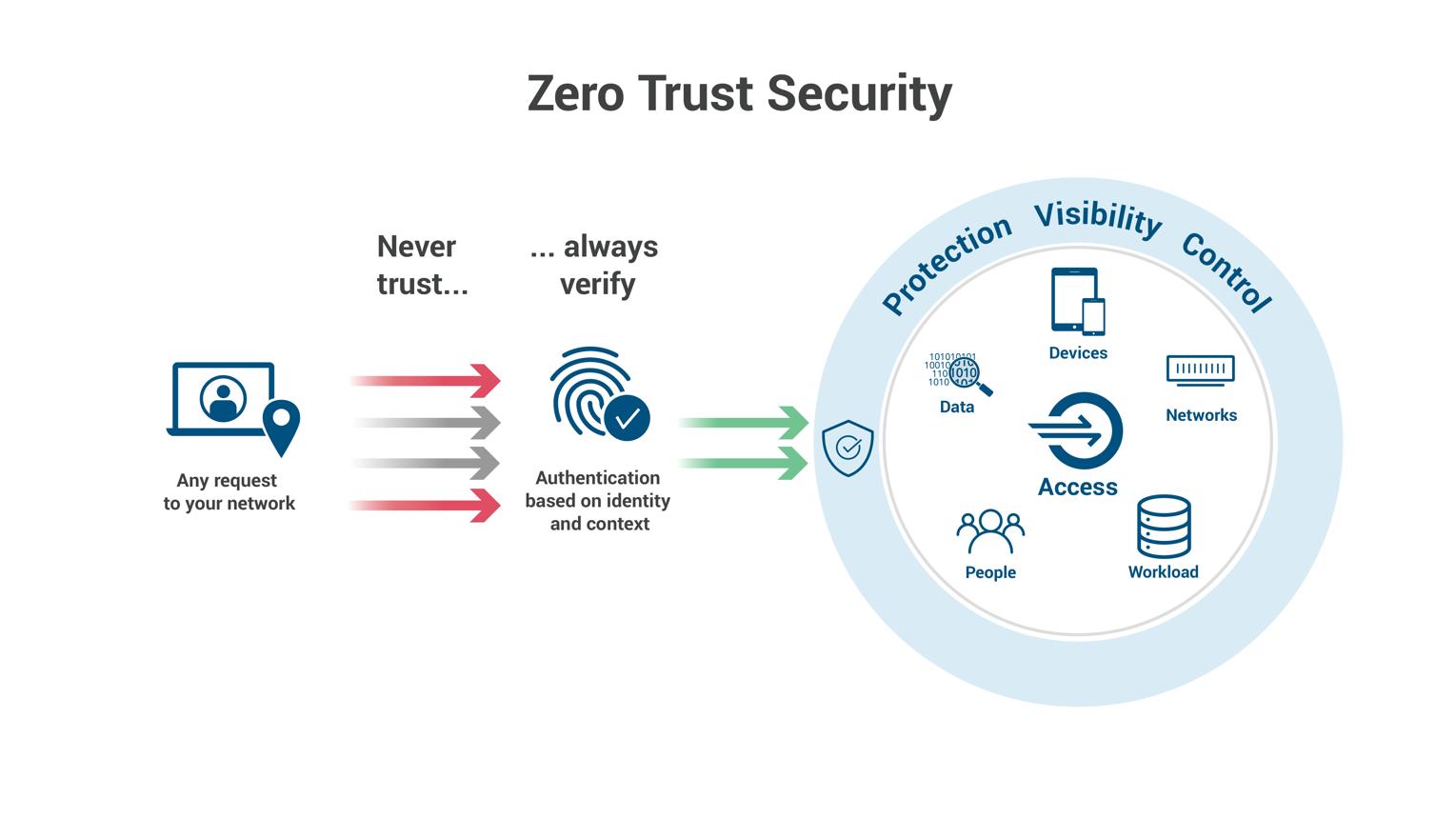
To solve these challenges, organizations are adopting a modern cybersecurity approach called Zero Trust Security. Unlike traditional security models that automatically trust users inside a network, Zero Trust follows one important principle:
“Never Trust, Always Verify.”
This means every user, device, application, and system must continuously prove they are authorized before gaining access to company resources. Modern cybersecurity companies like Microsoft, Google, Cisco, and learning platforms like FireShark strongly promote Zero Trust frameworks to strengthen protection in today’s digital world.
What is Zero Trust Security?
Zero Trust Security is a cybersecurity model that assumes no user or device should be trusted automatically, even if they are inside the company network.
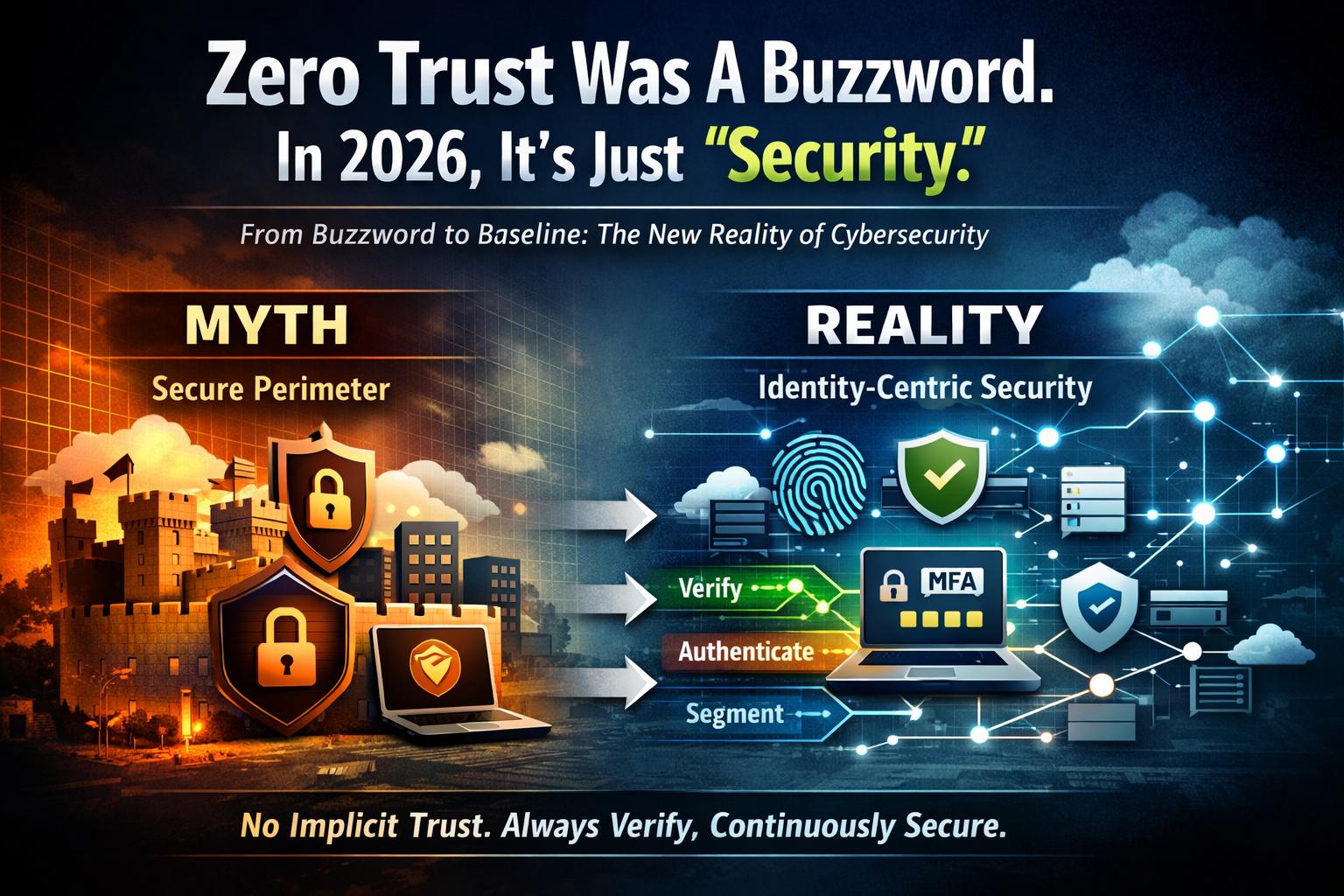
Traditional security models worked like a castle:
- Inside the network: Anyone was trusted.
Outside the network: Everyone was blocked.
However, modern cybercriminals can easily bypass perimeter defenses through phishing, stolen passwords, or malware. Once inside, they can move freely across systems.
Zero Trust eliminates this problem by verifying:
- User identity
Device health
Location
Access permissions
Behavioral activity
Core Principles of Zero Trust Security
1. Verify Every User and Device
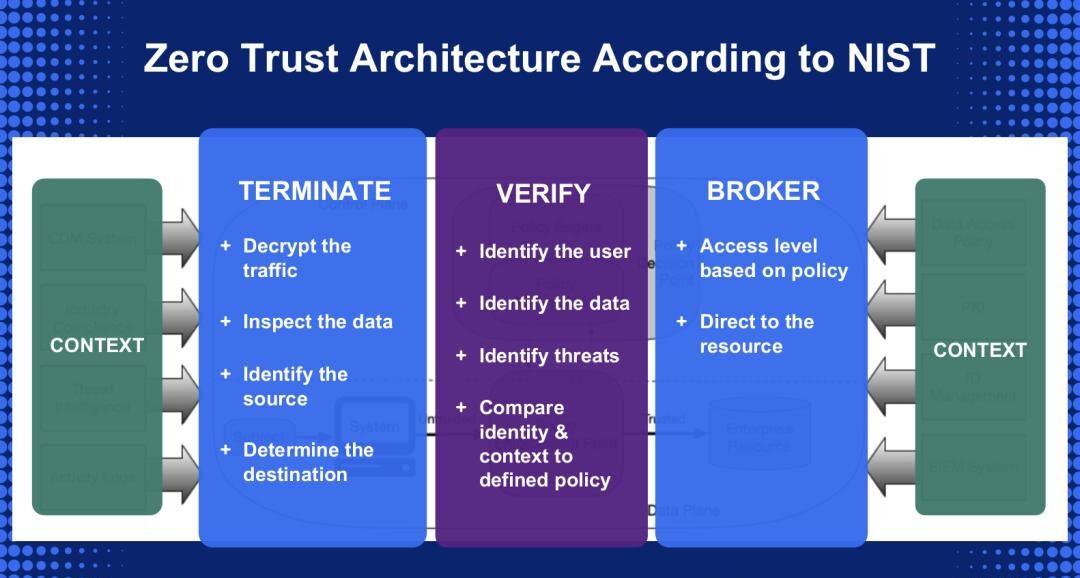
Every login attempt must be authenticated using strong security measures such as:
Multi-Factor Authentication (MFA)
Biometrics
One-Time Passwords (OTP)
Security tokens
2. Least Privilege Access
Users should only receive the minimum access necessary to perform their tasks. For example, HR employees should not have access to financial systems, and developers should not access customer payment data. This reduces the “blast radius” if an account is compromised.
3. Continuous Monitoring
Zero Trust systems constantly monitor login behavior, device activity, and network traffic. Modern tools from companies like CrowdStrike and Palo Alto Networks help businesses detect threats in real-time.
4. Assume Breach Mentality
Zero Trust assumes attackers may already be inside. By focusing on limiting movement and protecting sensitive systems specifically, organizations can detect abnormal behavior much faster.
Why Traditional Security is No Longer Enough
In the past, data lived on office servers and employees worked on-site. Today, the landscape has changed:
Cloud Computing: Data is hosted everywhere (AWS, Azure, Google Cloud).
Remote Work: Employees access systems from home or public Wi-Fi.
Advanced Attacks: Hackers use AI-powered phishing, supply chain attacks, and credential theft.

Why Modern Companies Need Zero Trust Security
Remote Work Security: Verifies users regardless of location or device.
Protection Against Ransomware: Prevents attackers from spreading across the network (Micro-segmentation).
Cloud Security: Validates access continuously across hybrid environments.
Reduces Insider Threats: Minimizes risk from employees with excessive permissions.
Better Data Protection: Adds layers of security around intellectual property and customer records.
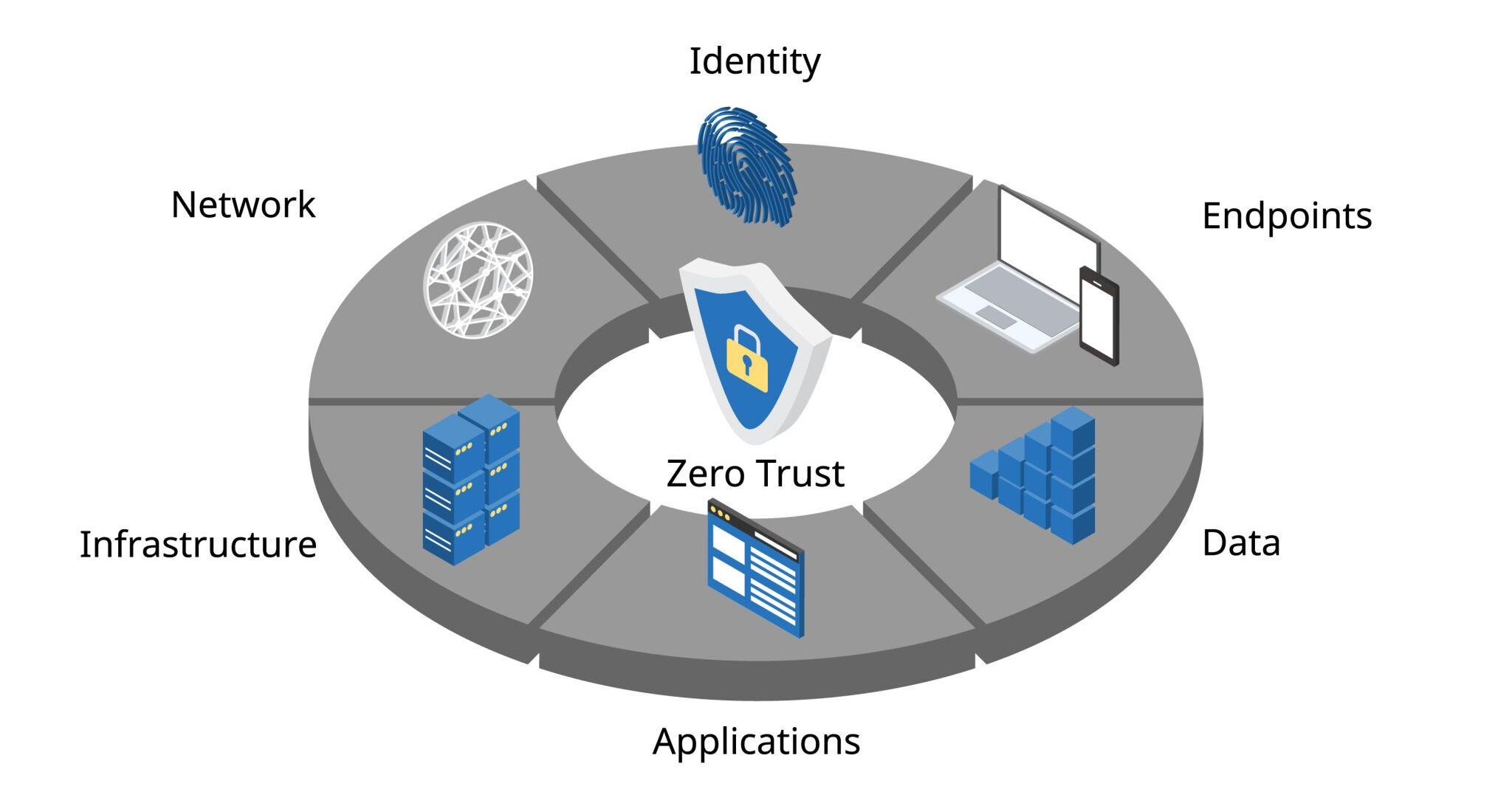
Key Technologies Used in Zero Trust
| Technology | Purpose |
| MFA | Verifies identity using multiple methods. |
| Endpoint Security | Protects laptops, smartphones, and IoT devices. |
| IAM | Controls who can access specific applications. |
| Network Segmentation | Divides networks into smaller, secure sections. |
| Encryption | Protects data during storage and transmission. |
| AI Analytics | Detects suspicious behavior automatically. |
Benefits and Challenges
The Benefits:
Improved Cybersecurity: Drastically reduces unauthorized access.
Faster Threat Detection: Identifies anomalies in real-time.
Better Compliance: Helps meet regulations (GDPR, HIPAA, etc.).
Increased Customer Trust: Shows a commitment to data privacy.
The Challenges:
Complex Deployment: Requires major infrastructure changes for large firms.
Higher Initial Cost: Advanced monitoring tools can be an investment.
User Experience: Frequent authentication can sometimes frustrate employees if not implemented smoothly.
The Future of Zero Trust
The future of cybersecurity will rely on Zero Trust because threats are becoming more advanced every year. We can expect to see more:
AI-driven threat detection.
Passwordless authentication.
Automated security responses.
Learning platforms like FireShark are helping the next generation of professionals master these concepts to stay ahead of digital threats.
Conclusion
Zero Trust Security stands as the most effective and necessary strategy for the modern era, leaving the antiquated “castle and moat” mentality in the dust. By moving away from the dangerous assumption that anyone inside the network is inherently safe, organizations can redefine their security perimeter to follow the user and the data, rather than the office walls. Adopting the “Never Trust, Always Verify” approach ensures that every access request is scrutinized with continuous rigor, regardless of whether it originates from a local workstation or a remote mobile device on public Wi-Fi.
In a 2026 landscape where AI-driven attacks and complex supply chain vulnerabilities are constant threats, this proactive framework allows companies to protect their intellectual property with surgical precision. By treating every interaction as a potential breach, businesses create a resilient architecture that doesn’t just block attacks, but significantly minimizes the “blast radius” if a single account is ever compromised.
Ultimately, Zero Trust isn’t just a technical patch; it’s a fundamental cultural shift toward total visibility and constant validation. It provides the essential foundation for digital stability, ensuring that as companies grow and evolve, their security posture remains unshakeable and their customers’ trust stays earned. Investing in this model today is no longer an “extra” security measure—it is the baseline for surviving and thriving in an increasingly volatile digital world.
FAQs
1. What does Zero Trust mean in cybersecurity?
It means no user or device is trusted by default. Every access request is verified continuously.
2. Why is Zero Trust important today?
It addresses the vulnerabilities of remote work, cloud environments, and sophisticated AI-driven attacks.
3. Is Zero Trust only for large companies?
No, businesses of all sizes can (and should) implement these principles to improve their security posture.
4. What is the biggest benefit of Zero Trust?
It limits the ability of an attacker to move through a network even if they steal a password.
5. Does Zero Trust replace firewalls?
No, it works alongside firewalls and other tools to provide a multi-layered defense.