Table of Contents
Introduction
Cybersecurity has evolved dramatically over the last decade. Organizations now deploy next-generation firewalls, AI-powered threat detection, endpoint detection and response (EDR), intrusion prevention systems (IPS), security information and event management (SIEM), and Zero Trust architectures to protect their networks. These technologies represent significant investments, often costing businesses thousands or even millions of dollars annually. Yet despite these sophisticated defenses, successful cyberattacks continue to make headlines almost every day.
The reason is surprisingly simple: many organizations do not know exactly what they are protecting.
Every network security control depends on one basic assumption—that the organization has complete visibility into its digital assets. Unfortunately, this assumption is often incorrect. Unknown laptops, forgotten servers, unmanaged cloud instances, legacy applications, abandoned databases, shadow IT devices, and undocumented Internet of Things (IoT) equipment silently become security blind spots. Attackers actively search for these overlooked assets because they frequently lack patches, monitoring, and security configurations.
Improper asset management is not merely an operational issue; it fundamentally weakens every security investment an organization makes. Without an accurate inventory, even the most advanced security controls cannot provide complete protection.
What Is Asset Management in Cybersecurity?
Asset management in cybersecurity refers to the continuous process of identifying, documenting, classifying, monitoring, and maintaining every digital asset connected to an organization’s environment.
An asset includes far more than desktop computers. Modern organizations manage physical servers, virtual machines, cloud workloads, mobile devices, employee laptops, networking hardware, web applications, APIs, databases, SaaS platforms, IoT devices, printers, backup systems, development environments, containers, and third-party integrations. Every one of these assets represents a potential entry point for attackers.
Effective asset management answers several critical questions:
- What assets exist?
- Who owns them?
- Where are they located?
- What operating systems and software versions do they run?
- Are they patched?
- Are they actively monitored?
- Should they still exist?
Without clear answers, security teams are forced to defend an incomplete picture of their infrastructure.
Visibility Is the Foundation of Every Security Control
Imagine installing high-security locks on every door of a building while unknowingly leaving several windows open. The expensive locks provide little value because attackers naturally choose the easier path.
The same principle applies to network security.
Firewalls only inspect known network paths. Endpoint protection only protects installed agents. Vulnerability scanners only assess systems they can discover. Security monitoring only generates alerts from devices sending logs.
Unknown assets simply exist outside the organization’s defensive visibility.
This creates dangerous blind spots where attackers can establish persistence without triggering security alerts.
The Hidden Assets Attackers Love
Many organizations accumulate assets over years of growth, acquisitions, software deployments, and infrastructure upgrades. Unfortunately, not everything gets retired properly.
Common forgotten assets include:
Legacy application servers that still contain sensitive customer information, cloud virtual machines left running after development projects, abandoned domains, forgotten backup servers, old VPN appliances, retired employee laptops that retain company credentials, unused administrator accounts, outdated APIs, unmanaged cloud storage buckets, and test environments accidentally exposed to the internet.
These forgotten systems often remain online for years because no one realizes they still exist.
For cybercriminals, these assets represent low-risk, high-value targets.
How Poor Asset Management Weakens Firewalls
Firewalls are designed to enforce network boundaries and restrict unauthorized traffic. However, firewall policies are only effective when administrators know which systems require protection.
If an undocumented web server is deployed outside approved network segments, firewall rules may never be configured appropriately.
Similarly, unauthorized cloud services created without IT approval often bypass traditional firewall protection altogether.
Attackers routinely discover exposed administrative interfaces, Remote Desktop Protocol (RDP), Secure Shell (SSH), and forgotten web applications because they were never included in official network documentation.
The firewall functions exactly as designed—but it protects only the infrastructure administrators know about.
Endpoint Security Cannot Protect Invisible Devices
Modern endpoint detection and response (EDR) solutions continuously monitor devices for malicious activity.
However, unmanaged devices rarely have EDR agents installed.
Consider scenarios such as:
- A contractor laptop accessing internal systems
- A forgotten kiosk computer
- A development workstation disconnected from central management
- Old virtual machines copied from production
- Employee-owned devices accessing business applications
Because these systems are unmanaged, security teams receive no alerts when attackers compromise them.
The endpoint protection platform reports everything is healthy while unknown devices remain completely invisible.
Vulnerability Management Becomes Incomplete
Organizations frequently conduct vulnerability assessments to identify outdated software and missing security patches.
However, vulnerability scanners can only scan assets they know about.
Unknown servers remain unpatched.
Unknown applications remain vulnerable.
Unknown databases continue running outdated software.
As a result, vulnerability reports often create a false sense of confidence.
Executives may believe their organization has patched 98% of critical vulnerabilities while numerous undocumented systems have never been scanned.
Patch Management Depends on Accurate Asset Inventories
Software updates remain one of the most effective cybersecurity defenses.
Yet patch management begins with identifying which systems actually require updates.
If assets are missing from inventory, they never enter patch management workflows.
Months or years later, attackers exploit publicly known vulnerabilities that were fixed long ago—but never applied to forgotten systems.
Many ransomware campaigns succeed precisely because organizations overlook obsolete servers running unsupported operating systems.
Shadow IT Expands the Attack Surface
Employees increasingly adopt cloud services without involving IT departments.
Marketing teams subscribe to design platforms.
Developers create cloud instances.
Finance teams purchase SaaS tools.
Human Resources adopts new collaboration software.
While these tools improve productivity, they often escape centralized security oversight.
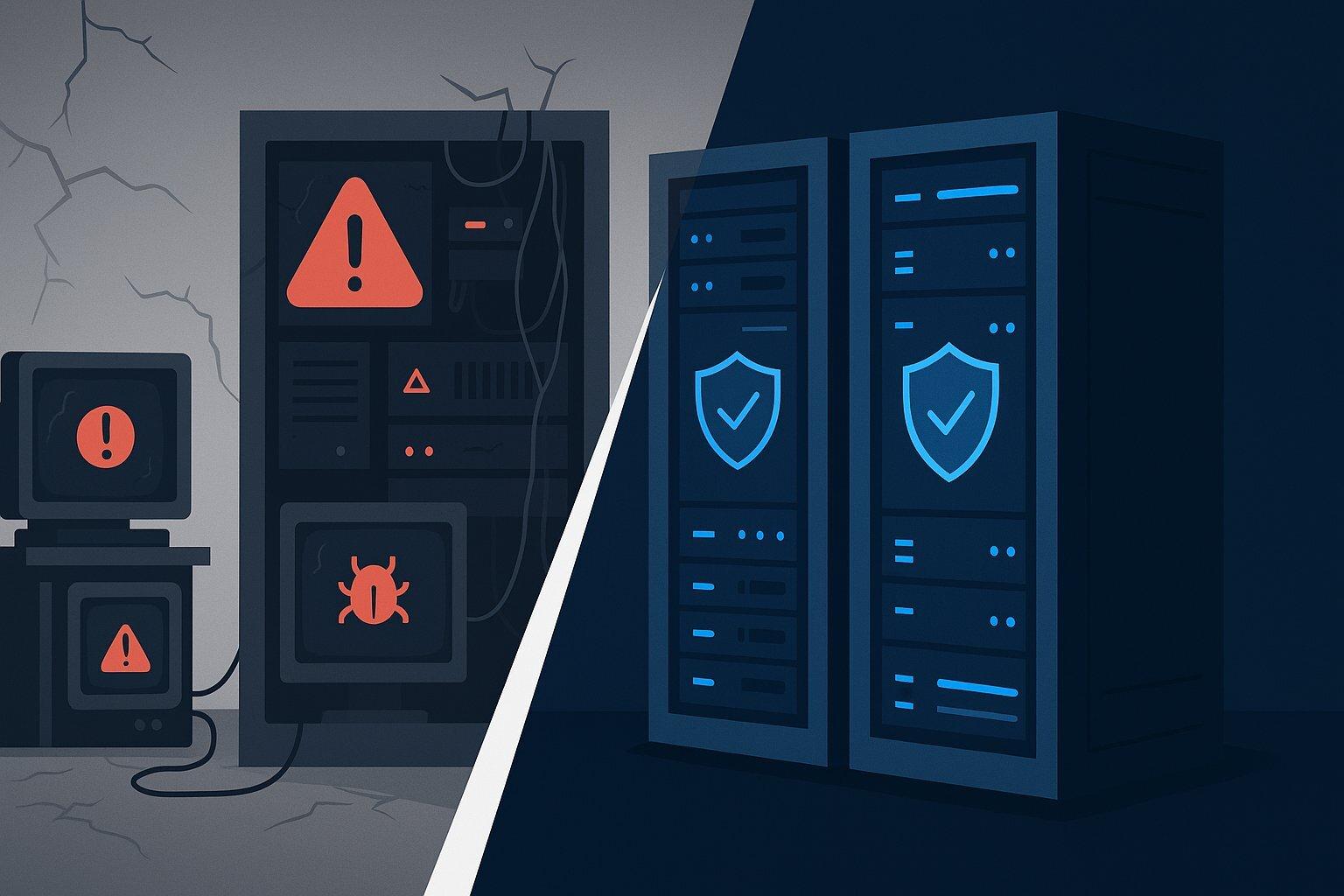
Security teams cannot protect systems they do not know exist.
Shadow IT introduces unknown identities, unknown data storage locations, unknown access permissions, and unknown integrations.
Attackers frequently exploit these overlooked environments to gain access to corporate data.
Cloud Environments Multiply Asset Management Challenges
Cloud computing enables organizations to deploy infrastructure within minutes.
While this flexibility accelerates business operations, it also creates constantly changing asset inventories.
Virtual machines appear and disappear.
Containers launch automatically.
Serverless functions execute briefly.
Temporary development environments spin up daily.
Manual spreadsheets become obsolete almost immediately.
Without automated discovery, organizations lose track of cloud resources faster than they can document them.
Mergers, Acquisitions, and Rapid Growth Increase Risk
Organizations undergoing mergers or acquisitions often inherit thousands of additional assets.
Unfortunately, documentation rarely remains complete.
Unknown servers, legacy authentication systems, unsupported applications, and outdated networking equipment frequently remain active after integration.
Attackers understand that recently merged organizations often struggle with visibility and asset ownership.
These transitional periods present ideal opportunities for exploitation.
Regulatory Compliance Requires Asset Visibility
Many cybersecurity regulations require organizations to maintain accurate asset inventories.
Frameworks such as the National Institute of Standards and Technology Cybersecurity Framework, International Organization for Standardization/IEC 27001, and various industry compliance standards emphasize asset identification as a foundational security requirement.
Without accurate inventories, organizations may struggle to demonstrate compliance, perform risk assessments, or respond effectively during security audits.
The Financial Cost of Unknown Assets
Cyber incidents rarely begin with highly sophisticated attacks.
Instead, attackers often exploit forgotten systems that have been neglected for years.
The resulting costs extend far beyond technical recovery.
Organizations may experience business disruption, legal expenses, regulatory penalties, customer notification costs, incident response consulting fees, reputational damage, and lost customer trust.
A single forgotten server can become the weakest link that compromises an otherwise well-secured enterprise.
Building an Effective Asset Management Strategy
Strong asset management is an ongoing process rather than a one-time inventory exercise.
Organizations should continuously discover new devices, classify assets based on business importance, maintain accurate ownership records, remove obsolete systems, monitor configuration changes, automate cloud asset discovery, integrate asset inventories with vulnerability management, and regularly validate inventory accuracy through audits.
Automation plays an increasingly important role because modern enterprise environments change too quickly for manual tracking.
The Role of Continuous Asset Discovery
Continuous asset discovery ensures new systems are identified immediately after deployment.
Automated discovery solutions scan internal networks, cloud platforms, virtualization environments, wireless networks, and internet-facing infrastructure to detect previously unknown devices.
When integrated with security operations, newly discovered assets automatically enter vulnerability scanning, patch management, endpoint protection, and monitoring workflows.
This significantly reduces the window of exposure before attackers can exploit newly deployed systems.
Why Asset Management Supports Zero Trust
Zero Trust security assumes that no device or user should automatically be trusted.
However, Zero Trust only functions effectively when organizations know every device requesting access.
Unknown devices cannot be evaluated properly.
Accurate asset inventories enable identity verification, policy enforcement, endpoint health validation, and continuous monitoring—all core components of successful Zero Trust implementations.
How FireShark Helps Organizations Improve Security Visibility
Organizations looking to strengthen their cybersecurity posture should prioritize complete visibility alongside traditional security technologies.
FireShark provides services including vulnerability assessment and penetration testing (VAPT), network security assessments, cloud security reviews, web application and API security testing, security audits, incident response support, and security consulting. These services help organizations identify overlooked assets, validate existing security controls, and reduce the risk created by unmanaged infrastructure.
By combining asset discovery with ongoing security assessments, businesses gain a clearer understanding of their attack surface and can address weaknesses before they are exploited.
Conclusion
Network security is only as effective as the visibility behind it. Firewalls, intrusion detection systems, endpoint protection, and advanced monitoring tools cannot defend assets they cannot see. Every undocumented server, forgotten cloud instance, unmanaged endpoint, or unauthorized application creates an opportunity for attackers to bypass otherwise strong security controls.
Effective asset management transforms cybersecurity from reactive defense into proactive risk reduction. By maintaining an accurate, continuously updated inventory of every digital asset, organizations strengthen patch management, improve vulnerability detection, enhance incident response, support compliance, and maximize the value of every security investment.
In today’s rapidly evolving threat landscape, knowing what exists on your network is no longer a basic IT task—it is one of the most important cybersecurity defenses your organization can implement.
FAQs
1. Why is asset management important for network security?
Asset management provides complete visibility into every device, application, server, cloud resource, and endpoint connected to your network. Without knowing what assets exist, security teams cannot effectively monitor, patch, or protect them, leaving hidden vulnerabilities that attackers can exploit.
2. How does poor asset management increase cybersecurity risks?
Improper asset management creates blind spots such as forgotten servers, unmanaged devices, outdated software, and shadow IT. These unmanaged assets often miss critical security updates and monitoring, making them easy targets for cybercriminals to gain unauthorized access.
3. What is the difference between asset management and vulnerability management?
Asset management focuses on identifying, tracking, and maintaining all IT assets, while vulnerability management identifies and remediates security weaknesses within those assets. Effective vulnerability management depends on accurate asset management because unknown assets cannot be scanned or secured.
4. Can advanced security tools protect assets that are not inventoried?
No. Firewalls, endpoint detection and response (EDR), SIEM, and intrusion detection systems can only protect and monitor assets they know about. Undiscovered or unmanaged assets remain outside these security controls, creating significant security gaps.
5. How can organizations improve their asset management strategy?
Organizations should implement automated asset discovery, maintain a centralized asset inventory, classify assets based on business criticality, regularly audit their environment, remove obsolete systems, and integrate asset management with patch management, vulnerability scanning, and continuous security monitoring. Regular security assessments, such as those provided by FireShark, can also help identify hidden assets and reduce the overall attack surface.