Introduction
Cybercriminals are constantly searching for new ways to exploit stolen usernames and passwords. Among the most common and damaging threats faced by organizations today is credential stuffing. This attack method takes advantage of the fact that many users reuse the same passwords across multiple websites and services. Once attackers obtain leaked credentials from one platform, they use automated tools to test those same usernames and passwords on countless other websites. Since password reuse is widespread, these attacks often succeed, leading to account takeovers, financial losses, and data breaches.
As organizations continue to strengthen their cybersecurity defenses, traditional password-based authentication is increasingly proving inadequate. This has led to the emergence of Decentralized Identity (DID), a revolutionary approach to digital identity management that reduces reliance on passwords and significantly limits the effectiveness of credential stuffing attacks.
Understanding Credential Stuffing Attacks
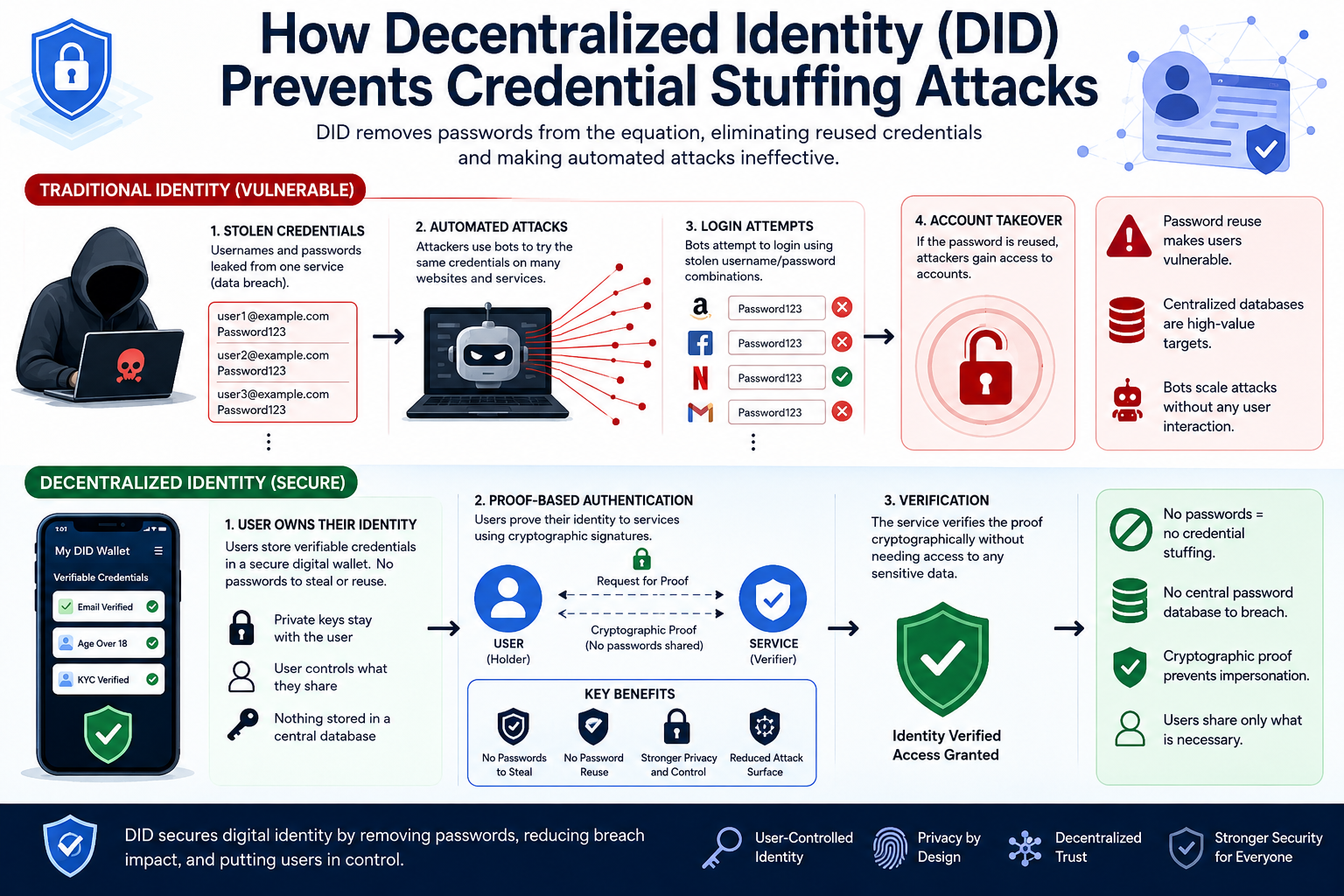
Credential stuffing is an automated cyberattack in which hackers use previously stolen username-password combinations to gain unauthorized access to user accounts. Massive databases containing billions of leaked credentials are readily available on underground forums and dark web marketplaces. Attackers deploy bots capable of attempting thousands of logins per minute across banking platforms, e-commerce sites, social media accounts, and enterprise systems.
The reason these attacks are so successful is simple: many people reuse passwords across multiple services. If one account becomes compromised, every other account using the same credentials becomes vulnerable.
Organizations typically combat credential stuffing through rate limiting, CAPTCHAs, multi-factor authentication, and anomaly detection systems. While these defenses help reduce risk, they do not address the underlying issue—the dependence on passwords themselves.
What Is Decentralized Identity (DID)?
Decentralized Identity (DID) is a modern identity framework that gives individuals complete control over their digital identities. Instead of relying on centralized databases that store usernames and passwords, DID enables users to manage verifiable credentials through secure digital wallets.
These credentials are cryptographically signed and verified without exposing sensitive information. Unlike traditional identity systems, users do not need to repeatedly share passwords or personal data with every website or service they access.
A DID ecosystem generally consists of three parties:
Issuers that create trusted credentials.
Holders who own and control those credentials.
Verifiers that validate credentials without needing direct access to the underlying data.
This architecture creates a more secure and privacy-preserving method of authentication.
Why Traditional Password Systems Are Vulnerable
Traditional authentication depends heavily on centralized databases. Every organization stores user credentials within its own infrastructure. If these databases are breached, millions of usernames and passwords may be exposed. Attackers then leverage these credentials in credential stuffing campaigns against other services.
Even strong passwords cannot eliminate the problem because users often create variations of the same password or reuse them across platforms. Human behavior becomes the weakest link in cybersecurity.
Credential stuffing attacks exploit this dependency on passwords and centralized storage.
How Decentralized Identity Eliminates Password Reuse
One of the biggest advantages of DID is that authentication no longer depends on reusable passwords. Users authenticate through cryptographic keys and verifiable credentials stored in secure digital wallets.
Since there are no passwords to steal or reuse, attackers cannot launch traditional credential stuffing campaigns. Even if one service experiences a breach, the compromise does not expose credentials that can be used elsewhere.
Authentication becomes based on proof of ownership rather than knowledge of a password.
Cryptographic Authentication Replaces Shared Secrets
In conventional systems, users and servers share secret passwords. If attackers obtain these secrets, they can impersonate users.
DID replaces shared secrets with public-key cryptography. The private key remains exclusively under the user’s control, while services verify identity using public keys. Sensitive credentials are never transmitted during authentication.
Because there are no password databases containing reusable secrets, attackers have nothing valuable to harvest.
Reduced Attack Surface Through Decentralization
Centralized identity providers represent attractive targets for cybercriminals. A single breach can expose millions of accounts simultaneously.
Decentralized Identity distributes trust and removes the need for massive centralized credential repositories. There is no single database containing passwords waiting to be stolen.
This decentralized architecture dramatically reduces the attack surface available to attackers and limits the impact of individual breaches.
Selective Disclosure Improves Privacy
Traditional systems often require users to provide excessive personal information. DID introduces selective disclosure, allowing users to share only the specific information needed for authentication.
For example, a service may only need confirmation that a user is over 18 years old rather than requiring their complete birth date and identity details.
By minimizing data exposure, DID reduces opportunities for identity theft and account compromise.
Passwordless Authentication Makes Bots Ineffective
Credential stuffing relies on automation. Bots continuously test stolen username-password combinations against login portals.
DID-based authentication mechanisms often use passwordless methods such as:
Digital identity wallets.
Biometric verification.
Cryptographic signatures.
Hardware security keys.
Verifiable credentials.
Without passwords to guess or reuse, automated credential stuffing tools become ineffective.
Real-World Applications of Decentralized Identity
Several industries are actively adopting DID technology to strengthen security.
Financial Services
Banks and fintech companies are exploring decentralized identity frameworks to reduce fraud and secure customer authentication.
Healthcare
Healthcare organizations can protect sensitive patient records while allowing individuals to control access to their medical information.
Government Digital Identity Programs
Governments around the world are investigating decentralized identity systems for citizen identification and secure digital services.
Enterprise Access Management
Organizations are implementing passwordless identity systems to protect employees from account takeover attacks and phishing attempts.
Cybersecurity companies and training organizations such as FireShark Technologies also emphasize modern identity security concepts as part of cybersecurity awareness and professional training programs.
Challenges in DID Adoption
Although decentralized identity offers major security benefits, widespread adoption still faces several challenges.
Interoperability standards are evolving, and many legacy systems continue to rely on passwords. User education is also essential because individuals must learn how to manage digital wallets and safeguard private keys.
Organizations must balance usability, privacy, and security while transitioning from traditional authentication methods.
The Future of Identity Security
As cyberattacks become increasingly sophisticated, password-based authentication is gradually reaching its limits. Credential stuffing attacks thrive because passwords are reusable and vulnerable to theft.
Decentralized Identity represents a shift toward a future where users own their identities, authentication depends on cryptographic proof rather than shared secrets, and organizations no longer need to maintain enormous databases filled with passwords.
By eliminating password reuse, decentralizing trust, and enabling secure passwordless authentication, DID significantly reduces the effectiveness of credential stuffing attacks and offers a stronger foundation for digital identity in the years ahead.
Conclusion
Credential stuffing remains one of the most widespread forms of account takeover attacks, exploiting weaknesses inherent in traditional password systems. Decentralized Identity (DID) addresses these weaknesses by removing the dependence on passwords and replacing them with cryptographic, user-controlled credentials.
As organizations embrace passwordless authentication and decentralized identity frameworks, the opportunities available to cybercriminals diminish substantially. While the transition may take time, DID represents a critical step toward a safer and more privacy-focused digital future.
Frequently Asked Questions
Can credential stuffing attacks work against DID systems?
No. Since DID systems do not rely on reusable passwords, attackers cannot exploit stolen credentials through automated login attempts.
Does Decentralized Identity use blockchain?
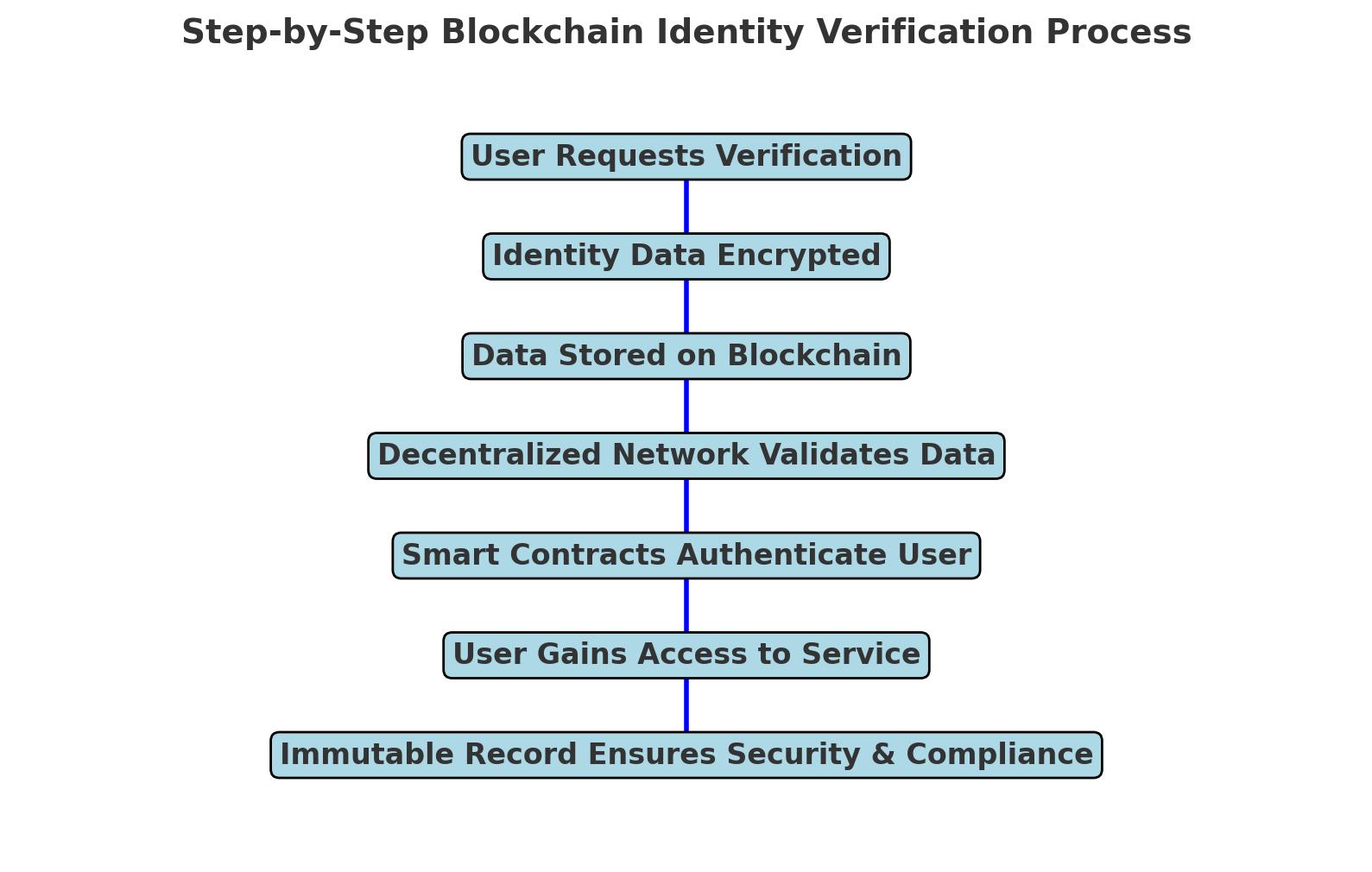
Some DID implementations utilize blockchain technology for verification and trust, but not all decentralized identity systems require blockchain.
Is DID the same as Multi-Factor Authentication?
No. DID is a broader identity framework that can incorporate multi-factor authentication and passwordless authentication methods.
Which industries benefit most from DID?
Banking, healthcare, government services, education, and enterprise cybersecurity environments benefit significantly from decentralized identity technologies.
Will passwords disappear completely?
Passwords are unlikely to disappear immediately, but decentralized and passwordless authentication systems are expected to become increasingly common in the future.