Table of Contents
Introduction
Application Programming Interfaces (APIs) have become the invisible backbone of modern digital services. Every mobile application, e-commerce platform, banking system, healthcare portal, cloud application, and AI-powered software relies heavily on APIs to exchange information securely between different systems. As organizations rapidly adopt microservices, cloud computing, and AI-driven applications, the number of publicly accessible APIs has grown exponentially.
Unfortunately, this growth has also expanded the attack surface for cybercriminals. Traditional cyberattacks often focused on exploiting software vulnerabilities such as SQL injection or remote code execution. Today’s attackers are shifting toward something much more dangerous—API logic vulnerabilities. These flaws do not stem from programming mistakes but from weaknesses in how business processes and workflows are designed.
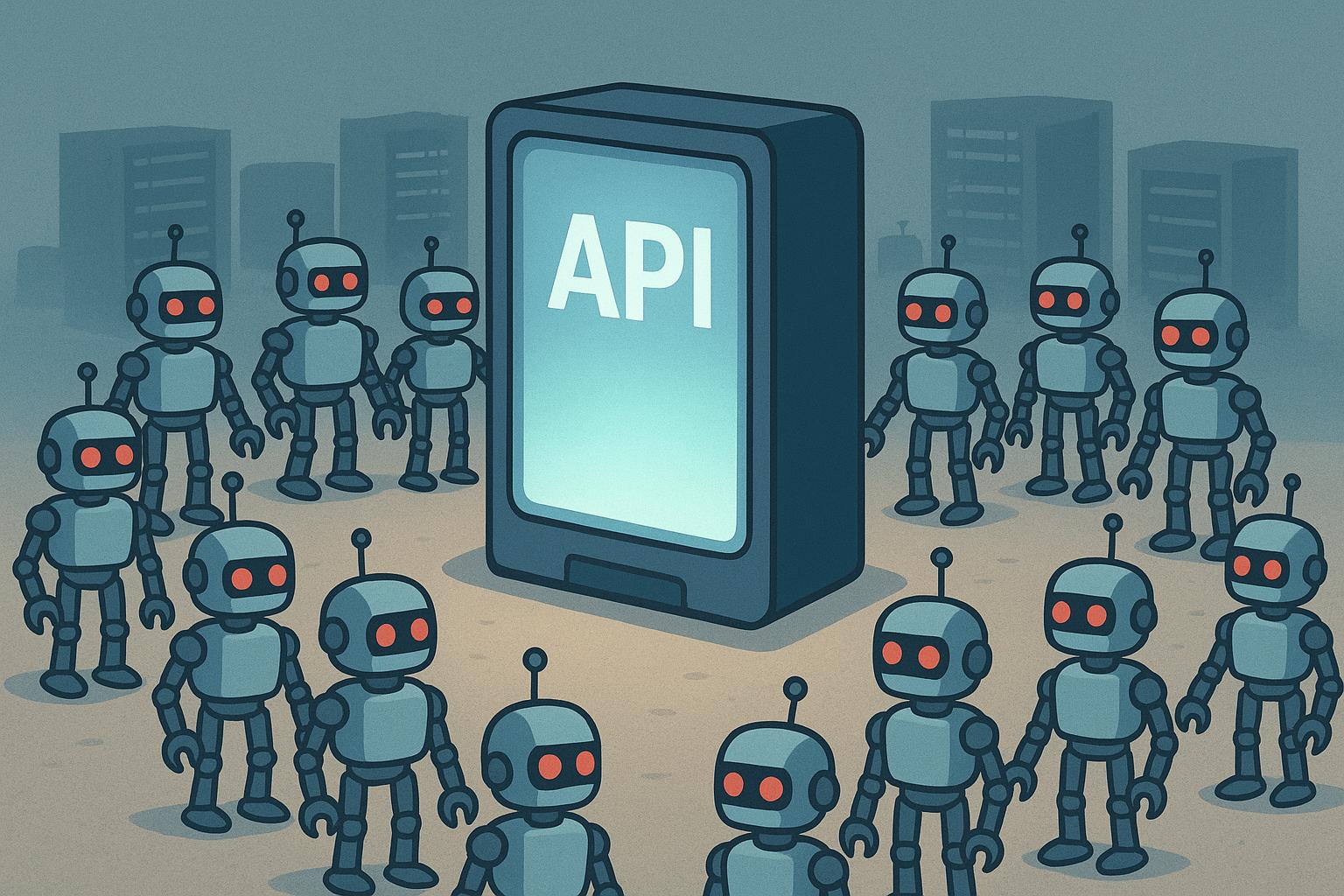
Adding another layer of sophistication, cybercriminals are increasingly integrating Artificial Intelligence into botnets. AI-driven botnets are no longer limited to launching Distributed Denial-of-Service (DDoS) attacks or credential stuffing campaigns. They can now analyze API behaviors, understand authentication mechanisms, identify business logic flaws, adapt their attack strategies in real time, and automate highly targeted exploitation with minimal human intervention.
This evolution represents one of the fastest-growing challenges in modern cybersecurity because even perfectly coded APIs can become vulnerable when attackers manipulate intended functionality in unintended ways.
Understanding AI-Driven Botnets
A botnet is a network of compromised devices remotely controlled by an attacker. Traditionally, these devices included personal computers infected with malware. Today, botnets consist of smartphones, IoT devices, cloud servers, routers, virtual machines, containers, and even industrial control systems.
Artificial Intelligence has dramatically changed how these botnets operate.
Instead of following fixed attack scripts, AI-enabled botnets continuously learn from successful and failed attacks. Machine learning algorithms evaluate API responses, authentication workflows, rate-limiting behaviors, session management patterns, and user interactions to determine the most effective attack path.
Modern botnets can:
- Adapt automatically when security controls change.
- Learn from previous attack attempts.
- Rotate IP addresses intelligently.
- Mimic legitimate human behavior.
- Bypass behavioral detection systems.
- Coordinate thousands of compromised devices simultaneously.
This intelligence makes them significantly harder to detect than conventional automated attack tools.
Why APIs Have Become Prime Targets
Organizations increasingly expose APIs to support:
- Mobile applications
- Online banking
- E-commerce platforms
- SaaS products
- AI services
- Payment gateways
- Healthcare systems
- Government portals
- Cloud-native applications
Unlike traditional websites, APIs expose direct access to application functionality and sensitive business processes.
Rather than attacking websites themselves, cybercriminals often target the APIs that power them.
Examples include:
- Account registration
- Password reset
- Order placement
- Shopping cart updates
- Coupon redemption
- Payment processing
- File uploads
- User profile management
- Financial transactions
These endpoints often contain valuable business logic that attackers can manipulate.
What Are API Logic Vulnerabilities?
API logic vulnerabilities occur when attackers abuse intended functionality in unexpected ways.
Unlike coding bugs, logic flaws exist because developers assumed users would follow legitimate workflows.
Examples include:
Unlimited Coupon Redemption
An API allows promotional coupons to be applied repeatedly because it never verifies whether the coupon has already been redeemed.
Price Manipulation
Attackers modify API parameters before checkout, reducing product prices to nearly zero.
Inventory Abuse
Automated bots reserve thousands of products without completing purchases, creating artificial shortages.
Banking Workflow Exploitation
A transfer API verifies account ownership but fails to validate transaction sequencing.
Reward Point Abuse
Attackers repeatedly trigger reward calculation APIs using automated requests.
None of these attacks require exploiting software vulnerabilities—they simply exploit flawed business logic.
How AI Makes Botnets Smarter
Older bots relied on predefined scripts.
Modern AI-powered botnets continuously observe API responses.
For example:
If an API returns:
- HTTP 200
- HTTP 403
- HTTP 429
- HTTP 401
The AI immediately learns:
- Authentication requirements
- Rate-limiting thresholds
- Token expiration patterns
- Permission levels
Instead of repeatedly making identical requests, AI changes:
- Request timing
- Header values
- User agents
- Session behavior
- API call sequences
This adaptive behavior closely resembles legitimate users.
Machine Learning Against Rate Limiting
Traditional rate limiting blocks excessive requests.
AI botnets analyze exactly when limits activate.
Rather than sending 100 requests every second, they may distribute requests across:
- 20,000 infected devices
- Multiple cloud regions
- Residential proxies
- Mobile IP addresses
The traffic appears completely normal.
Security systems often fail to recognize the coordinated attack.
Exploiting Authentication Workflows
Authentication APIs provide another attractive target.
AI analyzes:
- Login success rates
- Multi-factor authentication timing
- Password reset workflows
- Session token generation
- OAuth authorization flows
Instead of brute-force attacks, AI identifies authentication weaknesses such as:
- Weak account recovery logic
- Reusable session tokens
- Missing verification steps
- Improper privilege validation
These attacks generate minimal alerts because they resemble normal user activity.
Learning Business Workflows Automatically
One of the most dangerous capabilities of AI-driven botnets is automated workflow discovery.
Instead of requiring attackers to manually study an application, AI observes:
- Registration
- Login
- Cart creation
- Checkout
- Payment
- Refund
- Account deletion
The bot gradually builds a complete understanding of how the application operates.
Once the workflow is mapped, AI identifies opportunities to manipulate individual steps.
API Crawling at Machine Speed
AI continuously explores APIs.
It tests:
- Hidden endpoints
- Undocumented APIs
- Deprecated versions
- Internal microservices
- GraphQL queries
- REST endpoints
The AI records:
- Response times
- Parameter validation
- Authorization behavior
- Object identifiers
- Error messages
This creates an extensive attack map.
GraphQL APIs Are Increasingly Targeted
GraphQL allows clients to request exactly the data they need.
However, improperly configured GraphQL implementations can expose:
- Excessive data
- Deep object relationships
- Internal metadata
- Administrative functionality
AI botnets automatically generate thousands of GraphQL queries to determine which combinations reveal valuable information without triggering detection.
AI and Broken Object-Level Authorization (BOLA)
One of the most critical API vulnerabilities identified by the OWASP API Security Top 10 is Broken Object-Level Authorization (BOLA).
Instead of attacking authentication, attackers manipulate object identifiers.
For example:
/api/user/1001

/api/user/1002

/api/user/1003
If authorization checks are missing, attackers can access other users’ data.
AI accelerates this process by discovering valid object IDs, identifying predictable patterns, and adapting enumeration techniques while avoiding detection.
Intelligent Evasion Techniques
Traditional bots exhibit repetitive behavior.
AI botnets deliberately mimic humans by:
- Varying typing speed
- Randomizing mouse movement
- Delaying requests naturally
- Following realistic browsing paths
- Switching devices
- Changing geographic locations
Behavioral detection becomes much less effective.
Cloud-Native Applications Face Greater Risk
Cloud-native applications often expose hundreds of APIs.
Each microservice communicates through APIs.
AI botnets identify relationships between services, discovering attack paths that human testers might overlook.
Compromising one poorly secured API can enable lateral movement across multiple services.
Real-World Impact
Organizations targeted by AI-driven API attacks may experience:
- Financial fraud
- Account takeovers
- Data theft
- Loyalty program abuse
- Inventory manipulation
- Unauthorized transactions
- Business disruption
- Reputation damage
- Regulatory penalties
Because these attacks exploit legitimate functionality, traditional security tools often generate very few warnings.
Defending Against AI-Driven API Attacks
Protecting APIs requires a combination of secure design, continuous monitoring, and intelligent defense mechanisms.
Organizations should implement strong authorization at every endpoint rather than assuming authentication alone is sufficient. Every API request should verify that the authenticated user is authorized to access the requested resource. Adopting Zero Trust principles helps ensure that no request is trusted by default.
Behavioral analytics powered by machine learning can identify subtle anomalies such as unusual request sequences, excessive object access, or abnormal interaction patterns that traditional rule-based systems may miss. Adaptive rate limiting, risk-based authentication, API gateways with advanced threat detection, and bot management solutions can further reduce the effectiveness of AI-driven attacks.
Regular API security testing is equally important. Dynamic testing, business logic assessments, and adversarial simulations help uncover weaknesses that conventional vulnerability scanners cannot detect. Organizations should also maintain an accurate inventory of all APIs—including shadow and deprecated APIs—to reduce unnecessary exposure.
At FireShark Technologies, security professionals help organizations strengthen API ecosystems through Web Application & API Security Testing, Vulnerability Assessment and Penetration Testing (VAPT), Cloud Security Assessments, Security Audits, and Continuous Threat Monitoring. These proactive services help identify business logic flaws before attackers can exploit them.
The Future of AI vs AI
The cybersecurity landscape is entering an era where AI-powered attackers face AI-powered defenders. Offensive AI will continue to evolve, discovering complex business logic flaws, coordinating large-scale botnets, and adapting to changing defenses in real time. In response, defensive AI will become increasingly important for detecting anomalous behavior, correlating attack patterns across distributed systems, and automatically enforcing security policies.
Organizations that rely solely on traditional signature-based defenses will struggle against adaptive adversaries. Building resilient API security now—with secure design, continuous validation, intelligent monitoring, and regular testing—will be essential for protecting modern applications.
Conclusion
AI-driven botnets are redefining how cybercriminals exploit modern applications. Rather than relying on traditional software vulnerabilities, these intelligent attack networks focus on API logic flaws that arise from business processes and application workflows. By learning, adapting, and operating at machine speed, AI-enabled botnets can bypass conventional defenses and exploit legitimate functionality in ways that are difficult to detect.
As APIs continue to power digital transformation, securing their logic is just as important as securing their code. Organizations that invest in robust API governance, continuous security testing, behavioral analytics, and proactive threat detection will be far better equipped to defend against this rapidly evolving class of cyber threats.
FAQ
1. What is an AI-driven botnet?
An AI-driven botnet is a network of compromised devices that uses artificial intelligence and machine learning to automate attacks, adapt to defenses, and exploit vulnerabilities more efficiently than traditional botnets.
2. What are API logic vulnerabilities?
API logic vulnerabilities are weaknesses in application workflows or business processes that allow attackers to misuse legitimate API functionality without exploiting coding bugs.
3. Why are APIs attractive targets for attackers?
APIs expose critical business functions such as authentication, payments, account management, and data access, making them valuable targets for financial fraud, data theft, and account compromise.
4. How can organizations defend against AI-powered API attacks?
Organizations should implement strong authorization, Zero Trust architecture, API gateways, adaptive rate limiting, AI-based behavioral analytics, regular API security testing, and continuous monitoring to detect and prevent sophisticated attacks.
5. Can AI also improve cybersecurity defenses?
Yes. AI can analyze vast amounts of security data, detect anomalies, identify emerging attack patterns, automate threat response, and enhance API security by recognizing malicious behaviors that traditional tools may overlook.