Table of Contents
Introduction
Modern organizations rely heavily on virtualization to run business-critical applications, databases, cloud services, and enterprise workloads. Platforms such as VMware, Microsoft Hyper-V, Proxmox, KVM, Xen, and cloud-based virtualization technologies have become the backbone of digital infrastructure because they simplify management, improve scalability, and reduce hardware costs.
However, the same centralization that makes virtualization efficient also makes it an attractive target for cybercriminals. Instead of compromising dozens or hundreds of physical servers individually, attackers increasingly focus on virtualization platforms because controlling a single hypervisor may provide access to every virtual machine hosted within it. This shift has fueled a new generation of cyber extortion campaigns in which attackers encrypt virtual machines, steal sensitive business data, threaten public disclosure, and demand multi-million-dollar ransom payments.
Protecting virtualization infrastructure is therefore no longer limited to preventing downtime—it is essential for ensuring business continuity, protecting sensitive information, and maintaining customer trust.
Why Virtualization Has Become a Prime Target
Virtualization consolidates numerous workloads onto a relatively small number of physical hosts. A single ESXi or Hyper-V server may operate dozens or even hundreds of virtual machines responsible for finance, HR, production systems, email, databases, ERP platforms, and customer-facing applications.
Attackers recognize that compromising this infrastructure allows them to maximize damage quickly. Instead of encrypting individual computers, they can target storage volumes containing every virtual machine.
Modern ransomware groups specifically develop malware capable of:
- Encrypting virtual machine disks
- Disabling backup services
- Deleting snapshots
- Targeting hypervisors directly
- Stealing confidential corporate information
- Preventing rapid disaster recovery
This significantly increases operational disruption while placing immense pressure on organizations to pay ransom demands.
Understanding Modern Extortion Tactics
Cyber extortion has evolved beyond traditional ransomware.
Today’s attacks frequently involve multiple stages designed to maximize leverage over victims.
The first stage often begins with credential theft. Attackers steal administrator usernames and passwords using phishing campaigns, credential stuffing, information-stealing malware, or exploitation of weak authentication practices.
Once inside the environment, attackers spend days or even weeks exploring the infrastructure. They identify virtualization hosts, backup servers, domain controllers, storage systems, and management consoles while attempting to gain elevated privileges.
Rather than immediately deploying ransomware, many groups quietly exfiltrate confidential documents, financial records, customer databases, source code, and intellectual property.
Finally, they encrypt virtual machines and threaten to publicly release stolen information if payment is not made. This “double extortion” approach dramatically increases pressure on victims.
Some sophisticated groups even launch Distributed Denial-of-Service (DDoS) attacks or directly contact customers and business partners, creating “triple extortion” scenarios.
Common Attack Vectors Against Virtualization Platforms
Attackers typically exploit weaknesses in both technology and human behavior.
Some of the most common attack methods include:
- Compromised administrator accounts
- Weak remote management security
- Unpatched hypervisor vulnerabilities
- Exposed management interfaces
- Misconfigured storage systems
- Vulnerable backup servers
- Insider threats
- Third-party vendor compromise
- Stolen VPN credentials
- Remote Desktop exploitation
Because virtualization management servers often have extensive administrative privileges, compromising just one management interface can provide control over the entire infrastructure.
The Importance of Hypervisor Security
The hypervisor acts as the foundation of every virtualized environment. If it becomes compromised, every hosted workload is potentially at risk.
Organizations should minimize the hypervisor’s attack surface by disabling unnecessary services, limiting administrative access, applying vendor security updates promptly, and using secure management networks that are isolated from production traffic.
Administrative interfaces should never be exposed directly to the public Internet.
Strong authentication mechanisms, including multi-factor authentication and privileged access management, should be mandatory for all administrators.
Network Segmentation Reduces the Blast Radius
Flat networks make ransomware propagation much easier.
When virtualization hosts, storage systems, backup infrastructure, and management servers share unrestricted communication paths, attackers can move laterally with minimal resistance.
Proper segmentation isolates critical assets into separate security zones.
Management networks should remain isolated from user devices.
Backup infrastructure should have restricted connectivity.
Storage arrays should only communicate with authorized virtualization hosts.
Firewalls, VLANs, micro-segmentation, and Zero Trust principles collectively reduce an attacker’s ability to spread throughout the environment.
Protecting Administrative Accounts
Administrative accounts represent one of the highest-value targets during cyber extortion campaigns.
Organizations should implement privileged access management solutions that provide temporary administrative privileges instead of permanent elevated access.
Multi-factor authentication should protect all virtualization administrators.
Shared administrator accounts should be eliminated wherever possible.
Every administrative action should be logged, monitored, and regularly reviewed.
Strong password policies alone are no longer sufficient because attackers increasingly rely on stolen authentication tokens and session hijacking.
Secure Backup Strategies Are Essential
One of the primary objectives of ransomware is preventing recovery.
Attackers commonly delete online backups before launching encryption.
Organizations should maintain multiple backup copies following the 3-2-1 rule:
- Three copies of important data
- Two different storage media
- One offline or immutable backup
Immutable storage prevents attackers from modifying or deleting backups, even after administrative credentials have been compromised.
Backup restoration procedures should also be tested regularly rather than assuming backups are functional.

Continuous Monitoring Detects Attacks Early
Security monitoring should extend beyond traditional endpoint protection.
Organizations should monitor virtualization-specific events such as:
- Unexpected virtual machine creation
- Snapshot deletion
- Hypervisor configuration changes
- Administrator logins
- Storage modifications
- Failed authentication attempts
- Large-scale VM shutdowns
- Backup deletion events
Security Information and Event Management (SIEM) platforms, Endpoint Detection and Response (EDR), Extended Detection and Response (XDR), and Security Operations Centers (SOCs) can identify suspicious behavior before ransomware deployment occurs.
Vulnerability Management Cannot Be Ignored
Virtualization vendors regularly publish security updates addressing newly discovered vulnerabilities.
Delaying patches increases exposure to known exploits that are actively weaponized by cybercriminals.
Organizations should establish formal vulnerability management programs that include:
- Regular asset discovery
- Continuous vulnerability scanning
- Risk-based prioritization
- Timely security patch deployment
- Verification after updates
Security hardening should become part of routine infrastructure maintenance instead of a one-time activity.
Incident Response Planning Makes Recovery Faster
Even organizations with mature cybersecurity programs may eventually experience security incidents.
Preparation significantly reduces recovery time.
Incident response plans should clearly define responsibilities, communication channels, forensic procedures, legal considerations, and recovery workflows.
Virtualization administrators, SOC analysts, legal teams, executives, and public relations personnel should all understand their responsibilities before an incident occurs.
Regular tabletop exercises help identify weaknesses in response plans long before real attacks occur.
Employee Awareness Remains Critical
Technology alone cannot eliminate cyber risk.
Many extortion campaigns begin with phishing emails targeting employees or IT administrators.
Regular security awareness training helps staff recognize malicious emails, suspicious links, fake login pages, social engineering attempts, and credential theft campaigns.
A well-informed workforce often becomes the first line of defense against ransomware operators.
Building a Layered Security Strategy
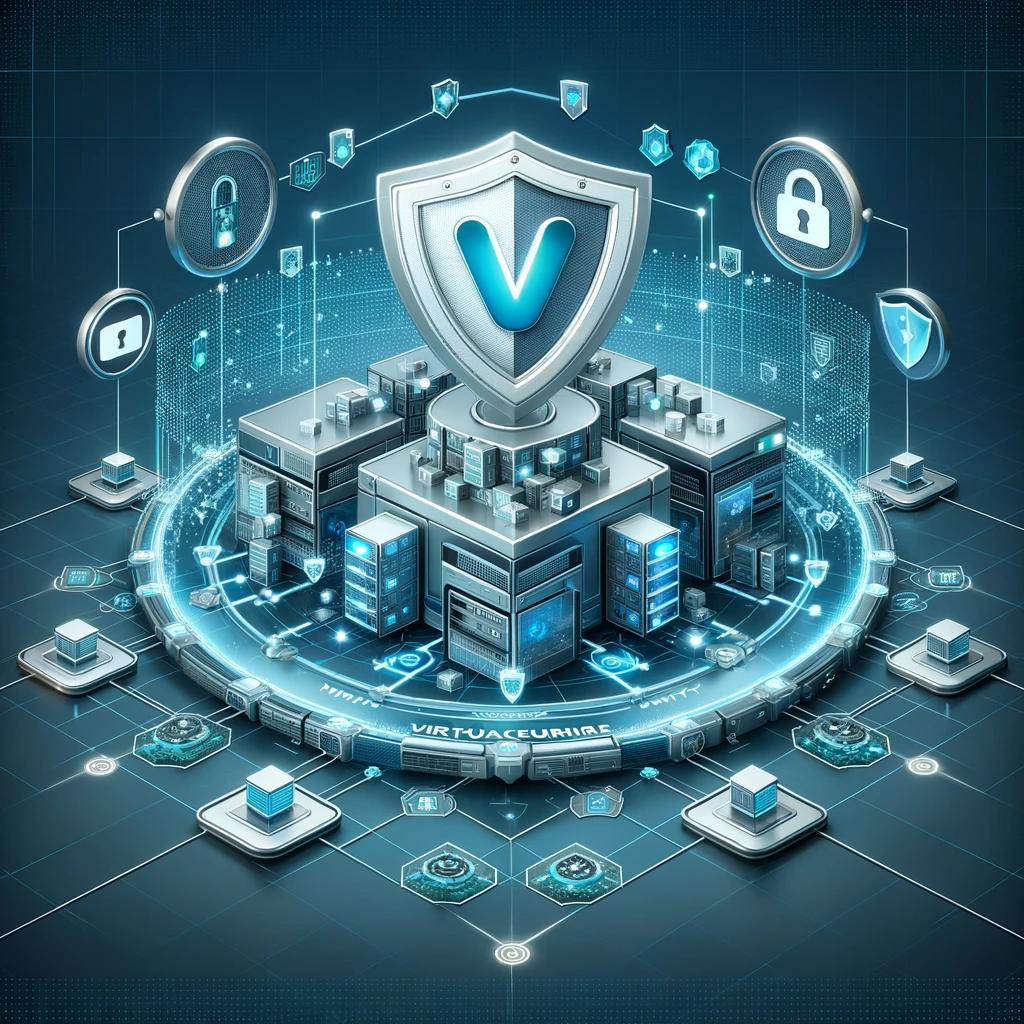
Protecting virtualization infrastructure requires multiple overlapping security controls rather than relying on a single solution.
A comprehensive strategy includes:
- Zero Trust architecture
- Network segmentation
- Multi-factor authentication
- Least privilege access
- Secure backup architecture
- Continuous monitoring
- Threat detection
- Regular patch management
- Vulnerability assessments
- Incident response planning
- Employee cybersecurity awareness
- Continuous security audits
When these measures work together, attackers face significantly greater obstacles, increasing the likelihood that malicious activity will be detected before widespread damage occurs.
Conclusion
Virtualization has transformed enterprise IT by improving efficiency, scalability, and resource utilization. Yet this same consolidation has made virtualization platforms increasingly attractive targets for cybercriminals conducting modern extortion campaigns.
Organizations must recognize that protecting virtualization infrastructure involves much more than securing individual virtual machines. Hypervisors, storage systems, backup environments, management consoles, administrative accounts, and network architecture all require comprehensive protection.
Businesses that invest in proactive security, continuous monitoring, immutable backups, Zero Trust principles, and well-rehearsed incident response plans are far better positioned to withstand today’s ransomware and cyber extortion threats.
For organizations seeking to strengthen their cyber resilience, FireShark Technologies provides services such as Vulnerability Assessment and Penetration Testing (VAPT), cloud security, infrastructure hardening, Security Operations Center (SOC) monitoring, incident response, and security consulting to help protect critical virtualized environments against evolving cyber threats.
Frequently Asked Questions (FAQs)
1. What is virtualization infrastructure?
Virtualization infrastructure consists of hypervisors, virtual machines, storage systems, management servers, networking components, and supporting services that allow multiple virtual environments to operate on shared physical hardware.
2. Why do ransomware groups target virtual environments?
Because compromising a single hypervisor or virtualization management server can impact dozens or hundreds of virtual machines simultaneously, maximizing operational disruption and increasing the likelihood of ransom payment.
3. What is the biggest security risk in virtualization?
Compromised administrator credentials remain one of the most significant risks, as they often provide attackers with broad access to virtual infrastructure.
4. How do immutable backups help against ransomware?
Immutable backups cannot be altered or deleted for a defined retention period, making them highly effective for recovering systems even if attackers obtain administrative privileges.
5. How can organizations improve virtualization security?
Organizations should combine strong authentication, Zero Trust principles, network segmentation, continuous monitoring, regular patching, secure backups, employee training, and incident response planning to build a resilient virtualization security posture.