
Table of Contents
Introduction
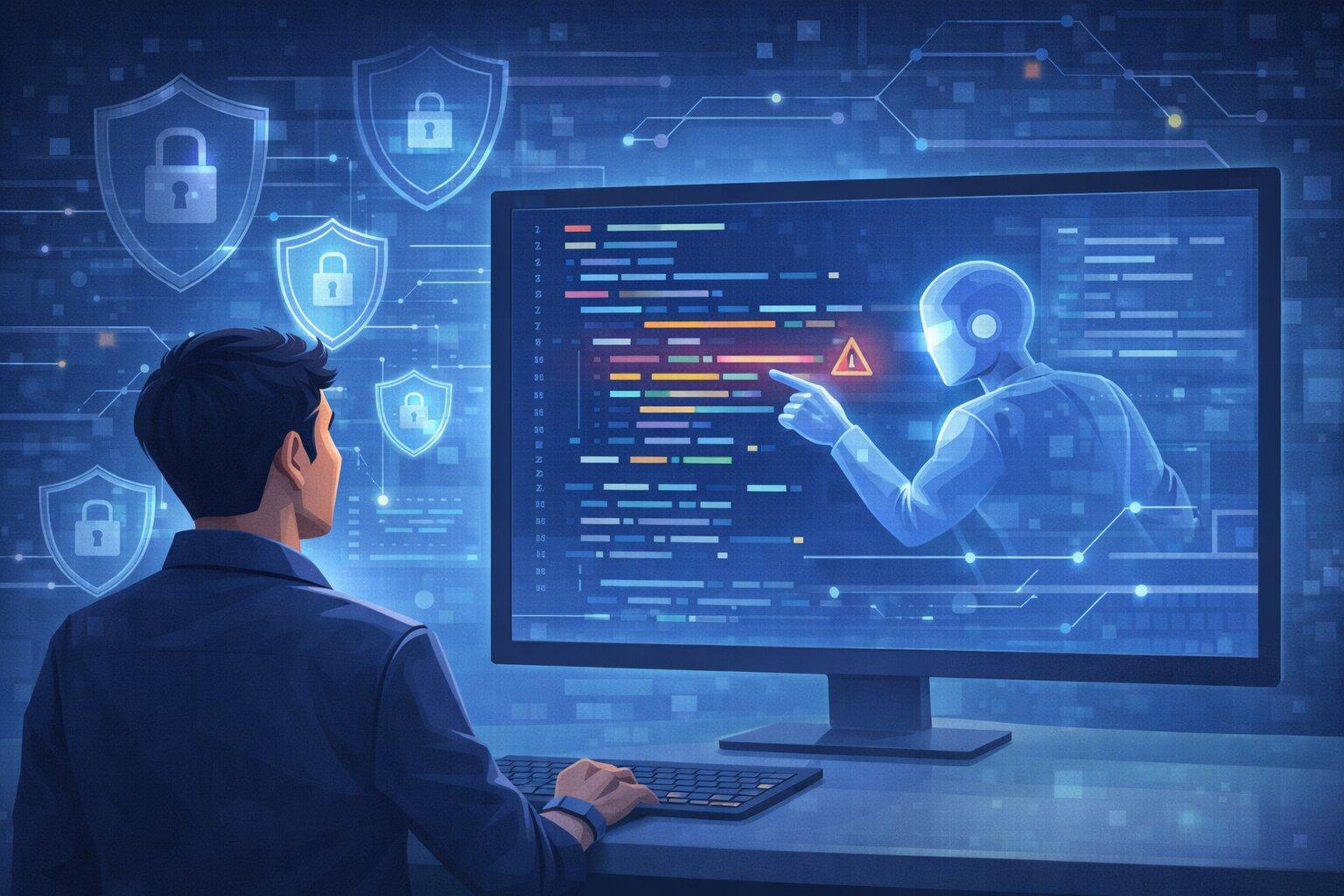
Artificial Intelligence is transforming cybersecurity at an unprecedented pace. From malware analysis and threat detection to vulnerability management and incident response, AI is helping security professionals automate tasks that once required significant manual effort. One of the most promising developments is AI-assisted fuzzing and automated vulnerability discovery, where machine learning models intelligently generate test inputs to uncover software flaws faster than traditional techniques.
While these technologies dramatically improve vulnerability research, they also introduce new challenges for organizations responsible for defending applications, networks, and cloud environments. AI-powered fuzzing enables researchers to discover security weaknesses in hours instead of weeks. Unfortunately, the same technology can also be leveraged by cybercriminals to identify exploitable vulnerabilities before defenders have time to respond.
For defenders, the challenge is no longer simply finding vulnerabilities—it is managing the speed at which AI can discover, prioritize, and potentially exploit them. Understanding both the advantages and risks of AI-assisted vulnerability discovery is essential for building stronger security strategies in today’s rapidly evolving threat landscape.
Understanding Traditional Fuzzing
Fuzzing, often called fuzz testing, is a software security testing technique that involves supplying an application with unexpected, malformed, or random inputs to observe its behavior. If the application crashes, hangs, leaks memory, or behaves unexpectedly, it may indicate a security vulnerability.
Traditional fuzzing has been a cornerstone of vulnerability research for decades. Security researchers use fuzzers to test:
- Web applications
- Operating systems
- Mobile applications
- Network protocols
- IoT firmware
- Device drivers
- APIs
- Enterprise software
Conventional fuzzers generate millions of random inputs hoping one eventually triggers an unexpected condition. Although effective, this brute-force approach has limitations.
Many complex applications require highly structured inputs, authentication sequences, or multiple execution paths. Random mutations often fail to reach deeper sections of the software where critical vulnerabilities may exist.
This limitation motivated the development of AI-assisted fuzzing.
What is AI-Assisted Fuzzing?
AI-assisted fuzzing combines machine learning with traditional fuzz testing techniques. Instead of blindly generating random inputs, AI learns how applications behave and creates smarter test cases that explore code more efficiently.
Modern AI models analyze:
- Source code
- Program execution paths
- Previous crashes
- Memory behavior
- API structures
- Input formats
- Compiler information
- Protocol specifications
Using this knowledge, AI predicts which inputs are most likely to trigger hidden software defects.
Rather than testing millions of meaningless combinations, AI prioritizes high-risk execution paths, greatly increasing testing efficiency.
How AI Improves Automated Vulnerability Discovery
Artificial intelligence introduces intelligence into every stage of the fuzzing lifecycle.
Instead of randomly generating payloads, AI can understand data structures, recognize software logic, and identify unexplored execution paths. Machine learning models continuously improve as they receive feedback from successful crashes and discovered vulnerabilities.
For example, an AI-assisted fuzzer may recognize that a particular API requires authentication tokens before reaching sensitive code. Rather than wasting time on invalid requests, it automatically generates valid authentication sequences and focuses testing on deeper functionality.
Large Language Models (LLMs) further improve vulnerability discovery by interpreting source code, identifying insecure programming patterns, and suggesting high-value fuzzing strategies.
As AI becomes more capable, vulnerability discovery becomes dramatically faster.
Benefits for Security Teams
For defenders, AI-assisted fuzzing offers several significant advantages.
It accelerates vulnerability assessments by reducing the time needed to identify security flaws.
Instead of manually crafting thousands of test cases, security engineers can automate large portions of the testing process.
Organizations benefit from:
- Faster vulnerability detection
- Improved software quality
- Better code coverage
- Reduced manual testing effort
- Earlier discovery during development
- Improved DevSecOps integration
- Lower security testing costs
Development teams can continuously test applications throughout the software development lifecycle, identifying vulnerabilities before production deployment.
The Hidden Risks for Defenders
Although AI-assisted fuzzing strengthens defensive security, it simultaneously increases offensive capabilities.
The same AI algorithms helping defenders secure applications can help attackers identify exploitable weaknesses at unprecedented speed.
This dual-use nature creates significant risks.
Attackers Can Discover Vulnerabilities Faster
Cybercriminals increasingly use automation to accelerate reconnaissance and exploit development.
AI-assisted fuzzing allows attackers to analyze publicly available software, open-source projects, APIs, and firmware without requiring extensive manual research.
Instead of spending months reversing software, attackers can automate much of the discovery process.
As a result:
- Zero-day vulnerabilities may be discovered faster.
- Exploit development timelines shrink significantly.
- Attack campaigns become increasingly automated.
- Defensive patch windows become shorter.
Organizations may find themselves racing against AI-powered attackers rather than human researchers.
Increased Zero-Day Discovery
One of the biggest concerns is the rapid increase in zero-day vulnerability discovery.
A zero-day vulnerability is a software flaw unknown to the vendor and therefore unpatched.
AI-assisted fuzzers can analyze enormous codebases continuously, uncovering vulnerabilities that traditional testing might overlook.
If attackers discover these flaws first, organizations have no available patch or signature-based protection.
This significantly increases operational risk.
AI May Generate Exploitable Test Cases
Unlike traditional fuzzers that merely trigger crashes, AI models can learn patterns associated with successful exploitation.
Future AI systems may automatically generate:
- Buffer overflow payloads
- Memory corruption inputs
- Authentication bypass sequences
- API abuse requests
- Serialization attacks
- Integer overflow conditions
While intended for defensive testing, these capabilities could be weaponized if abused.
False Positives Can Waste Security Resources
AI models are not perfect.
Automated vulnerability discovery tools sometimes identify behaviors that appear vulnerable but are actually harmless.
Security teams may spend valuable time investigating false positives instead of addressing genuine threats.
Over-reliance on AI-generated findings without human validation can reduce operational efficiency.
Expert verification remains essential.
AI Models Can Miss Critical Context
Applications often rely on business logic rather than technical implementation alone.
AI may detect memory corruption while overlooking vulnerabilities involving:
- Authorization logic
- Workflow manipulation
- Financial abuse
- Fraud scenarios
- Privilege escalation
- Insider misuse
Human security analysts understand organizational context that AI cannot fully interpret.
Defensive security still requires expert judgment.
Public AI Models Could Leak Sensitive Information
Organizations increasingly upload source code into AI-powered analysis platforms.
If proper safeguards are not in place, confidential code may inadvertently become part of external AI training datasets or third-party infrastructure.
This creates additional risks including:
- Intellectual property exposure
- Confidential algorithm leakage
- Compliance violations
- Regulatory concerns
- Privacy issues
Sensitive code should only be analyzed using trusted and properly governed AI environments.
AI Increases the Speed of Vulnerability Weaponization
Traditionally, discovering a vulnerability and developing a reliable exploit required considerable expertise.
AI shortens this timeline.
Once a vulnerability is identified, AI models can assist with:
- Exploit generation
- Proof-of-concept development
- Payload optimization
- Target identification
- Attack simulation
The result is a much shorter window between vulnerability discovery and real-world attacks.
Organizations must therefore reduce patch deployment times.
Supply Chain Risks
Modern software relies heavily on third-party libraries and open-source packages.
AI-assisted fuzzing can rapidly identify weaknesses across entire software ecosystems.
If a widely used library contains a hidden vulnerability, attackers may exploit thousands of dependent applications simultaneously.
Recent supply-chain attacks demonstrate how vulnerable modern software ecosystems have become.
Organizations should continuously monitor dependencies and maintain updated software inventories.
Defensive Best Practices
The risks associated with AI-assisted vulnerability discovery can be managed through proactive defensive strategies.
Security should begin during software development rather than after deployment.
Organizations should integrate AI-assisted fuzz testing into continuous integration and continuous deployment (CI/CD) pipelines so vulnerabilities are identified early.
Human security experts should always validate AI findings before remediation decisions are made.
Regular patch management remains one of the most effective defenses against AI-discovered vulnerabilities.
Threat intelligence should be continuously monitored to identify emerging exploitation trends.
Security teams should also implement:
- Secure coding practices
- Runtime application protection
- Network segmentation
- Continuous vulnerability scanning
- Security awareness training
- Zero Trust architecture
- Regular penetration testing
- Incident response planning
Combining AI automation with human expertise provides the strongest defense.
The Future of AI-Assisted Vulnerability Discovery
AI-assisted fuzzing will continue evolving rapidly.
Future systems may autonomously understand entire software architectures, generate highly sophisticated attack paths, and simulate complex multi-stage exploits with minimal human guidance.
Defenders will increasingly rely on AI not only to identify vulnerabilities but also to prioritize remediation based on real-world exploitability, business impact, and threat intelligence.
Rather than replacing security professionals, AI will become a force multiplier—handling repetitive analysis while allowing experts to focus on strategic decision-making.
Organizations that responsibly integrate AI into their security programs will be better positioned to defend against increasingly automated cyber threats.
Conclusion
AI-assisted fuzzing and automated vulnerability discovery represent one of the most significant advancements in modern cybersecurity. By intelligently exploring software behavior, AI enables defenders to uncover vulnerabilities faster, improve code quality, and strengthen application security. However, the same capabilities also empower attackers to accelerate zero-day discovery, automate exploit development, and reduce the time between identifying a flaw and weaponizing it.
The challenge for defenders is not to avoid AI, but to adopt it responsibly. Combining AI-driven testing with secure development practices, continuous monitoring, rapid patch management, and skilled human oversight creates a balanced approach that maximizes the benefits while reducing the risks. As cyber threats become increasingly automated, organizations that effectively integrate AI into their defensive strategies will be better prepared to protect critical systems, sensitive data, and business operations in the years ahead.
Frequently Asked Questions (FAQs)
1. What is AI-assisted fuzzing in cybersecurity?
AI-assisted fuzzing is an advanced software testing technique that uses artificial intelligence and machine learning to generate intelligent test inputs for applications. Unlike traditional fuzzing, AI analyzes application behavior and code paths to discover vulnerabilities more efficiently and with greater accuracy.
2. Why is automated vulnerability discovery important for defenders?
Automated vulnerability discovery enables security teams to identify software flaws early in the development lifecycle. By detecting vulnerabilities before attackers exploit them, organizations can improve software security, reduce remediation costs, and strengthen their overall cybersecurity posture.
3. Can attackers also use AI-assisted fuzzing?
Yes. AI-assisted fuzzing is a dual-use technology. While defenders use it to improve software security, cybercriminals can leverage the same techniques to discover zero-day vulnerabilities, automate exploit development, and launch attacks more quickly, making timely patching and continuous monitoring essential.
4. What are the biggest risks of AI-assisted vulnerability discovery?
The primary risks include faster discovery of zero-day vulnerabilities, automated exploit generation, increased false positives, over-reliance on AI without human validation, and potential exposure of sensitive source code when using unsecured AI platforms. Organizations must balance AI automation with expert oversight.
5. How can organizations safely implement AI-assisted fuzzing?
Organizations should integrate AI-assisted fuzzing into their Secure Development Lifecycle (SDLC), validate AI-generated findings through experienced security professionals, keep software updated with regular patch management, secure AI environments, and combine AI-powered testing with continuous monitoring, penetration testing, and threat intelligence to maximize security benefits.