Table of Contents
Introduction
For decades, modern digital security has relied on cryptographic algorithms that protect everything from online banking and cloud storage to government communications and healthcare records. Encryption methods such as RSA and ECC (Elliptic Curve Cryptography) have served as the foundation of cybersecurity because they are extremely difficult for classical computers to break. However, the rapid advancement of quantum computing is creating a new challenge that could fundamentally change how data is protected.
Quantum computers possess computational capabilities that are vastly different from traditional systems. While classical computers process information using bits represented as 0s and 1s, quantum computers use quantum bits, or qubits, which can exist in multiple states simultaneously. This unique capability allows quantum computers to solve certain mathematical problems significantly faster than conventional machines. As a result, many encryption algorithms that currently secure sensitive information may become vulnerable in the future.
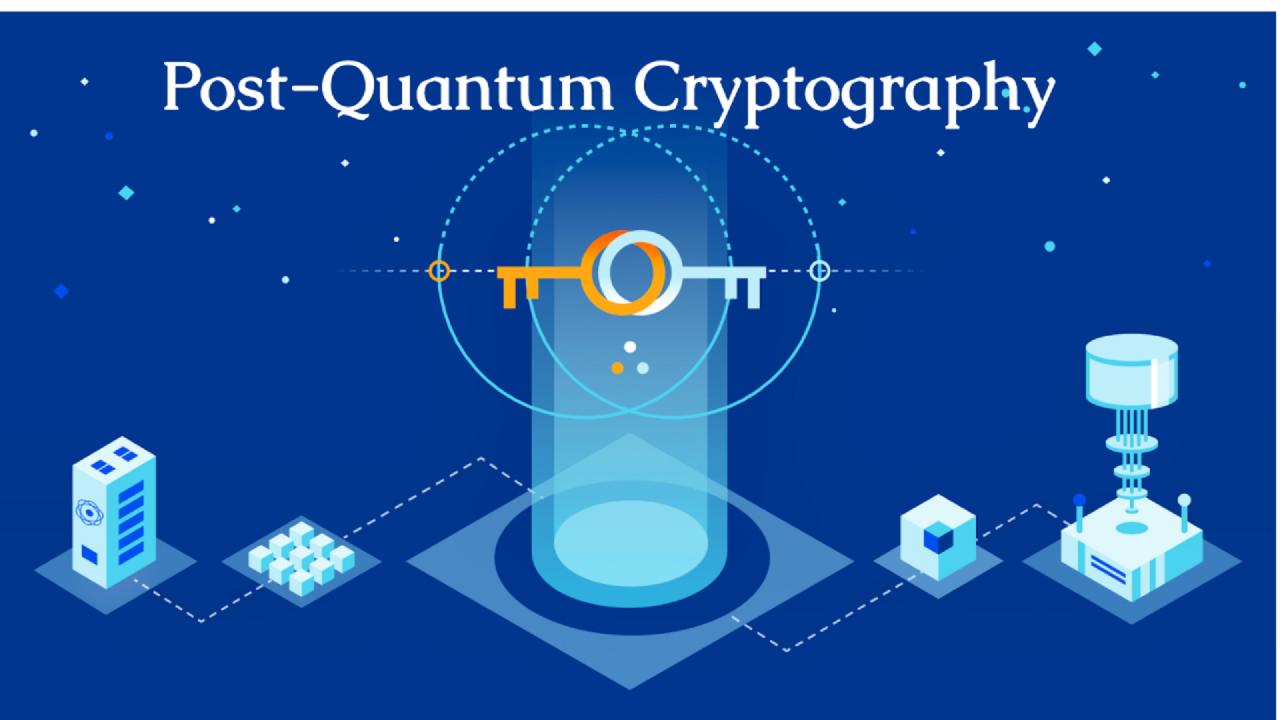
This emerging threat has led to the development of Post-Quantum Cryptography (PQC), a new generation of cryptographic algorithms designed to withstand attacks from both classical and quantum computers. As organizations increasingly recognize the importance of long-term data protection, post-quantum cryptography is becoming a critical component of modern cybersecurity strategies.
Understanding the Quantum Threat
The security of widely used encryption algorithms depends on mathematical problems that are difficult for traditional computers to solve. For example, RSA encryption relies on the difficulty of factoring large prime numbers, while ECC depends on solving complex elliptic curve mathematical problems.
Quantum computers threaten these systems because of algorithms such as Shor’s Algorithm, which can efficiently solve the mathematical challenges that secure RSA and ECC. Once sufficiently powerful quantum computers become available, encrypted communications that are considered secure today could potentially be decrypted in a fraction of the time required by classical computers.
The concern extends beyond future communications. Cybercriminals and nation-state attackers may already be collecting encrypted data today with the intention of decrypting it later when quantum computing capabilities mature. This strategy, often referred to as “Harvest Now, Decrypt Later,” poses a serious risk to organizations handling sensitive information with long-term value.
Industries such as healthcare, finance, defense, critical infrastructure, and cloud services are particularly vulnerable because they manage confidential information that must remain secure for many years.
What is Post-Quantum Cryptography?
Post-Quantum Cryptography refers to cryptographic algorithms specifically designed to remain secure even against attacks from powerful quantum computers. Unlike quantum cryptography, which requires specialized quantum communication hardware, post-quantum cryptography can be implemented using existing digital infrastructure and conventional computer systems.
The primary objective of PQC is to provide a smooth transition from current cryptographic systems while maintaining strong security against future quantum threats.
Researchers have developed several categories of quantum-resistant algorithms based on mathematical problems that are believed to be difficult for both classical and quantum computers to solve. These include lattice-based cryptography, code-based cryptography, multivariate cryptography, and hash-based cryptography.
Among these approaches, lattice-based cryptography has emerged as one of the most promising solutions due to its balance of security, performance, and practical implementation.
Why Post-Quantum Cryptography Matters
The digital economy relies heavily on trust and confidentiality. Every day, billions of transactions, communications, and authentication processes depend on encryption to protect data from unauthorized access.
Without quantum-resistant encryption, organizations may face several risks:
- Exposure of sensitive customer information
- Compromise of intellectual property
- Breach of financial records
- National security vulnerabilities
- Loss of trust and regulatory compliance issues
As quantum computing research accelerates globally, cybersecurity leaders are increasingly recognizing that preparing for the quantum era cannot wait until practical quantum computers become widely available. Transitioning cryptographic infrastructure across large organizations can take many years, making early adoption essential.
How Post-Quantum Cryptography Strengthens Data Security
Post-quantum cryptography provides a foundation for securing digital assets against future threats while maintaining compatibility with existing systems.
Modern organizations use encryption in numerous areas, including:
Secure Communications
Email services, messaging platforms, and virtual private networks depend on encryption to protect communications. PQC ensures that confidential conversations remain secure even in a future where quantum computers are capable of breaking traditional encryption standards.
Data Protection
Organizations store vast amounts of sensitive information in cloud environments, databases, and backup systems. Post-quantum encryption helps protect stored data from future decryption attempts.
Digital Signatures
Digital signatures verify the authenticity and integrity of software updates, electronic documents, and online transactions. Quantum-resistant signature schemes ensure trust remains intact in a post-quantum world.
Authentication Systems
Identity verification mechanisms rely on cryptographic protocols to prevent unauthorized access. PQC strengthens authentication frameworks against emerging quantum-based attacks.
Critical Infrastructure Security
Power grids, transportation networks, telecommunications systems, and government services increasingly depend on digital security. Post-quantum cryptography helps protect these critical systems from future cyber threats.
The Current State of Post-Quantum Cryptography
Governments and cybersecurity organizations worldwide are actively preparing for the transition to quantum-resistant security standards.
The National Institute of Standards and Technology has been leading a global effort to evaluate and standardize post-quantum cryptographic algorithms. After years of rigorous testing and analysis, several algorithms have emerged as leading candidates for widespread adoption.
Technology companies, cloud providers, financial institutions, and cybersecurity vendors are already testing and implementing post-quantum solutions within their infrastructures. Hybrid approaches combining traditional encryption with post-quantum algorithms are becoming increasingly common as organizations prepare for future migration.

Challenges in Adopting Post-Quantum Cryptography
Although post-quantum cryptography offers significant security benefits, implementation is not without challenges.
Many organizations operate complex IT environments containing thousands of applications, devices, and systems that rely on existing cryptographic standards. Replacing or upgrading these components requires careful planning and extensive testing.
Some post-quantum algorithms also require larger cryptographic keys and signatures, which can impact storage requirements, bandwidth consumption, and system performance. Organizations must balance security, efficiency, and operational requirements during deployment.
Additionally, many businesses lack a complete inventory of where cryptography is used across their infrastructure, making migration planning more difficult.
Despite these challenges, cybersecurity experts agree that proactive preparation is far less costly than responding to a future cryptographic crisis.
The Future of Data Security in a Quantum World
The transition to post-quantum cryptography represents one of the most significant shifts in cybersecurity history. Just as organizations adapted to emerging threats such as ransomware, cloud security challenges, and AI-powered cyberattacks, they must now prepare for the impact of quantum computing.
Forward-thinking organizations are already conducting cryptographic assessments, identifying vulnerable systems, and developing migration strategies to ensure long-term protection. As quantum technology continues to evolve, post-quantum cryptography will become a standard requirement rather than an optional enhancement.
Businesses that begin preparing today will be better positioned to maintain regulatory compliance, protect sensitive information, and preserve customer trust in the years ahead.
Conclusion
Post-Quantum Cryptography is rapidly becoming a cornerstone of modern data security. The rise of quantum computing threatens many of the encryption methods currently used to protect digital communications, financial transactions, cloud environments, and critical infrastructure. By adopting quantum-resistant cryptographic algorithms, organizations can safeguard their information against both present and future threats.
While practical large-scale quantum computers may still be developing, the need for preparation is immediate. Data stolen today could be decrypted tomorrow, making proactive security planning essential. As the cybersecurity landscape evolves, post-quantum cryptography will play a vital role in ensuring that sensitive information remains protected in the quantum era.
Frequently Asked Questions (FAQs)
1. What is Post-Quantum Cryptography (PQC)?
Post-Quantum Cryptography (PQC) refers to cryptographic algorithms designed to remain secure against attacks from both classical and future quantum computers. These algorithms aim to replace or supplement traditional encryption methods such as RSA and ECC, which may become vulnerable once powerful quantum computers are available.
2. Why is quantum computing a threat to current encryption?
Quantum computers can use advanced algorithms, such as Shor’s Algorithm, to solve complex mathematical problems much faster than traditional computers. This capability could allow them to break widely used encryption standards like RSA and ECC, potentially exposing sensitive data and communications.
3. Is Post-Quantum Cryptography already being used today?
Yes. Many technology companies, government agencies, financial institutions, and cybersecurity organizations are already testing and implementing post-quantum cryptographic solutions. Some organizations are adopting hybrid encryption models that combine traditional and quantum-resistant algorithms for enhanced security.
4. Which industries should prioritize Post-Quantum Cryptography?
Industries that handle sensitive, long-term data should prioritize PQC adoption. These include healthcare, banking, government, defense, telecommunications, cloud service providers, and critical infrastructure sectors where data confidentiality must be maintained for years or even decades.
5. How can organizations prepare for the transition to Post-Quantum Cryptography?
Organizations should begin by identifying where cryptographic technologies are used across their systems, assessing potential vulnerabilities, and developing a migration strategy. Conducting cryptographic audits, adopting crypto-agile architectures, and staying aligned with emerging standards from organizations like the National Institute of Standards and Technology can help ensure a smoother transition to quantum-safe security.