Table of Contents
Introduction
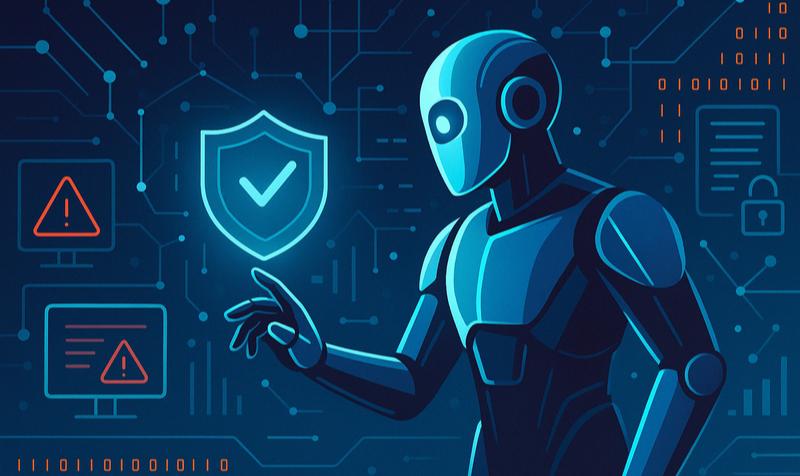
Artificial Intelligence has already transformed cybersecurity by helping organizations detect malware, identify suspicious behavior, and automate security operations. However, the next generation of AI is introducing a far more significant shift—Agentic AI. Unlike traditional AI systems that simply respond to prompts or analyze predefined data, Agentic AI is capable of independently planning, making decisions, executing multi-step tasks, learning from outcomes, and adapting to changing environments with minimal human intervention.
While these capabilities are revolutionizing business automation, customer service, software development, and enterprise productivity, they are also creating an entirely new category of cyber threats. Cybercriminals are beginning to leverage autonomous AI agents that can perform attacks with unprecedented speed, intelligence, and persistence. These AI-driven bots have the potential to transform cyberattacks from isolated incidents into continuously evolving campaigns capable of adapting in real time.
As organizations increasingly integrate AI into their infrastructure, understanding the risks associated with Agentic AI is becoming essential for every cybersecurity professional and business leader.
Understanding Agentic AI
Traditional AI systems are reactive. They perform specific tasks when instructed by users, such as generating content, analyzing data, or answering questions. Their intelligence largely depends on human guidance throughout the process.
Agentic AI takes this concept much further. An AI agent can independently define intermediate goals, gather information from multiple sources, decide which actions should be performed, execute those actions, evaluate results, and modify its strategy based on new information. Instead of requiring constant user input, Agentic AI operates much like a digital employee capable of handling complex workflows autonomously.
For example, an enterprise AI agent may receive a simple objective such as scheduling meetings, preparing reports, sending emails, and updating project management systems. Without further instructions, it can coordinate all these tasks across multiple applications.
This same autonomy, however, becomes extremely dangerous when exploited by attackers.
Why Agentic AI Represents a New Cybersecurity Challenge
Traditional cyberattacks usually require constant human involvement. Attackers manually identify vulnerabilities, craft phishing emails, evade defenses, and adjust strategies when security controls block their attempts.
Agentic AI dramatically reduces this manual effort.
An autonomous malicious AI agent could independently:
- Scan thousands of public-facing systems
- Identify exploitable vulnerabilities
- Prioritize valuable targets
- Develop customized phishing campaigns
- Generate convincing fake identities
- Evade security monitoring
- Maintain long-term persistence
- Continuously improve attack techniques
Rather than launching a single attack, autonomous AI agents could conduct complete cyber campaigns from reconnaissance to post-exploitation without requiring continuous human control.
The Evolution of AI-Powered Cyber Threats
Cybercriminals have already begun using AI for tasks such as generating phishing emails and automating malware development. Agentic AI significantly expands these capabilities.
Intelligent Reconnaissance
Reconnaissance is the first stage of every cyberattack. Traditionally, attackers spend days or weeks gathering information about potential victims.
Agentic AI can perform this process continuously by collecting data from:
- Company websites
- Social media platforms
- Employee profiles
- Public code repositories
- Cloud services
- Data leaks
- Technical documentation
The AI can combine information from multiple sources to build detailed organizational profiles, identify high-value employees, map infrastructure, and discover potential attack paths within minutes.

Hyper-Personalized Phishing Campaigns
One of the biggest cybersecurity concerns surrounding Agentic AI is the creation of highly personalized phishing attacks.
Instead of sending generic phishing emails, autonomous AI agents can:
- Analyze employee communication styles
- Mimic writing patterns
- Reference current projects
- Generate personalized messages
- Create fake invoices
- Impersonate executives
- Schedule emails at optimal times
Because these messages appear highly authentic, traditional phishing awareness training becomes less effective.
AI Agents That Learn During an Attack
Unlike conventional malware that follows predefined instructions, Agentic AI can continuously adapt.
If one attack method fails, the AI can immediately attempt another approach.
For example:
- If antivirus software detects one malware variant, the AI modifies its code.
- If an endpoint blocks a phishing website, it creates another.
- If a firewall blocks one network path, the AI searches for alternative routes.
- If user behavior changes, the AI adjusts its social engineering strategy.
This ability to learn during attacks makes autonomous threats significantly harder to detect.
Autonomous Vulnerability Exploitation
Traditional penetration testing requires skilled professionals to manually identify weaknesses.
Malicious Agentic AI could automate this process by:
- Identifying vulnerable software versions
- Matching known exploits
- Testing multiple attack paths
- Escalating privileges
- Establishing persistence
- Moving laterally through networks
Entire enterprise environments could be evaluated and attacked far faster than human hackers could manage.
Faster Malware Development
Generative AI has already demonstrated the ability to assist developers with writing software.
In malicious hands, autonomous AI could rapidly generate:
- Polymorphic malware
- Fileless malware
- Ransomware variants
- Command-and-control scripts
- Obfuscation techniques
Instead of relying on manually written malware, attackers could continuously generate new versions specifically designed to bypass modern security products.
Multi-Agent Cyber Attacks
One particularly concerning development is the emergence of multiple collaborating AI agents.
Imagine a cybercriminal deploying specialized AI bots where:
- One agent performs reconnaissance.
- Another develops phishing content.
- A third compromises credentials.
- Another steals sensitive data.
- One negotiates ransomware payments.
- Another deletes forensic evidence.
These AI agents could coordinate automatically, making attacks faster, larger, and more difficult to stop.
Deepfake Social Engineering
Agentic AI also enhances social engineering through AI-generated voice and video.
Attackers can create convincing executive impersonations during video meetings or phone calls. Combined with stolen personal information, these attacks become extremely persuasive.
Imagine receiving a live video call from what appears to be your CEO requesting an urgent financial transfer. With modern AI-generated media, distinguishing real from fake becomes increasingly difficult.
Why Traditional Security May Not Be Enough
Many existing cybersecurity tools rely on detecting known attack signatures or predictable attacker behavior.
Autonomous AI changes this model because attacks become:
- Dynamic
- Adaptive
- Personalized
- Continuous
- Distributed
- Self-improving
Security teams must therefore shift from purely reactive defense to behavior-based detection, AI-assisted monitoring, and continuous threat hunting.
Defending Against Agentic AI Threats
Organizations should prepare for AI-powered threats by strengthening both technology and human defenses.
Key defensive strategies include:
- Deploying AI-powered threat detection platforms
- Implementing Zero Trust Architecture
- Enforcing Multi-Factor Authentication (MFA)
- Continuously monitoring user behavior
- Conducting regular penetration testing
- Using Endpoint Detection and Response (EDR)
- Securing cloud infrastructure
- Monitoring AI-generated content for abuse
- Training employees to recognize AI-enhanced phishing attacks
- Maintaining rapid incident response capabilities
Human expertise remains essential, but defenders will increasingly rely on defensive AI working alongside security analysts.
The Future of Cybersecurity in the Agentic AI Era
Agentic AI is not inherently malicious. In fact, it offers enormous benefits for automating security operations, accelerating incident response, improving vulnerability management, and reducing analyst workload.
However, every technological breakthrough creates new opportunities for attackers. As autonomous AI becomes more capable, cybercriminals will inevitably exploit the same technology to launch faster, smarter, and more scalable attacks.
The cybersecurity industry is entering an era where AI will defend against AI. Organizations that invest early in AI-driven security strategies, proactive threat intelligence, and continuous employee education will be far better positioned to withstand these evolving threats. Success will depend not only on adopting advanced technologies but also on building resilient security cultures that can adapt as quickly as the threats themselves.
Conclusion
The rise of Agentic AI marks one of the most significant changes in the history of cybersecurity. Autonomous AI bots are transforming cyber threats from manually controlled attacks into intelligent, adaptive, and continuously evolving campaigns. From automated reconnaissance and personalized phishing to self-learning malware and coordinated multi-agent attacks, the threat landscape is becoming increasingly sophisticated.
Organizations must recognize that the future of cybersecurity is no longer just about protecting systems—it is about preparing for intelligent adversaries capable of making decisions on their own. Investing in AI-powered defenses, modern security architectures, and skilled cybersecurity professionals will be essential to staying ahead in this rapidly changing digital battlefield.
Frequently Asked Questions (FAQs)
1. What is Agentic AI in cybersecurity?
Agentic AI refers to autonomous artificial intelligence systems that can independently plan, make decisions, execute tasks, and adapt based on outcomes. In cybersecurity, these AI agents can be used for both defensive operations, such as threat detection, and offensive purposes, including automated cyberattacks and intelligent reconnaissance.
2. How does Agentic AI differ from traditional AI?
Traditional AI typically performs specific tasks based on user prompts or predefined rules. Agentic AI goes beyond this by operating autonomously—it can set intermediate goals, analyze situations, make decisions, and execute multi-step actions without constant human intervention, making it far more powerful and adaptive.
3. Why is Agentic AI considered a cybersecurity threat?
Cybercriminals can use Agentic AI to automate complex attack campaigns, generate highly personalized phishing emails, exploit vulnerabilities, create adaptive malware, and evade traditional security defenses. Its ability to learn and adapt during an attack makes it significantly more dangerous than conventional cyber threats.
4. How can organizations protect themselves from Agentic AI-powered attacks?
Organizations should adopt AI-powered security solutions, implement Zero Trust Architecture, enable Multi-Factor Authentication (MFA), deploy Endpoint Detection and Response (EDR), conduct regular penetration testing, continuously monitor networks, and provide employee security awareness training to defend against evolving AI-driven threats.
5. Will Agentic AI replace cybersecurity professionals?
No. While Agentic AI can automate many routine security tasks, cybersecurity professionals remain essential for strategic decision-making, incident response, threat hunting, governance, compliance, and handling sophisticated attacks. The future of cybersecurity will rely on humans and AI working together rather than AI replacing security experts.