

Introduction
Penetration testing has become one of the most important practices in modern cybersecurity. Organizations constantly face threats from hackers who exploit vulnerabilities in systems, networks, and applications. To identify and fix these weaknesses before malicious actors can take advantage of them, security professionals rely on specialized tools.
Before deep-diving into execution frameworks, it helps to understand how these security assessments fit within the broader defensive ecosystem by mapping out the Difference Between Ethical Hacking, Penetration Testing, and Red Teaming. Among the most widely used and respected penetration testing utilities is the Metasploit Framework. Known for its extensive capabilities and flexibility, Metasploit has become an essential component of ethical hacking and security assessment activities around the world.
What is the Metasploit Framework?
Metasploit Framework is an open-source penetration testing platform designed to help cybersecurity professionals discover, exploit, and validate security vulnerabilities. Originally developed by H. D. Moore in 2003, the framework has evolved into a comprehensive security testing solution used by penetration testers, security researchers, and ethical hackers alike. Its primary goal is to simulate real-world cyberattacks in a controlled environment, allowing organizations to understand their security posture and strengthen their defenses.
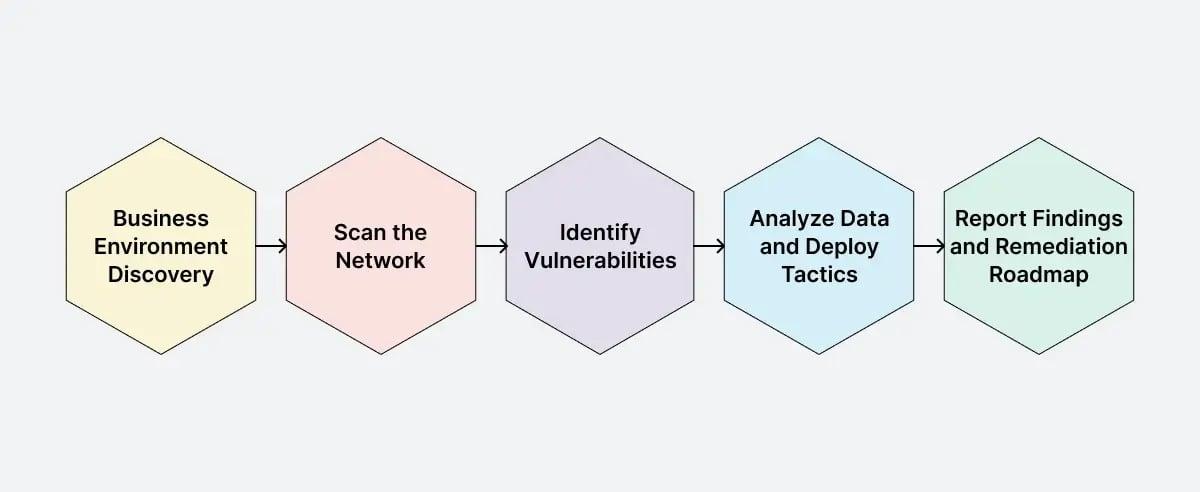
Rather than randomly attempting to connect to systems, Metasploit intelligently sends specifically crafted payloads and analyzes system behavior. Based on these responses, security teams can safely determine whether a vulnerability poses an active risk.
The Core Components of Metasploit
One of the main reasons for Metasploit’s massive popularity is its extensive collection of exploit modules. These modules contain code that targets known vulnerabilities in operating systems, applications, and network services. Instead of developing exploits from scratch, security professionals can leverage Metasploit’s library to test whether systems are vulnerable to specific attacks. This significantly reduces the time required for vulnerability validation and enables testers to focus on analyzing security risks and recommending remediation measures.
The framework follows a highly flexible, customizable modular architecture consisting of several key pillars:
| Module Type | Core Technical Function |
| Exploits | Code sequences utilized to take advantage of specific system vulnerabilities. |
| Payloads | The actions, scripts, or runtime code executed on a target after successful exploitation. |
| Auxiliary Modules | Performs secondary actions such as network scanning, port enumeration, and fuzzing. |
| Encoders | Modifies payloads to bypass traditional security mechanisms and signature detection. |
| Post-Exploitation | Gathers critical telemetry data, maps internal networks, and assesses operational impact. |
Because it contains such a vast repository of attack vectors, this environment serves as a core asset among Certified Ethical Hacker Version 13 (CEH v13) Tools | CEH Practical setups.
Streamlining the Penetration Testing Lifecycle
One of the most powerful features of Metasploit is its ability to streamline the end-to-end security assessment process. A typical engagement begins with information gathering and vulnerability identification. Once anomalies are discovered, Metasploit can be used to verify whether they are actively exploitable. By safely simulating attacks, organizations can distinguish between minor theoretical vulnerabilities and critical real-world risks. This practical approach helps prioritize remediation efforts and allocate engineering resources more effectively.
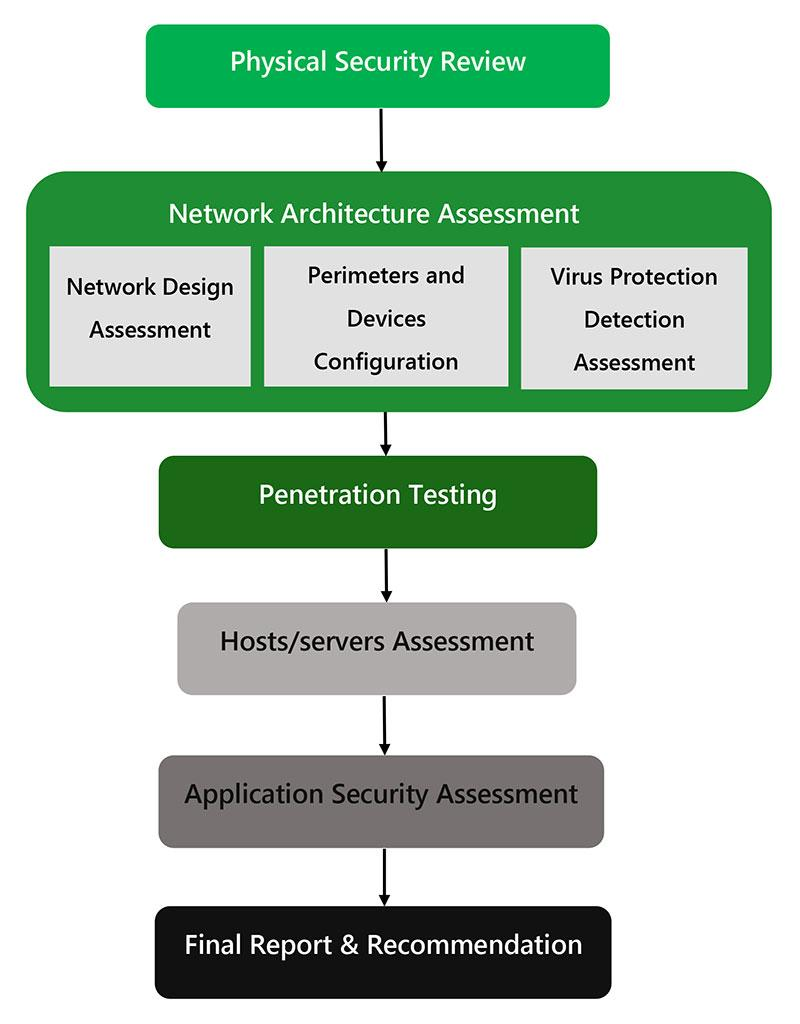
[Information Gathering] ──> [Vulnerability Scanning] ──> [Metasploit Validation] ──> [Prioritized Remediation]
Metasploit also supports automated penetration testing tasks. Security teams can create custom scripts, automate repetitive delivery paths, and integrate the framework seamlessly with external vulnerability scanners. This capability is particularly valuable in large enterprise environments where thousands of systems must be assessed regularly. Automation improves efficiency while ensuring consistent testing procedures across disparate corporate assets and networks.
Metasploit in Cybersecurity Training and Education
Another important aspect of Metasploit is its critical role in professional training and development. Many aspiring ethical hackers and security professionals use the framework to learn about vulnerabilities, exploitation techniques, and defensive strategies.
Educational Impact: Through hands-on experience in controlled lab environments, learners gain a deep, technical understanding of how cyberattacks work, allowing them to build stronger defensive architectures.
As a result, Metasploit has become a default tool in cybersecurity courses, professional certification programs, and security research initiatives. To optimize this learning curve, engineers frequently deploy it on specialized operating systems; find out more about this standard implementation in our guide on Kali Linux: Why It Is the Most Popular OS for Ethical Hackers. Practicing with the framework in safe, gamified settings is an excellent mechanism to Strengthen Your Pentesting Skills Through Capture the Flag Challenges.
Operational Limitations and Ethical Boundaries
Despite its undeniable power, Metasploit must be used responsibly and ethically. The exact same capabilities that make it valuable for protective security testing can cause massive disruptions if misused by malicious actors. Unauthorized exploitation of target systems is highly illegal and carries severe criminal consequences.
Therefore, penetration testers must always obtain written, explicit authorization before conducting security assessments. Organizations should also establish clear rules of engagement and ensure that testing activities remain strictly within predefined boundaries.
Furthermore, results may be influenced by firewalls, intrusion detection systems (IDS), and localized network filtering mechanisms that block or modify inbound testing traffic. Additionally, scanning very large subnet ranges can require considerable time unless appropriate execution flags and timing options are carefully tuned.
Conclusion
In an era where cyber threats are constantly evolving, organizations must take a proactive approach to security rather than waiting for attacks to occur. Metasploit Framework has established itself as one of the most powerful and reliable tools for penetration testing by enabling security professionals to identify, validate, and understand vulnerabilities in a controlled environment. Its extensive library of exploits, modular architecture, and automation capabilities make it an invaluable resource for ethical hackers and cybersecurity teams.
However, the true value of Metasploit lies not in exploiting systems, but in helping organizations strengthen their overall cyber resilience. When used ethically and with proper authorization, it provides critical insights that allow businesses to remediate security weaknesses before they can be weaponized by malicious threat actors.
Frequently Asked Questions (FAQs)
1. What is Metasploit Framework used for? Metasploit Framework is used for network penetration testing, live vulnerability validation, security posture assessments, automated exploit development, and specialized cybersecurity training.
2. Is Metasploit free to use? Yes, Metasploit Framework is open-source and entirely free to use. However, commercial versions (such as Metasploit Pro) are available from Rapid7, providing additional enterprise web interfaces, automation workflows, and team collaboration features.
3. Who uses Metasploit on a daily basis? Ethical hackers, penetration testers, security operations center (SOC) analysts, vulnerability management engineers, and threat researchers use Metasploit to evaluate and improve organizational defense strategies.
4. Can beginners learn Metasploit? Yes. Beginners can master Metasploit by setting up deliberate virtual sandbox labs, utilizing deliberate target environments (such as Metasploitable), and following structured cyber security training pathways.
5. Is using Metasploit legal? Metasploit itself is a completely legal, standard security auditing utility. However, launching exploits or running auxiliary tools against external networks or infrastructure without explicit, written permission from the owner is entirely illegal and violates international cybercrime laws.