Introduction
Cyberattacks have evolved dramatically over the past decade. While organizations have invested heavily in antivirus software, firewalls, endpoint protection, and traditional Multi-Factor Authentication (MFA), attackers have adapted their techniques just as quickly. Modern phishing campaigns are no longer limited to poorly written emails asking users to reveal passwords. Today, cybercriminals use AI-generated phishing messages, fake login portals, browser-in-the-middle attacks, session hijacking, adversary-in-the-middle (AiTM) phishing kits, and social engineering techniques that can bypass traditional security measures with alarming success.
One of the biggest lessons learned from recent cyber incidents is that passwords alone—even when combined with traditional MFA methods like SMS or OTP applications—are no longer sufficient. Organizations worldwide are now shifting toward phishing-resistant authentication methods built on the FIDO2 standard, enabling passwordless and cryptographically secure authentication that dramatically reduces account compromise risks.
As businesses continue adopting cloud services, remote work, and hybrid environments, phishing-resistant MFA has become one of the strongest defenses against identity-based cyberattacks.
The Growing Problem with Traditional Authentication
For years, passwords served as the first line of defense. Unfortunately, they have also become one of the weakest security components.
Employees frequently reuse passwords across multiple websites. Many create weak passwords that attackers can easily guess or crack through brute-force attacks. Even strong passwords become vulnerable once they’re stolen through phishing campaigns or data breaches.
To improve security, organizations introduced Multi-Factor Authentication, requiring users to provide an additional verification factor beyond their password.
Traditional MFA commonly includes:
- SMS verification codes
- Email verification
- Authenticator apps
- Push notifications
- Voice calls
While these methods significantly improved security compared to passwords alone, attackers quickly discovered methods to bypass them.
Why Traditional MFA Is No Longer Enough
Modern attackers rarely attempt direct password cracking. Instead, they target users themselves.
Sophisticated phishing websites now perfectly imitate Microsoft 365, Google Workspace, banking portals, VPN gateways, and enterprise login systems.
A victim enters:
- Username
- Password
- MFA code
The phishing server immediately forwards those credentials to the legitimate website in real time.
Within seconds, the attacker successfully logs into the victim’s account.
This technique is known as an Adversary-in-the-Middle (AiTM) attack.
Because the authentication code is valid for a short period, the attacker can capture and reuse it before it expires.
Even push notification MFA has weaknesses. Attackers often launch “MFA fatigue attacks,” repeatedly sending authentication requests until frustrated users eventually approve one accidentally.
How Modern Phishing Attacks Bypass Traditional MFA
Modern phishing attacks exploit weaknesses in legacy authentication systems through techniques such as:
Real-Time Phishing Proxies
Attackers create proxy servers positioned between the victim and the legitimate website. Every login request passes through the attacker first.
The victim believes they are communicating directly with Microsoft or Google.
Instead, every credential is intercepted.
Session Cookie Theft
Many websites store authentication sessions inside browser cookies.
Rather than stealing passwords, attackers steal authenticated sessions.
Once they possess the session cookie, they no longer need passwords or MFA codes.
Push Fatigue Attacks
Instead of hacking systems, attackers exploit human behavior.
Victims receive dozens of authentication prompts.
Eventually they approve one simply to stop the notifications.
Major organizations have suffered breaches using this exact technique.
SIM Swapping
SMS-based MFA depends on mobile carriers.
Attackers convince telecom providers to transfer the victim’s phone number onto a new SIM card.
All future SMS verification codes now reach the attacker.
What Is Phishing-Resistant MFA?
Phishing-resistant MFA eliminates the weaknesses that attackers exploit.
Rather than sending authentication codes that users manually enter, phishing-resistant authentication verifies the identity of both:
- the user
- the website
before any authentication occurs.
Even if a user visits a fake website, authentication simply fails.
No password.
No code.
No approval.
Nothing useful reaches the attacker.
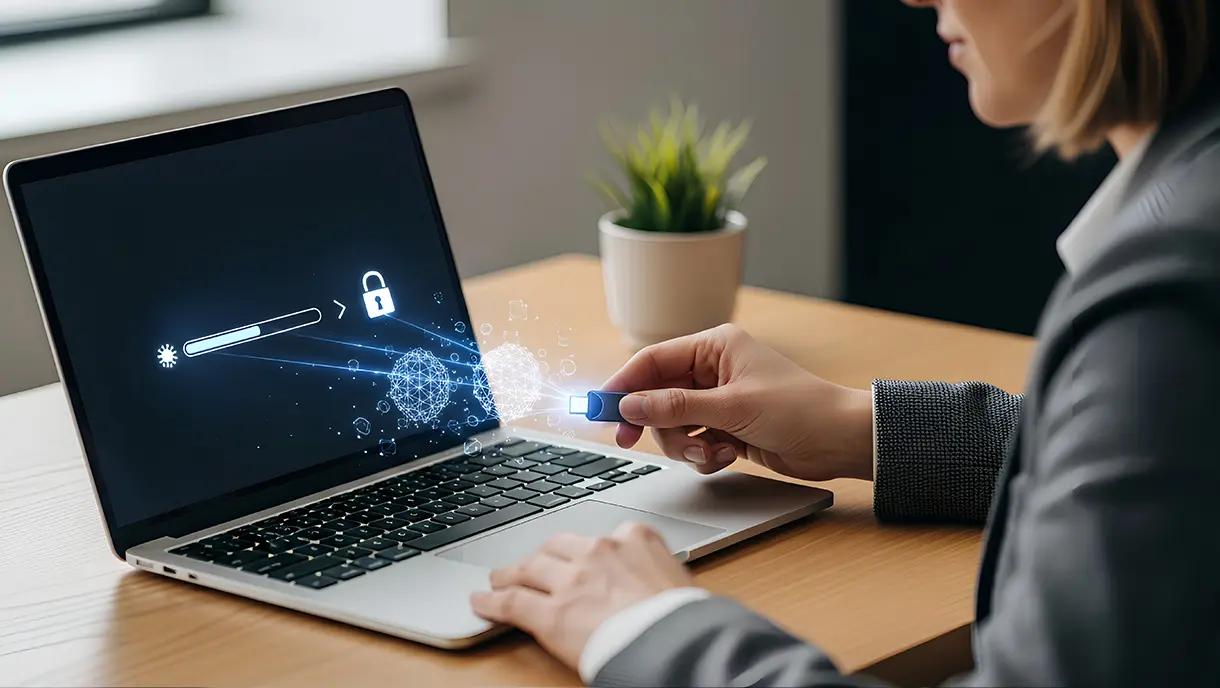
This fundamentally changes authentication from “something you know” into cryptographic proof of identity.
Understanding FIDO2
FIDO2 stands for Fast Identity Online 2, an open authentication standard developed by the FIDO Alliance in collaboration with major technology companies.
Instead of relying on passwords, FIDO2 uses public-key cryptography.
During registration:
- A unique cryptographic key pair is created.
- The private key remains securely stored on the user’s device.
- The public key is shared with the online service.
When logging in:
The website sends a cryptographic challenge.
The user’s device signs the challenge using its private key.
The website verifies the signature using the stored public key.
The private key never leaves the user’s device.
It cannot be stolen by phishing websites.
It cannot be intercepted.
It cannot be replayed.
How FIDO2 Stops Phishing Completely
Unlike passwords, FIDO2 credentials are tied to the exact website domain.
For example:
https://company.comand
https://company-login.comare completely different domains.
Even if the phishing page looks identical, the browser refuses to authenticate because the cryptographic keys only work with the legitimate domain.
The fake website never receives authentication.
The attack simply fails.
Passwordless Authentication
One of the biggest advantages of FIDO2 is passwordless login.
Users authenticate using:
- Fingerprint
- Face recognition
- PIN
- Hardware security key
- Built-in device security
The password disappears entirely.
Since there is no password:
- Nothing to steal
- Nothing to guess
- Nothing to reuse
- Nothing to phish
Passwordless authentication dramatically reduces helpdesk costs associated with password resets while improving user convenience.
Passkeys: The Future of Authentication
FIDO2 introduced passkeys as the next evolution of secure login.
Passkeys synchronize securely across trusted devices while remaining protected by device security mechanisms.
Users can sign in using:
- Windows Hello
- Apple Face ID
- Touch ID
- Android biometric authentication
No passwords are required.
No OTP codes are entered.
Authentication becomes nearly invisible while maintaining strong security.
Benefits for Businesses
Organizations implementing phishing-resistant MFA experience significant improvements in both security and user experience.
Major benefits include:
- Dramatically reduced phishing success rates.
- Protection against credential theft.
- Resistance to AiTM phishing attacks.
- Elimination of password reuse risks.
- Fewer password reset requests.
- Stronger compliance with modern cybersecurity standards.
- Improved employee productivity through faster authentication.
- Better protection for remote workers and cloud environments.
Industries That Benefit Most
Almost every industry handling sensitive information can benefit from FIDO2 authentication.
These include:
- Banking and Financial Services
- Healthcare
- Government Agencies
- Defense Organizations
- Educational Institutions
- Cloud Service Providers
- Manufacturing
- Software Companies
- Managed Service Providers (MSPs)
- E-commerce Businesses
Organizations operating under regulations such as GDPR, HIPAA, PCI DSS, ISO 27001, and NIST guidelines increasingly view phishing-resistant MFA as a critical control.
Best Practices for Implementing Phishing-Resistant MFA
Successful adoption requires more than simply purchasing security keys. Organizations should assess critical systems, identify high-risk users, enable phishing-resistant authentication for administrators first, support passkeys on compatible devices, educate employees about phishing-resistant login flows, maintain secure recovery procedures, and monitor authentication logs for unusual activity. Combining FIDO2 with endpoint security, identity governance, and continuous monitoring creates a layered defense that is far stronger than passwords and legacy MFA alone.
The Future of Identity Security
Identity has become the new security perimeter. As organizations embrace cloud computing, hybrid work, and AI-powered applications, attackers are increasingly focused on compromising user accounts rather than exploiting software vulnerabilities. Passwords and traditional MFA methods were important milestones, but they are no longer enough against sophisticated phishing campaigns and real-time credential theft.
Phishing-resistant MFA based on FIDO2 and passkeys represents a major shift in cybersecurity. By using cryptographic authentication that is bound to legitimate websites and secured by trusted devices, organizations can eliminate entire categories of attacks instead of merely detecting them after the fact. This approach not only strengthens security but also simplifies the login experience for users.
For businesses looking to build a resilient identity strategy, adopting FIDO2 and phishing-resistant MFA is becoming less of an option and more of a necessity. Organizations that invest in these technologies today will be far better equipped to defend against the evolving cyber threats of tomorrow.
Conclusion
Cybercriminals are constantly refining phishing techniques, making traditional authentication methods increasingly vulnerable. Passwords, SMS codes, and even conventional MFA can be bypassed through sophisticated attacks such as adversary-in-the-middle phishing, session hijacking, and MFA fatigue.
Phishing-resistant MFA, powered by FIDO2 and passkeys, changes the security model by relying on cryptographic authentication rather than shared secrets. Because authentication is bound to the legitimate website and the private key never leaves the user’s device, attackers cannot steal or replay credentials through phishing pages.
As organizations continue to modernize their security posture, implementing FIDO2 is one of the most effective ways to protect users, reduce identity-related risks, and enable a secure, passwordless future. For companies seeking to strengthen their cybersecurity resilience, phishing-resistant MFA is no longer just an advanced feature—it is a foundational requirement for defending against modern cyberattacks.
FAQs
1. What is phishing-resistant MFA?
Phishing-resistant MFA is a form of multi-factor authentication designed to prevent attackers from stealing or replaying authentication credentials through phishing websites. It uses cryptographic methods, such as FIDO2, to verify both the user and the legitimate website.
2. How does FIDO2 differ from traditional MFA?
Traditional MFA often relies on one-time codes or push notifications, which can be intercepted or tricked through phishing. FIDO2 uses public-key cryptography, keeping the private key securely on the user’s device and preventing credential theft.
3. What are passkeys, and why are they more secure?
Passkeys are FIDO2-based credentials that allow users to sign in using biometrics or a device PIN instead of passwords. They are resistant to phishing because they only work with the legitimate website they were created for.
4. Can FIDO2 completely eliminate phishing attacks?
FIDO2 cannot stop every type of cyberattack, but it is highly effective against credential phishing and adversary-in-the-middle attacks because attackers cannot obtain or reuse the private cryptographic keys.
5. How can organizations start implementing phishing-resistant MFA?
Organizations should begin by identifying high-risk accounts, enabling FIDO2 security keys or passkeys for administrators, integrating with identity providers that support FIDO2, training employees, and gradually expanding passwordless authentication across the organization.