Introduction
Artificial Intelligence (AI) is transforming almost every industry, and software development is one of the fields experiencing the most significant changes. From writing code and detecting bugs to automating testing and improving project management, AI is reshaping how software is created, maintained, and delivered.
What once required countless hours of manual effort can now be completed much faster with the assistance of intelligent tools. As AI technology continues to evolve, developers are discovering new ways to increase productivity, improve code quality, and focus on innovation rather than repetitive tasks.
The Evolution of the Software Development Lifecycle
In the past, software development relied heavily on manual coding, extensive documentation, and time-consuming debugging processes. Developers needed to spend hours searching for solutions, reviewing code, and fixing errors.
Today, AI-powered tools are capable of assisting developers throughout the entire software development lifecycle. These tools can:
Analyze complex system requirements.
Generate instantaneous code suggestions.
Identify underlying vulnerabilities.
Predict potential engineering issues before they occur.
As a result, software teams can develop applications more efficiently while maintaining higher standards of quality and security.
Code Generation and Smart Programming Assistants
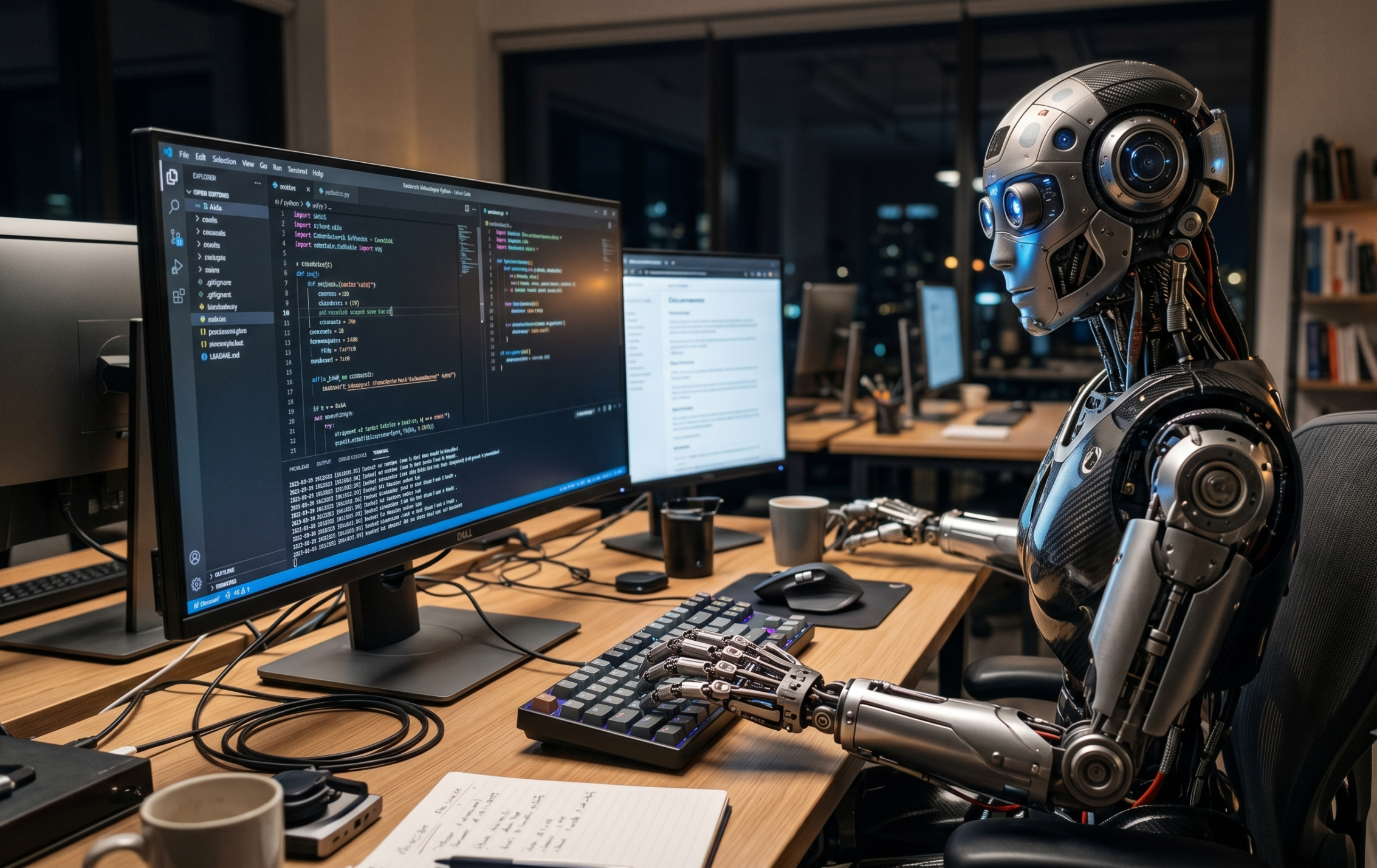
One of the most noticeable impacts of AI is in code generation and assistance. Modern AI-powered coding assistants can understand natural language instructions and generate functional code within seconds. Developers can describe what they want to build, and AI tools can provide code snippets, functions, or even complete modules.
[Natural Language Prompt] ──> [AI Coding Engine] ──> [Functional Code Module]
This capability significantly reduces development time and allows programmers to focus on solving complex business problems rather than writing repetitive boilerplate code. For a deep dive into how the leading foundational models stack up against one another in programming and reasoning environments, read our comprehensive analysis on ChatGPT vs Claude vs Gemini: Which AI Assistant Is Better?.
In addition to boosting enterprise productivity, AI also helps beginners learn programming more effectively by providing contextual explanations, examples, and real-time guidance.
Accelerating Software Testing and QA
Another area where AI is making a significant difference is software testing. Testing is a crucial part of software development, but it can often be repetitive and resource-intensive.
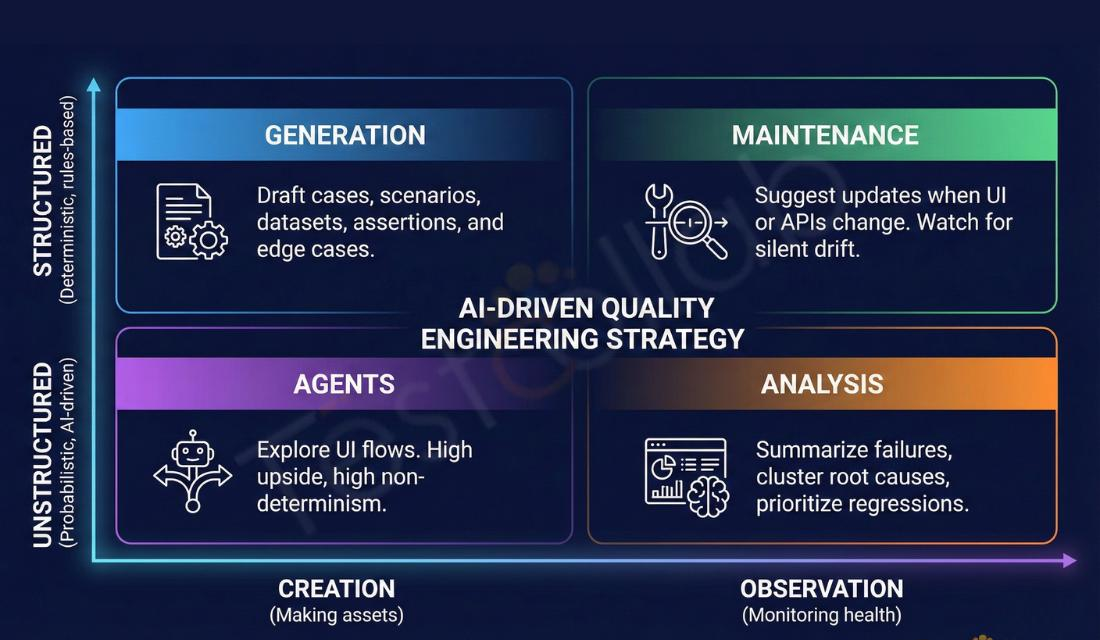
AI-driven testing tools can automatically generate test cases, execute tests, and analyze results. These tools can identify patterns that might indicate hidden bugs and suggest areas that require further inspection. Automated testing powered by AI not only accelerates the testing process but also improves overall software reliability by detecting edge-case defects that traditional testing methods might miss.
Efficiency in Bug Detection and Debugging
Bug detection and debugging have become significantly more efficient with AI integration. Intelligent systems can analyze millions of lines of code and quickly identify potential errors, performance bottlenecks, and security vulnerabilities.
Instead of forcing engineers to manually review massive codebases line by line, developers can rely on AI tools to highlight problematic sections and recommend immediate refactoring solutions. This reduces overall development costs and drastically shortens the time required to release stable software updates and new features.
Intelligent Project Management and Collaboration
AI is also transforming project management and team collaboration. Software development projects often involve multiple cross-functional teams working on complex tasks with strict deadlines.
AI-powered project management systems can analyze past team performance, estimate project timelines, identify systemic delivery risks, and recommend optimized resource allocation strategies. By using predictive analytics, organizations can make better decisions and significantly reduce the likelihood of project delays, enabling teams to deliver projects more efficiently while maintaining transparency and accountability.
Transforming Cybersecurity Paradigms
Cybersecurity is a critical area benefiting from AI-driven software development. As digital threats become increasingly sophisticated, traditional reactive security approaches are no longer sufficient.
Proactive vs. Reactive Security: Relying on post-development patch management is a vulnerable strategy. Integrating AI directly into the pipeline ensures security is compiled natively into the codebase from day one.
AI systems can continuously monitor applications, detect unusual behavior, and identify potential vulnerabilities in real time. Developers can integrate AI-based security tools during the initial compilation process to build more secure applications from the start. This proactive approach helps organizations reduce security risks and protect sensitive data more effectively.
However, this technology is a double-edged sword, as malicious entities also leverage automation. To understand how defensive engineering must adapt to automated threats, see our guide on AI-Powered Cyber Attacks: How Hackers Are Using AI. For a detailed overview of the tools utilized to monitor and protect enterprise networks, check out the Top AI Tools Every Cybersecurity Professional Should Know.
The Rise of Low-Code and No-Code Platforms
The rise of AI is also encouraging the adoption of low-code and no-code development platforms. These platforms allow users with limited programming knowledge to create applications through visual interfaces and automated workflows.
AI enhances these platforms by understanding user requirements and generating application components automatically. This democratization of software development enables businesses to build custom solutions faster and empowers non-technical users to actively participate in digital transformation initiatives.
The Human Element: Collaboration, Not Replacement
Despite its many advantages, AI is not replacing software developers. Instead, it is becoming a powerful tool that enhances their native capabilities.
Human creativity, problem-solving skills, critical thinking, and business understanding remain completely essential in software development. AI can generate code and automate repetitive tasks, but it cannot fully understand abstract business goals, intuitive user experiences, or complex architectural decisions in the same way humans can. The future will involve close collaboration between developers and AI systems, where each complements the unique strengths of the other.
Conclusion
Artificial Intelligence is fundamentally changing the future of software development by automating routine tasks, improving code quality, strengthening cybersecurity, and accelerating project delivery. From AI-powered coding assistants to intelligent testing and security solutions, the technology is transforming every stage of the development process.
While AI will continue to evolve and become more capable, human expertise will remain at the center of innovation. The future of software development is not about humans versus AI—it is about humans and AI working together to create smarter, faster, and more reliable software solutions.
Frequently Asked Questions (FAQs)
1. How is AI helping software developers?
AI assists developers by generating functional code, detecting bugs early, automating quality assurance testing, improving application security, and providing intelligent recommendations that increase overall daily productivity.
2. Will AI replace software engineers?
No. AI is engineered to assist software engineers rather than replace them. Human creativity, strategic architectural design, user experience empathy, and high-level decision-making remain essential components of software development.
3. What are AI coding assistants?
AI coding assistants are specialized software tools that help developers write code faster by suggesting contextual code snippets, completing multi-line functions, explaining complex legacy code, and highlighting syntax errors in real time.
4. How does AI improve software testing?
AI can automatically generate comprehensive test cases, execute continuous integration tests, analyze output logs, and detect hidden defects that manual or standard automated testing scripts might overlook.
5. What skills should future developers learn alongside AI?
Future developers should focus heavily on programming fundamentals, system design architecture, cloud computing, data analysis, cybersecurity, and mastering the prompt engineering skills required to effectively use AI-powered development tools.