
Introduction
Cybersecurity has woven itself into the fabric of daily life. Whether you are managing corporate operations via cloud architectures, executing mobile banking transactions, or handling sensitive employee databases, your data footprint is active around the clock. Yet, as cyber threats continue to accelerate in scale and sophistication, an alarming number of individuals and business leaders continue to base their defense strategies on outdated assumptions.
Operating under these misconceptions creates a false sense of security, transforming an organization into an easy target. Dismantling these myths is the first and most critical step toward implementing a resilient, modern defense.
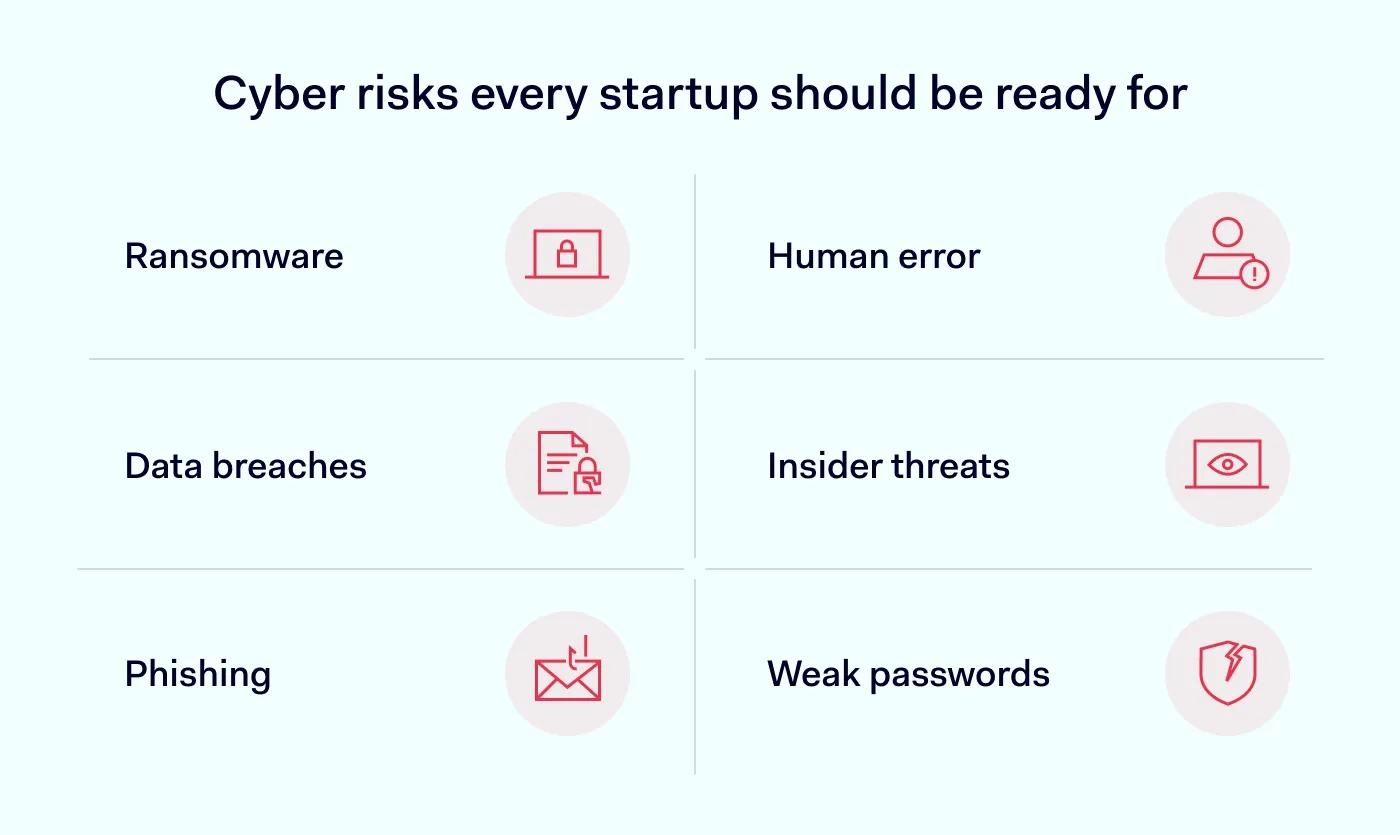
The Common Misconceptions Disarming Modern Networks
[Outdated Assumption] ──> [Gaps in Defense] ──> [Unchecked Lateral Infiltration]
Myth 1: “Our Organization is Too Small to Be Target”
This remains one of the most financially damaging misconceptions in existence. Many small and medium-sized businesses (SMBs) assume that cybercriminal syndicates exclusively chase massive corporations with household names.
The reality of modern cybercrime is highly automated. Threat actors deploy persistent, automated scanning software to crawl the internet, seeking vulnerabilities regardless of company size. Automated tools do not look at your brand logo; they look for unpatched software, exposed access ports, and weak credentials. Because smaller enterprises often lack a dedicated, around-the-clock security operations center, they frequently become the path of least resistance for opportunist attackers.
Myth 2: “Antivirus Software Offers Complete Protection”
Relying solely on local antivirus programs to protect your architecture is the digital equivalent of locking your front door while leaving your windows wide open. Traditional signature-based antivirus solutions are design-limited: they can only detect threat profiles that have already been identified, analyzed, and indexed.
Modern attacks systematically bypass legacy antivirus systems using complex phishing configurations, fileless malware execution, zero-day vulnerabilities, and credential theft. Comprehensive cybersecurity requires a multi-layered framework, combining advanced behavioral monitoring with structured employee awareness.
Myth 3: “Strong Passwords Are a Solitary Line of Defense”
With the emergence of complex threat mechanisms, some believe that password strength no longer matters, leading to dangerous credential reuse. Conversely, others believe that a long password alone is enough to keep an account safe. Both extremes expose systems to severe risk.
While complexity prevents simple automated guessing, cybercriminals routinely bypass password text entirely through targeted phishing mechanisms and session hijacking. To see how threat actors easily extract even the most complex combinations from unsuspecting users, see our analysis on How Cybercriminals Steal Passwords and Login Credentials. Complex keys must always be paired with robust Multi-Factor Authentication (MFA).
Myth 4: “Cyber Attacks Are Instantly Easy to Spot”
Hollywood has conditioned society to expect cyber attacks to announce themselves with flashing crimson text, alarms, or rapid system failures. Real-world corporate intrusions operate in complete silence.
Once attackers gain an initial foothold, their primary objective is long-term stealth—known as “dwell time.” Cybercriminals can spend weeks or months quietly mapping internal network directories, escalating administrative privileges, and copying confidential data archives before initiating an open extortion phase. Continuous behavioral network visibility is required to isolate an intrusion before the damage is finalized.
Myth 5: “Mac Operating Systems and Smartphones Cannot Be Hacked”
The long-held belief that certain operating systems or mobile device ecosystems are entirely immune to cyber threats is categorically false. While some operating platforms feature robust sandbox boundaries, they remain prime targets for tailored infostealer malware, mobile spyware, and aggressive social engineering campaigns.
Because users assume their mobile devices are inherently safe, they are far more likely to click malicious links, ignore operating system safety updates, or grant invasive application permissions. Every device that connects to corporate data paths must be evaluated with identical security scrutiny.
Myth vs. Reality Matrix
| The Pervasive Myth | The Technical Reality | Recommended Security Correction |
| “Public Wi-Fi is perfectly secure if it requires a network password.” | Attackers can easily set up twin hotspots or execute man-in-the-middle interceptions on shared local networks. | Enforce mandatory corporate VPN utilization and avoid sensitive transactions on public access points. |
| “Cybersecurity is exclusively an IT department responsibility.” | Human error and behavioral manipulation remain the leading root causes of initial network compromises. | Foster a culture of shared responsibility through interactive, continuous security awareness training. |
| “Cloud environments automatically back up all data seamlessly.” | Cloud sync applications copy changes immediately—meaning if your local files are corrupted or encrypted, the cloud versions follow suit. | Implement automated, off-site, immutable (air-gapped) data backup matrices. |
| “Cybercriminals are only hunting for direct financial banking data.” | Proprietary code, healthcare documents, customer identities, and employee data footprints are highly lucrative on underground leak sites. | Treat all forms of personally identifiable information (PII) and internal strategy data with rigorous encryption standards. |
The Compounding Risk of Bad Assumptions
Allowing these assumptions to dictate corporate policy prevents an organization from preparing for real-world incidents. Reactive security cultures—where an enterprise intends to address cybersecurity only after a breach has materialised—face vastly higher recovery bills, extended operational downtime, and severe reputational damage.
Furthermore, modern cybercrime groups are rapidly deploying automated artificial intelligence models to scale their deceptive strategies, completely eliminating writing errors and creating hyper-targeted social engineering lures. The industrial scale of these automated methodologies is covered deeply in our feature on AI-Powered Cyber Attacks: How Hackers Are Using AI.
Transforming Vulnerability Into Enterprise Resilience
Security is Not a Software Product: True organizational defense cannot be achieved simply by purchasing a fire-and-forget software license. It is an ongoing structural commitment combining identity perimeter management, proactive endpoint monitoring, and human behavioral readiness.
Because human behavior remains a preferred entry point for malicious network intrusions, technical barriers can be undermined if an individual is tricked into executing a malicious payload or yielding operational credentials. To explore how targeted communication structures manipulate behavioral patterns to bypass technical defenses, see our study on The Psychology of Cybercrime: Why People Fall for Online Scams.
This is where FireShark transforms corporate defense structures. We help organizations step out of reactive defense models and build sustainable security cultures. By providing contextual, ongoing training modules and simulated threat exercises, FireShark equips your workforce to identify hidden social engineering indicators, maintain immaculate access hygiene, and report suspicious internal indicators immediately. We turn your employees from perceived liabilities into active defensive components. For a comprehensive breakdown of how to build an end-to-end organizational defense architecture, review our manual on What is Cybersecurity? Why is Cybersecurity Important!.
Conclusion
Mitigating cyber risk requires a data-driven approach rather than reliance on comfortable assumptions. Cybercriminals do not limit their scope based on your company’s net worth, your choice of desktop hardware, or your belief that your files are uninteresting. By replacing legacy misconceptions with a modern, proactive strategy—anchored by strong identity authentication, regular update patching, isolated backups, and continuous employee training—you significantly reduce your organization’s attack surface and build definitive security resilience.
Frequently Asked Questions (FAQs)
1. Why do cybercriminals target small businesses if large corporations have more capital?
While large corporations possess larger cash reserves, they also invest heavily in advanced security operations centers, threat hunting, and multi-layered access management. Cybercriminals frequently target small businesses because their defense networks are simpler to penetrate via automated exploit kits, making them highly profitable targets for quick extortion or supply-chain hopping.
2. Is a phishing email always easy to identify by bad spelling or awkward language?
No. While early phishing attempts were often full of obvious grammatical errors, modern threat actors utilize specialized tools and language models to craft highly polished, corporate-grade messaging. To learn how to parse the subtle indicators of modern social engineering attempts, refer to our detailed catalog of The Most Common Phishing Techniques Used by Cybercriminals.
3. Why can’t a password-protected public Wi-Fi network be trusted?
A password on a public Wi-Fi network (such as at a hotel or coffee shop) only encrypts traffic between individual devices and the local router, but it does not protect you from other users on that exact same network. An attacker connected to the same public access point can deploy sniffing tools to capture data packets, inject malicious code into your browser sessions, or configure a spoofed network clone to intercept your traffic. For an explicit look at how these network vectors are compromised, read our strategy guide on How Hackers Exploit Public Wi-Fi Networks and How to Stay Safe.
4. If our corporate data is entirely stored in a major cloud suite, are we safe from data loss?
Cloud hosting providers are responsible for maintaining infrastructure availability, hardware uptime, and physical data center security. However, data integrity inside your account follows the “shared responsibility model.” If an employee falls victim to credential theft or a ransomware attack triggers on a synchronized device, your cloud data can be wiped, corrupted, or exfiltrated.
5. Is implementing true enterprise cybersecurity too expensive for mid-sized operations?
The baseline implementations of an effective cybersecurity strategy—such as deploying strict multi-factor authentication, enforcing automated software patching schedules, disabling local administrator privileges, and educating your workforce—require minimal financial overhead. The total cost of proactive risk mitigation is a small fraction of the catastrophic recovery costs, legal penalties, and operational downtime caused by an unmitigated network breach.