

Introduction
Generative AI has rapidly transformed the digital world by making content creation faster, smarter, and more accessible. From writing emails and generating images to creating videos and voice recordings, AI-powered tools have become an essential part of everyday life. However, the same technology that improves productivity is also changing the landscape of cybercrime. One of the biggest areas being reshaped by generative AI is social engineering—the psychological manipulation of people into revealing sensitive information or performing actions that benefit attackers.
Unlike traditional hacking, social engineering does not primarily target computer code; it targets human behavior. Cybercriminals have always relied on deception through phishing emails, fake websites, and impersonation scams. In the past, these attacks often contained spelling mistakes, awkward grammar, or obvious signs of fraud that made them easier to detect. Generative AI has rewritten these rules by enabling attackers to create highly convincing, personalized, and scalable attacks that are increasingly difficult to distinguish from legitimate communication. To understand the baseline mechanics behind secure communication before they get hijacked, check out our guide on Understanding the Difference Between Encryption and Decryption.
Understanding Social Engineering: The Psychological Playbook
Social engineering is based on exploiting human emotions such as trust, fear, urgency, curiosity, and greed. Rather than breaking through technical security systems, attackers persuade victims to voluntarily share passwords, financial details, confidential business information, or access credentials.
Traditional social engineering methods included fraudulent emails pretending to be from banks, fake technical support calls, or messages claiming that an account would be suspended unless immediate action was taken. While effective, these methods required significant manual effort and often lacked personalization. Generative AI has dramatically increased the sophistication of these attacks by automating the creation of realistic content tailored to specific individuals or organizations.
How Generative AI Is Changing the Game
Generative AI models can analyze publicly available information from social media profiles, company websites, professional networking platforms, and news articles. Using this data, attackers can craft messages that appear highly authentic. Imagine receiving an email that references your recent project, mentions your manager’s name, and perfectly mimics your company’s internal writing style. Instead of generic phishing attempts, AI-generated messages are uniquely customized to the recipient, heavily increasing their likelihood of success.
According to data from the World Economic Forum (WEF) Global Cybersecurity Outlook 2026, a staggering 94% of security leaders identify AI as the single most significant driver of cybersecurity change. This technology enables attackers to instantly spin up high-fidelity variants of malicious content, including:
Professionally written phishing emails
Fake customer support conversations
Convincing business proposals
Fraudulent legal documents
Realistic chat messages
Personalized SMS scams
Because AI can generate thousands of unique messages within minutes, cybercriminals can launch large-scale campaigns without sacrificing personalization or quality.
The Core Vectors of AI-Driven Scams
To see how drastically things have shifted, let’s explore the primary modern attack vectors rewritten by generative artificial intelligence.
1. Polished AI-Powered Phishing Attacks
Phishing remains one of the most common forms of cybercrime, and generative AI has significantly enhanced its effectiveness. Previously, phishing emails often contained obvious grammatical errors or suspicious formatting. Modern AI systems produce polished, grammatically correct, and context-aware messages that closely resemble genuine communications.
For example, an attacker could generate an email appearing to come from a company’s HR department requesting employees to verify payroll information through a fake portal. Since the email uses the organization’s tone and formatting, employees may trust it without questioning its authenticity. AI can also automatically translate phishing campaigns into multiple languages, allowing criminals to target victims worldwide with localized accuracy. Studies reveal that AI-generated phishing emails achieve up to a 54% success rate compared to just 12% for traditional methods. To learn more about how traditional perimeter security handles or falls victim to these, read our breakdown on What Is a Next-Generation Firewall?.
2. The Dangerous Rise of Deepfake Technology
One of the most concerning developments is the use of generative AI for creating deepfake audio and video. Deepfake technology can replicate a person’s voice or facial expressions with remarkable accuracy. Criminals have already used AI-generated voice cloning—which requires as little as three seconds of matching audio to achieve a high-fidelity match—to impersonate executives and instruct employees to transfer money or share confidential information.
Imagine an employee receiving an urgent phone call that sounds exactly like their CEO asking for a fast financial transaction. Without additional verification procedures, the employee may comply, believing the request to be genuine. As the quality of deepfake technology improves, traditional methods of verifying identity through voice or video become less reliable.
3. Smarter Business Email Compromise (BEC)
Business Email Compromise (BEC) attacks have traditionally relied on impersonating executives or vendors. Generative AI makes these attacks even more convincing. AI can study previous email exchanges, writing styles, and communication patterns to create messages that match the organization’s normal behavior. Attackers can imitate tone, formatting, and even timing, making fraudulent requests appear legitimate. For businesses, this means that relying solely on email authenticity is no longer sufficient. Financial approvals and sensitive requests should always involve independent verification procedures.
4. Chatbots as Interactive Social Engineers
Generative AI chatbots can engage victims in realistic conversations over extended periods. Instead of sending a single phishing message, attackers can create interactive conversations that gradually build trust. For instance, a fake technical support chatbot may guide users through multiple steps before asking them to enter login credentials or install malicious software. Because the interaction feels natural and responsive, victims may not realize they are communicating with an AI-driven scam.
Comparison Matrix: Traditional vs. AI-Powered Social Engineering
| Feature | Traditional Social Engineering | AI-Powered Social Engineering (2026) |
| Grammar & Tone | Often contains spelling errors, awkward phrasing, or broken English. | Flawless grammar, custom formatting, and matching corporate tones. |
| Personalization | Low to Moderate. Mostly generic blast messages or slow manual spear-phishing. | Hyper-Personalized. Instantly targets job roles, active projects, and real manager names. |
| Scalability | Heavily limited by human speed and manual writing hours. | Massive. Can generate thousands of unique, tailored attacks in minutes. |
| Media Exploitation | Limited to static images or text-based trickery. | Deepfake audio, synthetic voice cloning, and deepfake video calls. |
Psychological Manipulation Becomes More Effective
Social engineering has always relied on psychology, but AI enhances its ability to exploit human emotions. Generative AI can create highly contextualized messages designed to manipulate specific feelings:
The Hacker’s Emotional Playbook:
Fear: Triggered through automated, realistic fake security alerts.
Urgency: Crafted via urgent payment deadlines or administrative demands.
Curiosity: Piqued through unexpected, hyper-relevant document attachments.
Trust: Earned through familiar writing styles, local jargon, and company idioms.
Authority: Established through high-fidelity executive impersonation.
Sympathy: Induced through detailed, AI-generated emotional storytelling.
Because these messages are carefully crafted and contextually relevant, even highly experienced users find them incredibly convincing. These strategies are a primary reason why these attacks make the list of the Top Cybersecurity Threats Businesses Should Prepare for in 2026.
Structural Defense: Challenges & Best Practices for Organizations
Organizations face significant challenges in defending against AI-powered social engineering attacks. Traditional email filters primarily detect known malicious patterns or static blacklists, but AI-generated messages appear completely original and legitimate. Security teams must combine technical defenses with continuous employee awareness training.
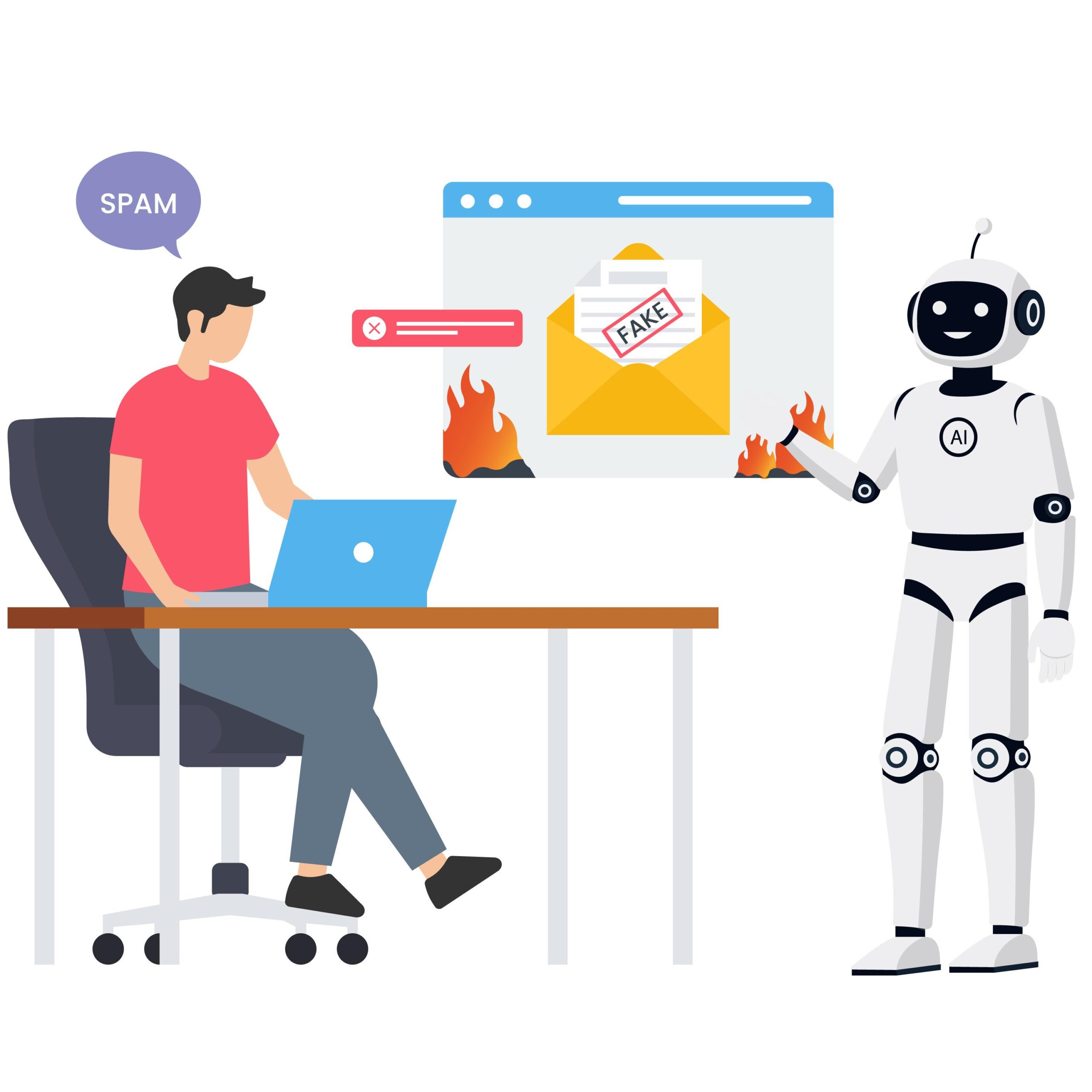
To safeguard internal systems, companies should rapidly implement:
Multi-Factor Authentication (MFA): Mandatory for all critical applications and enterprise endpoints. Ensure you are deploying this correctly by checking out our guide on What Is Two-Factor Authentication and Why You Should Use It.
Strict Verification Procedures: Out-of-band channels (such as phone calls via known internal numbers or face-to-face check-ins) must be used to verify any financial or sensitive data transaction requests.
Cybersecurity Awareness Programs: Continuous training modules covering modern AI threats, deepfake indicators, and tactical digital hygiene.
Regular Phishing Simulation Exercises: Running active phishing simulations that adapt using modern AI-style templates to find behavioral vulnerabilities early.
Zero-Trust Security Principles: Implementing strict access boundaries that assume every user or device could be compromised. Learn more about the architectural benefits in our article: What Is Zero Trust Security and Why Modern Companies Need It.
AI-Assisted Threat Detection Solutions: Leveraging natural language processing (NLP) to detect subtle anomalies in tone, pacing, and communication structures.
Individual Protection: Building Digital Awareness
As AI-generated scams become more sophisticated, individuals must develop stronger daily habits. You can minimize your risk exposure by focusing on key tactical changes:
Verify Unexpected Requests: Always verify sudden requests for money, bank transfers, or sensitive information through an independent communication channel before responding.
Skepticism Over Media: Shift your perspective to realize that voice recordings, audio clips, and video calls are no longer definitive proof of identity.
Avoid Unsolicited Links: Do not click on attachments or links embedded inside unexpected communications, even if the message looks flawlessly professional.
Enforce Good Habits: Recognize and eliminate everyday security oversights by reviewing the Common Cybersecurity Mistakes People Make Everyday.
Conclusion
Generative AI is rewriting the rules of social engineering by transforming basic, error-ridden scams into highly personalized, adaptive, and flawless attacks. From highly tailored phishing campaigns and cloned deepfake voices to interactive chat scams, cybercriminals now possess tools capable of exploiting human trust at machine speed and scale.
As these technologies evolve, the future of cybersecurity relies as much on protecting human behavior as it does on updating technical firewalls. The strongest defense will always be a balanced combination of advanced automated security systems, airtight identity verification processes, and a highly alert workforce.
Frequently Asked Questions (FAQs)
1. What is AI-powered social engineering?
AI-powered social engineering is an advanced cyberattack method where criminals leverage generative artificial intelligence to craft highly realistic phishing emails, interactive chat messages, and deepfake media to manipulate people into surrendering data or assets.
2. Why are AI-generated phishing attacks significantly more dangerous than older methods?
Unlike traditional phishing, which often relies on easily spotted typos or clunky phrasing, AI phishing produces flawless grammar and adapts context to individual targets, making them nearly impossible to detect with the naked eye.
3. What are deepfakes, and how do threat actors use them to run scams?
Deepfakes are synthetic audio or video clips generated by AI to impersonate a real person’s voice or likeness. Scammers use them to clone the voices of corporate executives, tricking employees into transferring massive corporate funds.
4. How can modern businesses successfully defend against AI-driven social engineering?
Organizations should implement strict zero-trust network configurations, enforce multi-factor authentication (MFA), deploy AI-powered language-filtering tools, and run ongoing employee verification policies for any unusual administrative requests.
5. Can an individual protect themselves from high-quality AI scams?
Yes. By adopting a posture of healthy skepticism, bypassing links in unexpected messages, and always using an independent, secondary communication channel to verify urgent financial or personal requests before acting.