
Introduction
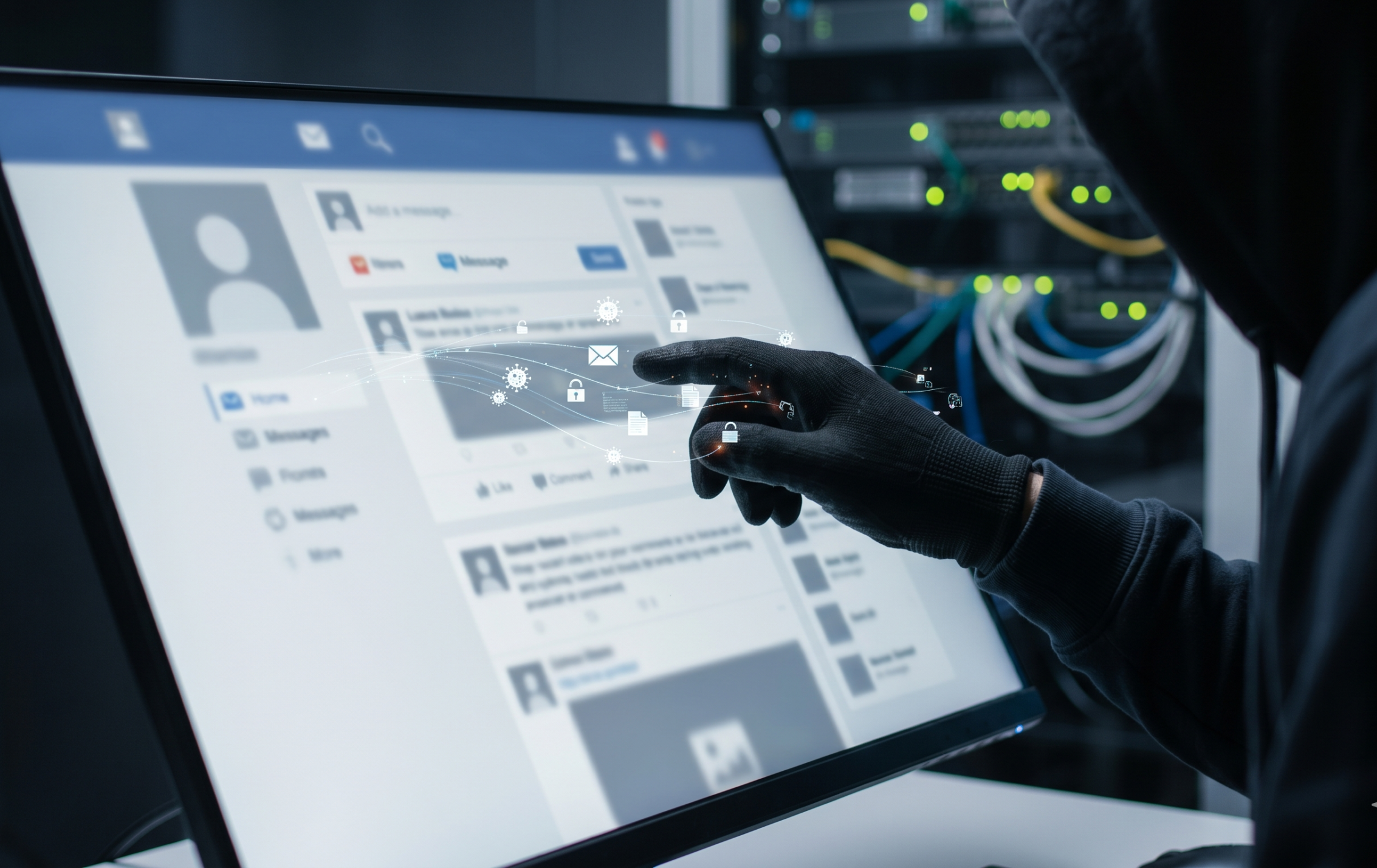
Social media platforms have transformed from basic networking tools into foundational communication channels for global commerce, professional branding, and personal interaction. However, as billions of individuals catalog their daily routines, employment histories, and professional dependencies across these networks, cybercriminals have found a fertile environment to operate.
In the cyber threat landscape of 2026, social media is no longer just a space for casual online scams; it functions as an enterprise-grade reconnaissance and execution environment for advanced persistent threats (APTs) and financial fraud networks. Rather than expending resources trying to break through hardened network firewalls, modern threat actors exploit human behavior by transforming your public social presence into a weaponized attack vector.

The Social Media Goldmine: Automated Reconnaissance and OSINT
The foundation of any successful cyber attack is high-quality information. Historically, gathering data on an enterprise target required weeks of manual surveillance. Today, social media provides threat actors with an exhaustive, freely accessible stream of Open-Source Intelligence (OSINT).
[Public Profile Data Scraped] ──> [AI Synthesis & Profiling] ──> [Hyper-Personalized Attack Executed]
By leveraging automated scraping tools powered by generative AI, cybercriminals can scan millions of public profiles in seconds. This gathering of publicly available information is a core component of digital reconnaissance. For a detailed breakdown of how this data is harvested and utilized within the security space, see our guide on What is OSINT and How Cybersecurity Professionals Use It.
A user who checks into a regional corporate office, celebrates a promotion, or discusses an upcoming software deployment on a professional network leaves structural breadcrumbs. Attackers aggregate these disjointed data points—including birth dates, structural corporate roles, relational connections, and personal interests—to design hyper-targeted profiles of their victims. Furthermore, the scaling of these automated data-harvesting bots represents a broader shift toward AI-Powered Cyber Attacks: How Hackers Are Using AI to optimize target profiling.
Next-Gen Social Engineering: From Mass Phishing to Sticky Personas
Social engineering relies entirely on psychological manipulation rather than software vulnerabilities. Because social networks encourage a culture of informal conversation and immediate trust, users routinely lower their cognitive defenses, sharing information they would fiercely guard in a traditional corporate environment.
1. Dynamic “Sticky Personas”
In the current digital landscape, threat actors have moved past static fake accounts. They utilize generative AI dialogue agents to create long-term, highly credible fake identities. These automated personas interact casually with targets over weeks or months, building emotional alignment, referencing actual mutual connections, or offering industry insights. Once high-trust relationships are established, the persona seamlessly introduces a malicious file link or requests sensitive internal access keys.
2. Angler Phishing and Customer Service Deception
A highly effective variation of social media fraud is Angler Phishing. Attackers monitor public corporate profiles or social feeds for disgruntled customers posting complaints to verified brands (such as airlines, banks, or tech support channels).
Using a lookalike profile with matching branding, the attacker quickly intercepts the thread, posing as an escalated support agent. They direct the frustrated customer to an external chat link, an instant messaging app, or a fake portal designed to harvest account credentials or execute financial theft.
The Vectors of Execution: Exploitation and Impersonation
Once a threat actor maps a target via social networks, they use various delivery methods to compromise accounts and infrastructure.
Malicious Link Redirection & Water Holes: Attackers exploit viral trends, breaking news, or synthetic visual content to distribute malware. Clicking these links can trigger a direct browser exploit or lead to fake CAPTCHA screens that trick users into running malicious scripts locally.
Identity Cloning and Synthetic Deepfakes: Cybercriminals do not just target consumers; they mimic corporate leaders. By scraping public audio and video clips from company webinars or media posts, attackers can generate convincing deepfake audio or real-time video streams to authorize financial transfers or bypass onboarding validation protocols.
Recruitment Fraud: Targeting job seekers on professional networks remains a high-yield tactic. Scammers build sophisticated fake corporate profiles, execute elaborate fake interview processes, and then demand upfront equipment fees or extract comprehensive banking routing data under the guise of standard background checks.
The Corporate Attack Path: Targeting the Enterprise Network
For modern businesses, an employee’s social media footprint represents a clear security risk. Attackers map entire organizational charts simply by analyzing team structures, project endorsements, and employee networks online.
Attacker Maps Executive Network ──> Scrapes Voice/Video Data ──> Deepfake Vishing Call to Helpdesk ──> Network Access Granted
If a threat actor discovers the names of specific procurement managers and their active suppliers through professional network summaries, they can launch highly credible spear-phishing or Business Email Compromise (BEC) campaigns. Furthermore, disgruntled or former employees are frequently monitored by bad actors looking to cultivate internal access opportunities or extract proprietary intellectual property.
Emotional Manipulation and Online Fraud
Cybercriminals understand human emotions and frequently exploit them through social media. Fraudsters may create fake charity campaigns, romance scams, investment opportunities, or emergency situations designed to trigger emotional responses.
When users feel sympathy, excitement, fear, or urgency, they are more likely to make decisions without carefully evaluating the situation. Emotional manipulation remains one of the most effective methods used by cybercriminals because it bypasses logical thinking and security awareness. To better understand the psychological triggers attackers exploit during these deceptive interactions, read our feature on The Psychology of Cybercrime: Why People Fall for Online Scams.
Defensive Matrix: Threat Mapping and Mitigation
| Social Media Attack Vector | Threat Mechanism | Critical Countermeasure |
| Automated OSINT Scraping | Behavioral data and corporate dependency harvesting. | Strict privacy settings; enforce clean social boundaries regarding corporate internal structures. |
| Angler Phishing | Counterfeit support accounts intercepting complaints. | Verify verified account badges; always use official, in-app support channels. |
| Dialogue Agent/Fake Friend Lures | Long-term psychological grooming to bypass trust barriers. | Out-of-band verification; implement a strict “verify before you share” policy. |
| Deepfake Video & Voice Clones | Synthetic identity deception targeting helpdesks and executives. | Implement strict cryptographic security keys and secondary verbal authentication words. |
| Viral Link Malware Distribution | Drive-by browser execution via trending topic baits. | Implement automated endpoint isolation and advanced browser security tracking. |
Strengthening the Identity Perimeter with FireShark
Technical guardrails and traditional cloud firewalls cannot prevent an employee from over-sharing corporate insights or trusting a highly sophisticated online persona. Because social media attacks deliberately target human psychology and emotion, security cannot be solved by software updates alone—it requires building an analytical, highly aware workforce.
FireShark neutralizes identity-centric threats by providing data-driven, practical cybersecurity awareness training. Our educational programs teach teams how to recognize lookalike social engineering models, handle corporate details securely on personal profiles, and identify advanced AI-generated spear-phishing campaigns. By helping your workforce sharpen their digital safety habits, FireShark turns your employees into an active defensive boundary capable of neutralizing social attacks before they impact your organization.
Conclusion
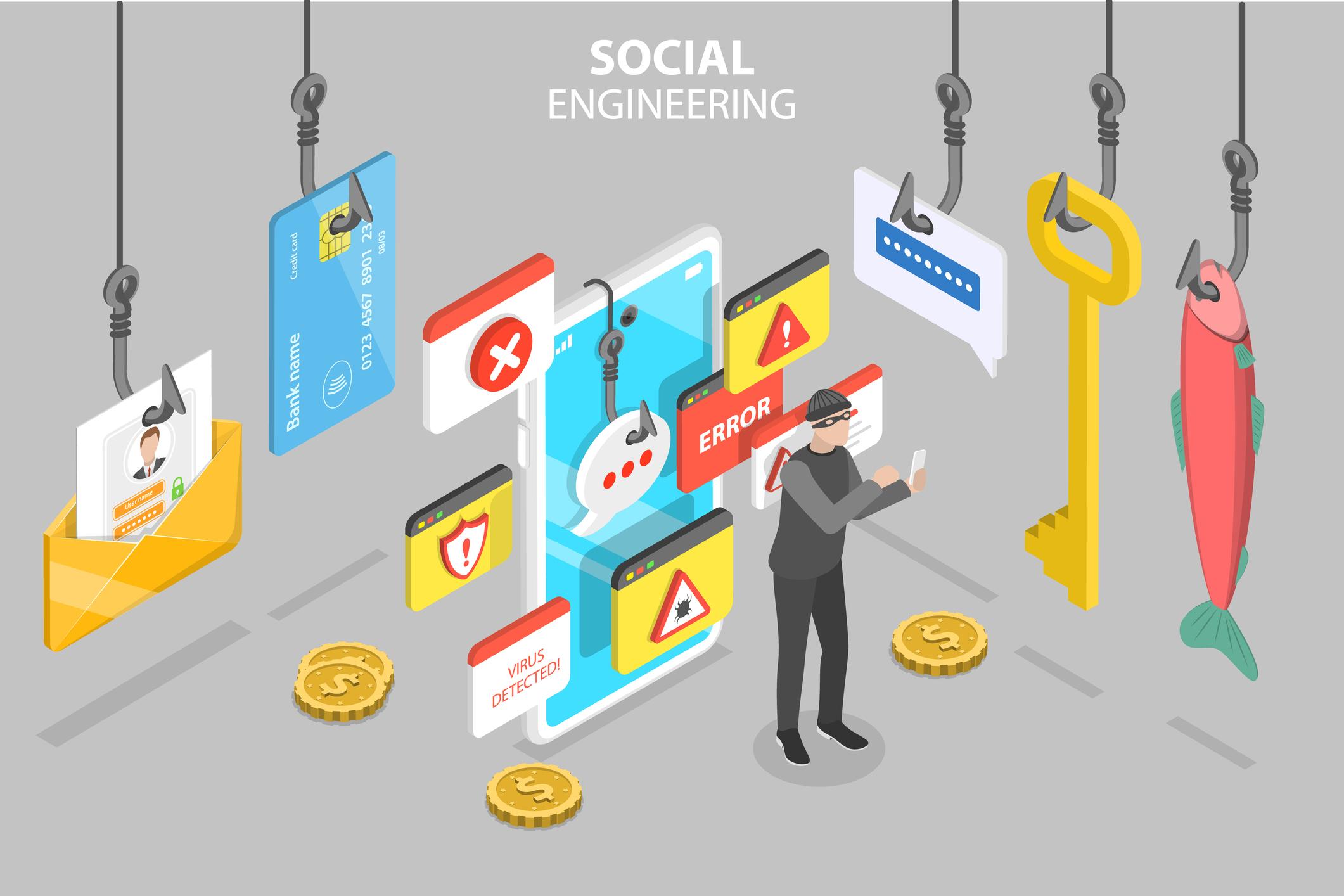
Social media platforms are highly effective vectors for modern cybercriminals because they shift the focus of an attack from structural software layers to individual human behavior. By transforming public status updates into high-value operational intelligence, threat actors easily deploy hyper-personalized phishing campaigns, exploit corporate structures, and bypass security perimeters. Maintaining a highly secure profile requires minimal personal disclosure, continuous verification of online connections, and regular security awareness training.
Frequently Asked Questions (FAQs)
1. How do cybercriminals turn harmless personal status updates into targeted cyber attacks?
Attackers collect various public data points—such as your professional milestones, travel schedules, and family updates—to run open-source intelligence (OSINT) mapping. They use these personal details to guess password recovery questions or create hyper-customized phishing emails that sound authentic, significantly increasing the likelihood that a victim will trust them.
2. What makes an “Angler Phishing” attack different from traditional email phishing?
Traditional phishing uses mass emails to find targets. Angler phishing specifically targets users on social platforms who are actively posting complaints to verified corporate brands. Attackers use lookalike customer support profiles to jump into the public thread, directing the target to a fake external site to steal their credentials or payment info.
3. Can an attacker breach a corporate network using my personal social media profiles?
Yes. Attackers use employee profiles to map out an organization’s internal hierarchy, identifying key decision-makers, financial managers, and IT support staff. By monitoring listed projects or software skills, they can build highly realistic spear-phishing lures or execute deepfake voice calls to helpdesks to secure network login credentials.
4. How do threat actors use generative AI to scale social media scams?
Generative AI allows attackers to move away from generic, poorly written copy and build automated “sticky personas.” These AI agents can manage thousands of personalized conversations simultaneously across multiple channels, automatically adapting their language and psychological angles in real time to build trust before deploying malicious links.
5. What should my first steps be if I accidentally interact with a fake profile or malicious link?
Immediately disconnect your device from local networks to stop any background malware from transmitting data back to an attacker. Change the credentials of any accounts that may have been exposed, and ensure non-SMS multi-factor authentication (MFA) is fully enabled. Finally, run a comprehensive malware scan using trusted endpoint security software.