

Introduction
The rapid adoption of cloud computing has fundamentally transformed the way modern enterprises operate. Businesses no longer rely solely on physical servers and on-premises data centers to store proprietary information or run mission-critical applications. Instead, they leverage scalable cloud platforms to drastically improve agility, reduce overhead costs, and enable employees to collaborate seamlessly from anywhere in the world.
While this digital transformation offers incredible operational advantages, it also introduces significant security challenges. As organizations migrate critical business logic and sensitive information to distributed architectures, protecting these cloud-native assets has become a top board-level priority.

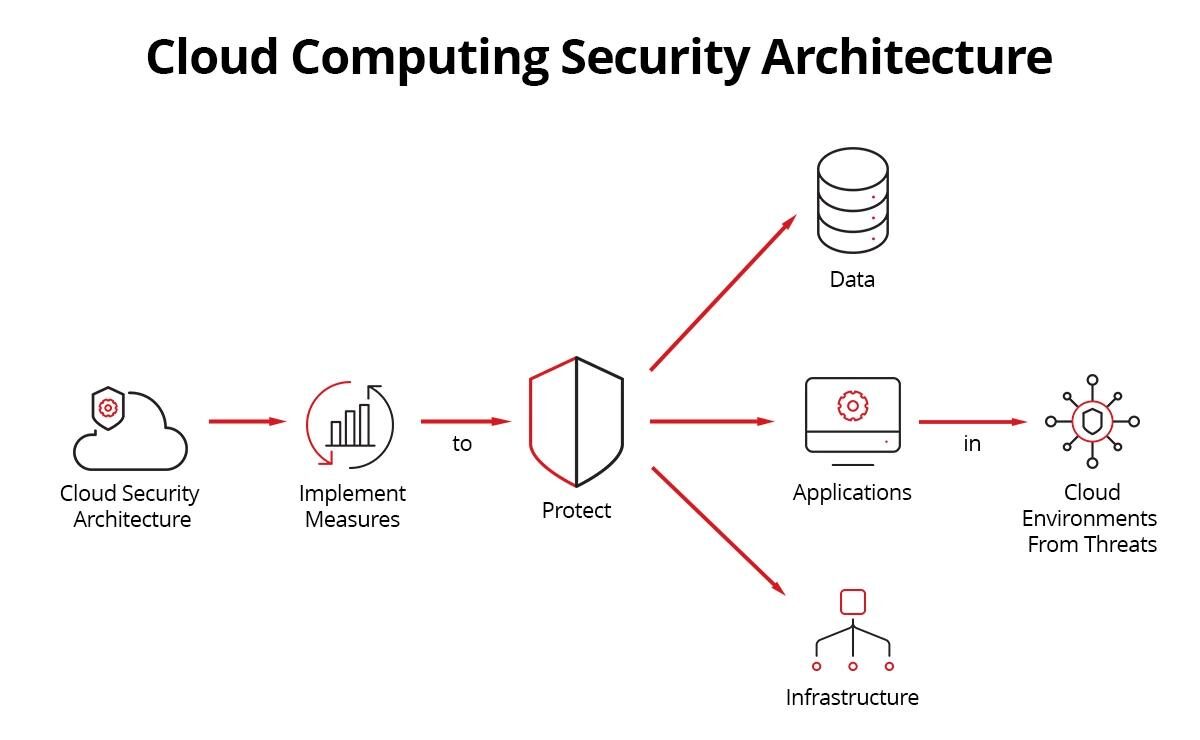
At its core, cloud security is a unified collection of technologies, policies, controls, and operational practices engineered to safeguard cloud-based systems, data repositories, and foundational infrastructure from sophisticated cyber threats. In today’s highly interconnected landscape, establishing a robust security posture is no longer optional—it is a fundamental component of long-term enterprise success. To understand how these principles fit into a comprehensive defensive strategy, look at our baseline overview on What Is Cybersecurity? Why Is Cybersecurity Important?.
Understanding Cloud Security & The Shared Responsibility Model
Cloud security refers to the specific strategies and technical tools used to protect cloud computing environments from unauthorized access, malicious cyberattacks, and sudden data loss. Unlike traditional IT security, which focuses on defending a static corporate network perimeter, cloud security must address highly distributed ecosystems where data and applications live across multiple geographical zones and third-party systems.
The single most critical concept within this domain is the Shared Responsibility Model. Organizations frequently make the dangerous assumption that their data is inherently safe simply because they use a secure cloud service provider (CSP). In reality, security is a two-way street:
┌────────────────────────────────────────────────────────┐
│  Cloud Service Provider (CSP) Responsibility          │
│  -> Secures Physical Hardware, Facilities, & Hypervisors│
└───────────────────────────┬────────────────────────────┘
                            │
┌───────────────────────────▼────────────────────────────┐
│  Enterprise Customer Responsibility                    │
│  -> Secures Data, Applications, IAM, & Configurations   │
└────────────────────────────────────────────────────────┘
The Provider’s Duty: The CSP (such as AWS, Azure, or Google Cloud) is responsible for securing the underlying physical infrastructure, virtualization layers, and core networking hardware.
The Customer’s Duty: The enterprise customer remains strictly responsible for protecting everything inside that infrastructure—including customer data, user accounts, application code, operating system configurations, and access privileges.
Consequently, poor security configuration or sloppy credential management on the customer’s end can easily leave an enterprise vulnerable, regardless of how secure the underlying provider platform is.
Structural Security Realities: On-Premise vs. Cloud Infrastructure
To appreciate why cloud-native frameworks require specialized strategies, consider how the security paradigm changes when migrating away from legacy hardware:
| Security Domain | Traditional On-Premise Infrastructure | Modern Enterprise Cloud Infrastructure |
| Network Perimeter | Defined by physical firewalls, routers, and localized data centers. | Software-defined, logical, and highly distributed across locations. |
| Asset Visibility | Static hardware inventory tracking with manual audits. | Dynamic, rapidly scaling virtual instances and microservices. |
| Security Controls | Hardware-centric appliances and physical access boundaries. | Identity-centric configurations, APIs, and policy automation. |
| Operational Control | Complete ownership over the physical hardware layers. | Governed by the Shared Responsibility Model with the CSP. |
Major Threats to Cloud Infrastructure
Modern enterprises generate massive volumes of sensitive data daily, including financial ledgers, proprietary customer files, intellectual property, and long-term corporate strategies. Because this information represents a highly lucrative target, cybercriminals continuously develop specialized attack vectors to compromise cloud deployments.
Organizations must proactively identify and mitigate these five major cloud threats:
1. Massive Data Breaches
When unauthorized actors successfully infiltrate a cloud environment, they can expose sensitive corporate secrets and customer records. These incidents often trigger immense regulatory penalties, severe financial liability, and an immediate loss of marketplace trust.
2. Environmental Misconfigurations
Cloud misconfiguration remains one of the single biggest causes of cloud security failures. These incidents rarely happen due to flaws in the CSP’s platform; instead, they occur when an organization incorrectly sets up storage buckets, access permissions, or public network paths, accidentally exposing private databases to the open internet. To avoid these costly operational blunders, review the Common Cybersecurity Mistakes People Make Every Day.
3. Identity Theft and Credential Attacks
Weak employee passwords, stolen administrative keys, and targeted social engineering enable cybercriminals to easily hijack legitimate cloud accounts. Once inside, attackers can move laterally through internal cloud networks to compromise linked corporate systems. Hackers frequently use deceptive messaging to capture these initial credentials; learn how to spot these schemes by reading about The Most Common Phishing Techniques Used by Cybercriminals.
4. Advanced Ransomware Schemes
Ransomware attacks targeting cloud infrastructure have become exceptionally sophisticated. Attackers may directly encrypt cloud-hosted virtual machines or exploit automated cloud synchronization tools to silently distribute malware across an entire enterprise network, locking files and crippling business continuity. For a deep dive on how to break this attack cycle, see our guide on How Ransomware Attacks Work and How to Prevent Them.
5. Dangerous Insider Threats
Whether driven by malicious intent or simple human error, internal employees or third-party contractors with excessive system privileges present a major cloud vulnerability. Without strict oversight, an insider can easily leak data or delete critical resources, making careful access control an absolute necessity. To protect against these evolving threats, check out the Top Cybersecurity Threats Businesses Should Prepare for in 2026.
Key Components of Effective Cloud Security
A resilient cloud security strategy relies on multiple, overlapping layers of technical protection working together to form a unified defense:
Identity and Access Management (IAM): IAM frameworks ensure that only explicitly authorized users can access specific cloud resources. Organizations should always follow the Principle of Least Privilege (PoLP), ensuring employees receive only the minimum access levels necessary to fulfill their daily roles.
Multi-Factor Authentication (MFA): Enabling MFA adds an essential roadblock to the authentication pipeline. By requiring a secondary verification token, MFA ensures that even if an attacker steals an employee’s password, accessing the cloud console remains incredibly difficult. Discover how to implement these parameters effectively with our resource on What Is Two-Factor Authentication and Why You Should Use It.
Comprehensive Data Encryption: Encryption translates corporate data into unreadable text that can only be unlocked with the proper cryptographic key. For thorough protection, information must be encrypted both while resting inside cloud storage and while in transit across public or private networks. Learn how these mathematical mechanisms work in our post on Understanding the Difference Between Encryption and Decryption.
Continuous Telemetry & Real-Time Monitoring: Security teams must maintain real-time monitoring across all cloud assets. Automated monitoring platforms analyze event logs, spot anomalies, and trigger high-priority alerts before minor configuration errors turn into full-scale data breaches.
Audits & Automated Vulnerability Assessments: Regular technical audits and security posture scans help organizations identify internal software bugs, exposed ports, and missing patches before malicious actors do.
Resilient Backup & Disaster Recovery (DR): Maintaining offline, immutable cloud backups guarantees that an enterprise can rapidly restore its operations following hardware failures, accidental deletion, or a ransomware incident.
The Shift to Zero Trust Security
One of the most defining shifts in enterprise cloud security is the rapid migration toward a Zero Trust architecture. Traditional legacy security models relied on a “castle-and-moat” philosophy, assuming that any user or device located inside the corporate network could be trusted by default. However, in a modern cloud ecosystem defined by remote workforces, SaaS applications, and third-party API integrations, this assumption creates immense risk.
The Golden Rule of Zero Trust: Never Trust, Always Verify.
Under a Zero Trust model, no user, device, or application is ever granted inherent trust, regardless of their location on the network or past login history. Every single access request must continuously authenticate, validate its security posture, and verify its explicit authorization before interacting with internal systems. This continuous validation significantly limits an attacker’s ability to move laterally if a single account gets compromised. For a complete architectural roadmap on how to build this framework, explore our dedicated breakdown: What Is Zero Trust Security and Why Modern Companies Need It.
Compliance, Regulations, and the Role of AI
Many modern industries operate under strict data privacy laws (such as GDPR, HIPAA, or PCI-DSS) that regulate how sensitive information must be handled. Cloud security frameworks provide the logging, encryption, and access controls required to satisfy these compliance audits, helping organizations avoid steep legal penalties while building consumer trust.
Concurrently, Artificial Intelligence (AI) has become a massive force multiplier for cloud security operations. AI-powered defense tools can ingest and analyze millions of security logs simultaneously, isolating credential misuse and blocking anomalous network behavior far faster than traditional manual review.
However, security teams must recognize that this technology is a double-edged sword: threat actors are actively deploying AI to launch highly advanced phishing campaigns and automated exploits. To see how this balance is shifting, read our analysis on AI-Powered Cyber Attacks: How Hackers Are Using AI and discover how to defend your endpoints by tracking the Top AI Tools Every Cybersecurity Professional Should Know.
Conclusion
Cloud computing has firmly established itself as the foundation of modern enterprise infrastructure, giving businesses the agility, scale, and performance needed to thrive in a digital economy. However, these structural benefits can only be fully realized when supported by robust, proactive security practices. Cloud security is far more than a routine IT box to check—it is an invaluable strategic business investment that preserves operational continuity, protects client privacy, and defends corporate data against increasingly aggressive cyber threats. By prioritizing cloud-native visibility, adopting Zero Trust principles, and building a security-first internal culture, modern organizations can confidently pursue digital innovation with peace of mind.
Frequently Asked Questions (FAQs)
1. What is cloud security?
Cloud security is a comprehensive combination of specialized technologies, corporate policies, and operational controls designed to protect cloud-based applications, data repositories, and digital infrastructure from unauthorized access, accidental exposure, and cyber threats.
2. Why can’t enterprises rely entirely on their Cloud Provider for security?
Per the Shared Responsibility Model, cloud service providers only guarantee the safety of the underlying physical host systems and virtualization layers. Protecting everything running inside that environment—such as identity settings, access permissions, application code, and files—remains the sole responsibility of the customer.
3. What are the most common security risks in cloud computing?
The most prevalent cloud security risks include data breaches, human error resulting in misconfigured cloud storage settings, compromised user credentials, insider threats, insecure APIs, and sophisticated ransomware campaigns.
4. How does the Zero Trust model protect a cloud environment?
The Zero Trust model operates on the principle of “never trust, always verify”. It eliminates the assumption that anything inside a company’s network is inherently safe, requiring continuous authentication, device validation, and strict access control for every single request.
5. What immediate steps can an organization take to maximize cloud resilience?
Organizations can quickly strengthen their posture by enforcing multi-factor authentication (MFA) across all profiles, applying the principle of least privilege to restrict access, encrypting data both at rest and in transit, continuously monitoring system logs, and providing ongoing security training to eliminate human error.